
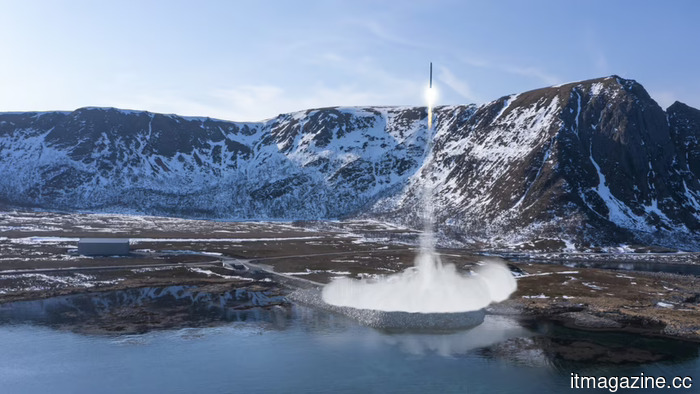
Isar Aerospace secures €270 million to expand its rocket manufacturing capabilities.
Europe is determined to achieve independent access to space, but it faces a significant challenge: functioning rockets. Isar Aerospace has recently secured €270 million to tackle the initial issue and has an imminent opportunity to address the second one within the week.
The Munich-based startup, recognized as one of Europe’s most well-funded space companies, completed a €270 million Series D funding round with contributions from new investors Island Green Capital and Molten Ventures, alongside existing supporters like HV Capital, Lakestar, UVC Partners, and KfW Capital.
This funding round brings Isar’s total capital raised to around €870 million, highlighting the substantial investment flow into the space sector. The proceeds will facilitate the ramp-up of production for its Spectrum rocket and enhance its launch operations internationally.
This urgency reflects Europe’s current predicament. In 2025, Europe executed fewer than ten orbital launches, compared to over 190 in the US, relying heavily on foreign providers, especially Elon Musk’s SpaceX, which is listed on the stock market this week.
Amid increasing geopolitical tensions, governments are focusing on establishing their own sovereign access to space, positioning Isar to appeal directly to European nations, NATO members, and allies. The company now reports that defense-related work constitutes approximately 60 percent of its demand, a shift from primarily civilian business just a year ago.
The funding aims to accomplish three objectives at once.
First, production: a 40,000-square-meter factory in Parsdorf, near Munich, is being established to produce up to 40 Spectrum vehicles annually, with rockets three through seven already in the pipeline.
Second, infrastructure: in addition to its launchpad at Andøya in northern Norway, Isar has partnered with Spaceport Nova Scotia in Canada to establish a second site, in part through a collaboration with German shipbuilder TKMS to develop a sovereign Canadian launch capability.
Third, the order book: Isar claims it is already scheduled into 2028, with missions lined up for the European Space Agency, Astroscale, and various commercial clients.
However, all of this hinges on one persistent fact: Spectrum has yet to reach orbit. Its inaugural flight in March 2025 marked a historic first orbital launch attempt from continental Europe but lasted under 30 seconds before falling into the ocean, which Isar regarded as a successful safety systems test.
Since then, the qualification flight intended to deliver a genuine launch service has been postponed three times due to a faulty valve, a drifting boat, and a suspected leak. A fourth launch window opens on June 15.
“Space is no longer a frontier; it is the infrastructure of national power,” stated co-founder and CEO Daniel Metzler. This statement reflects both the hopeful pitch and the mounting pressure: Isar is being financed as if it has already succeeded, while still needing to demonstrate that it can.
It is not alone in this endeavor. Spain’s PLD Space and Germany’s Rocket Factory Augsburg are also vying for the small-satellite market, and none of Europe’s emerging launch providers have achieved orbit yet.
Investors, ranging from the NATO Innovation Fund to KfW Capital, are banking on Isar reaching that milestone first, with the €270 million investment enabling it to build the factory, launchpads, and manifest to scale rapidly if it succeeds. The more challenging aspect, as every rocket company learns, is the actual launch. The answer regarding that is due in just a few days.
Other articles
 From College to Commuting, the INIU Pocket Rocket P50 Is Designed for a Mobile Lifestyle
Graduation might signify a fresh start, yet battery anxiety often lingers as we move on to new chapters in life. Crafted for daily use, the INIU Pocket Rocket P50 is intended to help you keep powered up, alleviating one concern from your mind.
From College to Commuting, the INIU Pocket Rocket P50 Is Designed for a Mobile Lifestyle
Graduation might signify a fresh start, yet battery anxiety often lingers as we move on to new chapters in life. Crafted for daily use, the INIU Pocket Rocket P50 is intended to help you keep powered up, alleviating one concern from your mind.
 China is creating a $295 billion plan for AI data centers aimed at excluding Nvidia.
China is creating a five-year plan worth approximately $295 billion to establish a national AI data center network, primarily utilizing 80% domestically developed technology, effectively excluding Nvidia and AMD.
China is creating a $295 billion plan for AI data centers aimed at excluding Nvidia.
China is creating a five-year plan worth approximately $295 billion to establish a national AI data center network, primarily utilizing 80% domestically developed technology, effectively excluding Nvidia and AMD.
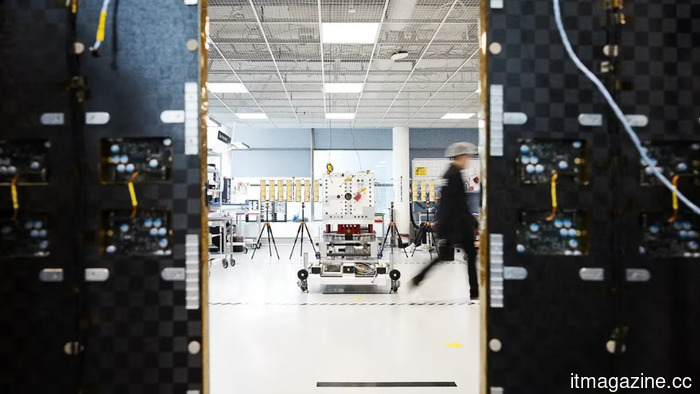 ICEYE achieves a €10 billion valuation following a €450 million fundraising round.
Finland's ICEYE secured €450 million in funding, led by General Atlantic, achieving a valuation of €10 billion, which is four times its value from six months ago, as governments accelerate efforts to acquire sovereign radar satellites.
ICEYE achieves a €10 billion valuation following a €450 million fundraising round.
Finland's ICEYE secured €450 million in funding, led by General Atlantic, achieving a valuation of €10 billion, which is four times its value from six months ago, as governments accelerate efforts to acquire sovereign radar satellites.
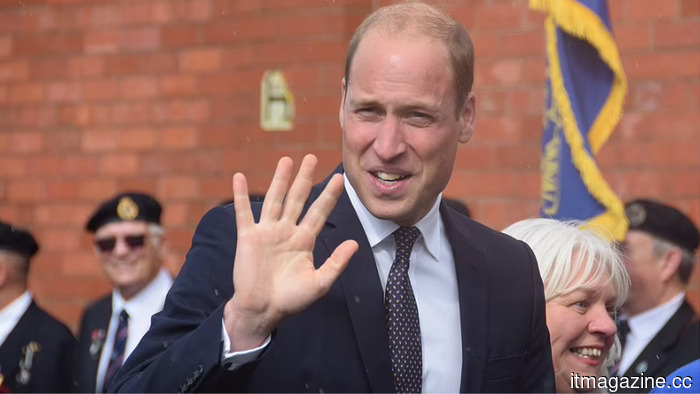 Prince William highlights homelessness prevention at London Tech Week.
The Prince of Wales will lead a panel during London Tech Week alongside Salesforce, Bloomberg Philanthropies, and NatWest, focusing on the use of data and technology to combat homelessness.
Prince William highlights homelessness prevention at London Tech Week.
The Prince of Wales will lead a panel during London Tech Week alongside Salesforce, Bloomberg Philanthropies, and NatWest, focusing on the use of data and technology to combat homelessness.
 China is preparing a $295 billion plan for AI data centers aimed at excluding Nvidia.
China is creating a five-year plan valued at around $295 billion to establish a national AI data center network that will rely on 80% domestic technology, effectively sidelining Nvidia and AMD.
China is preparing a $295 billion plan for AI data centers aimed at excluding Nvidia.
China is creating a five-year plan valued at around $295 billion to establish a national AI data center network that will rely on 80% domestic technology, effectively sidelining Nvidia and AMD.
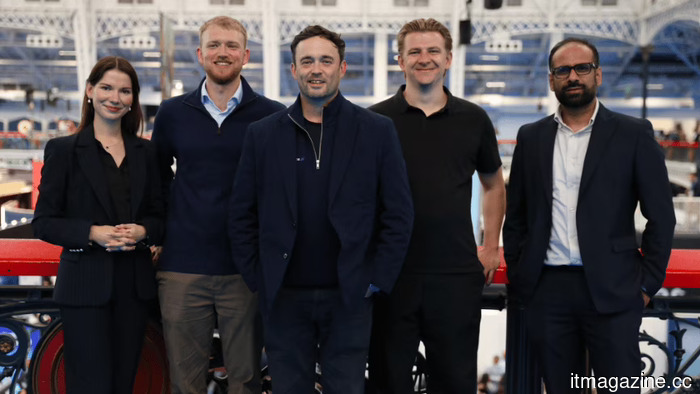 Deliverance AI comes out of stealth mode with an annual recurring revenue of £6 million for sovereign AI.
UK startup Deliverance AI has emerged from stealth mode with an annual recurring revenue of £6 million, developing an 'agentic operating system' designed to manage governed AI within private, air-gapped settings.
Deliverance AI comes out of stealth mode with an annual recurring revenue of £6 million for sovereign AI.
UK startup Deliverance AI has emerged from stealth mode with an annual recurring revenue of £6 million, developing an 'agentic operating system' designed to manage governed AI within private, air-gapped settings.
Isar Aerospace secures €270 million to expand its rocket manufacturing capabilities.
Germany's Isar Aerospace has secured €270 million to manufacture 40 rockets annually and establish a second launchpad, with a critical orbital launch opportunity set for 15 June.