
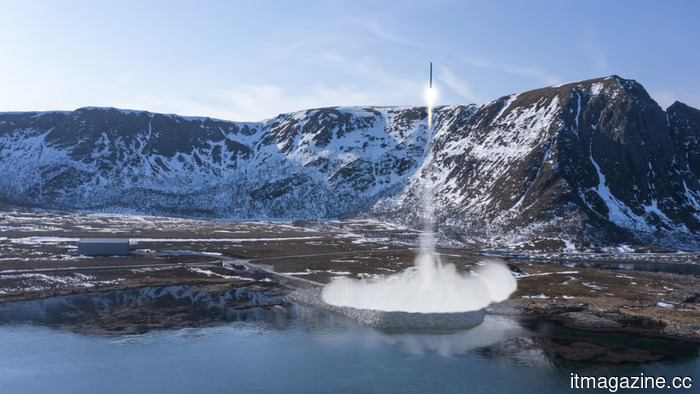
Isar Aerospace secures €270 million to expand its rocket manufacturing.
Europe aspires to achieve independent access to space, yet it struggles with functional rockets. Isar Aerospace has recently secured €270 million to address this initial challenge, and within a week, it will have another opportunity to tackle the second.
Based in Munich, this startup is among the highest-funded space ventures in Europe, having completed a €270 million Series D financing round, with new investors such as Island Green Capital and Molten Ventures joining existing supporters like HV Capital, Lakestar, UVC Partners, and KfW Capital.
This latest funding round brings Isar's total financial backing to approximately €870 million, highlighting the significant influx of investment into the space sector. The funds will be utilized to ramp up production of its Spectrum rocket and to broaden its launch activities internationally.
The urgency reflects a continent racing to catch up. In 2025, Europe conducted fewer than 10 orbital launches, while the US surpassed 190, relying significantly on foreign providers, primarily Elon Musk’s SpaceX, which is going public this week.
Amid rising geopolitical tensions, nations increasingly seek their own sovereign access to space, and Isar is positioning itself directly towards European states, NATO members, and allies. According to the company, approximately 60 percent of its demand now stems from defense-related projects, a shift from predominantly civil business just a year ago.
The funding supports three key areas simultaneously.
First, production is prioritized: Isar is establishing a 40,000-square-meter factory in Parsdorf, near Munich, capable of producing up to 40 Spectrum vehicles annually, with rockets three through seven already in production.
Second is infrastructure: In addition to its launchpad at Andøya in Norway, Isar has partnered with Spaceport Nova Scotia in Canada to establish a second site, partially in collaboration with German naval shipbuilder TKMS to develop a sovereign Canadian launch capability.
Third, the company has a growing order book that is said to extend to 2028, featuring missions for the European Space Agency, Astroscale, and various commercial clients.
However, all of this hinges on one persistent issue: the Spectrum rocket has yet to reach orbit. Its maiden flight in March 2025 was historic as the first orbital launch attempt from continental Europe but lasted less than 30 seconds before descending into the sea. Isar termed it a successful test of its safety systems.
The qualification flight intended to provide an operational launch service has faced three postponements due to a faulty valve, an errant boat, and a suspected leak. A fourth opportunity is set to open on June 15.
“Space is no longer a frontier; it is the infrastructure of national power,” said co-founder and CEO Daniel Metzler. This statement encapsulates both the promise and the pressure: Isar is being financed as if it has already succeeded, yet it still needs to demonstrate its capability.
It is not the only company endeavoring to achieve this goal. Spain's PLD Space and Germany’s Rocket Factory Augsburg are also targeting the small-satellite market, with all of Europe’s aspiring launch providers yet to achieve orbit.
Investors, ranging from the NATO Innovation Fund to KfW Capital, are placing their bets on Isar reaching that milestone first, and the €270 million will facilitate the factory, launchpads, and mission manifest necessary for swift scalability upon success. The more challenging aspect, as every rocket company discovers, is the launch itself, with answers expected in just days.
Other articles
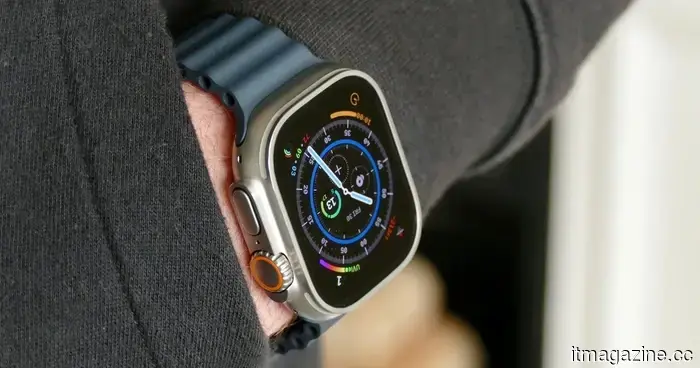 watchOS 27 eliminates support for many Apple Watch models, which is quite frustrating.
Apple announced at WWDC 2026 that watchOS 27 will not be compatible with the Apple Watch Series 8, the first-generation Apple Watch Ultra, or the Apple Watch SE 2. This update, scheduled for release this fall, represents the biggest single-cycle reduction in software support for Apple Watch.
watchOS 27 eliminates support for many Apple Watch models, which is quite frustrating.
Apple announced at WWDC 2026 that watchOS 27 will not be compatible with the Apple Watch Series 8, the first-generation Apple Watch Ultra, or the Apple Watch SE 2. This update, scheduled for release this fall, represents the biggest single-cycle reduction in software support for Apple Watch.
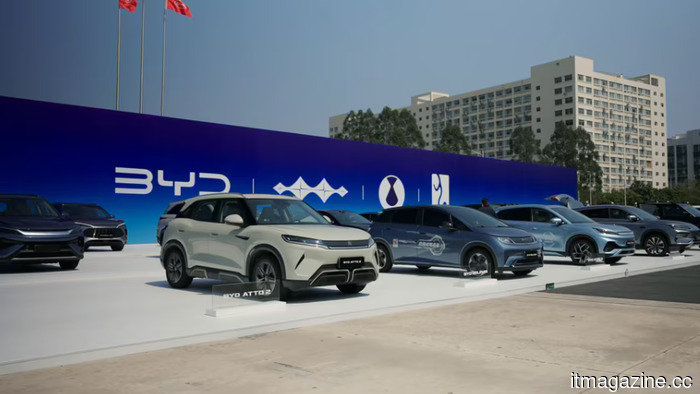 BYD claims that demand is twice the level of its capacity, yet its sales figures tell a different tale.
Stella Li from BYD indicates that China aims for 80% electric vehicle market penetration, as gasoline car sales drop by 39% and the Pentagon includes the automaker in its 1260H military roster.
BYD claims that demand is twice the level of its capacity, yet its sales figures tell a different tale.
Stella Li from BYD indicates that China aims for 80% electric vehicle market penetration, as gasoline car sales drop by 39% and the Pentagon includes the automaker in its 1260H military roster.
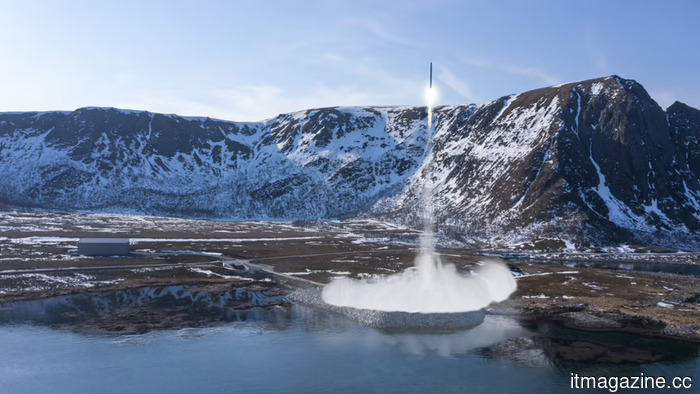 Isar Aerospace secures €270 million to expand its rocket manufacturing capabilities.
Germany's Isar Aerospace has secured €270 million to produce 40 rockets annually and establish a second launchpad, with a crucial orbital launch opportunity beginning on June 15.
Isar Aerospace secures €270 million to expand its rocket manufacturing capabilities.
Germany's Isar Aerospace has secured €270 million to produce 40 rockets annually and establish a second launchpad, with a crucial orbital launch opportunity beginning on June 15.
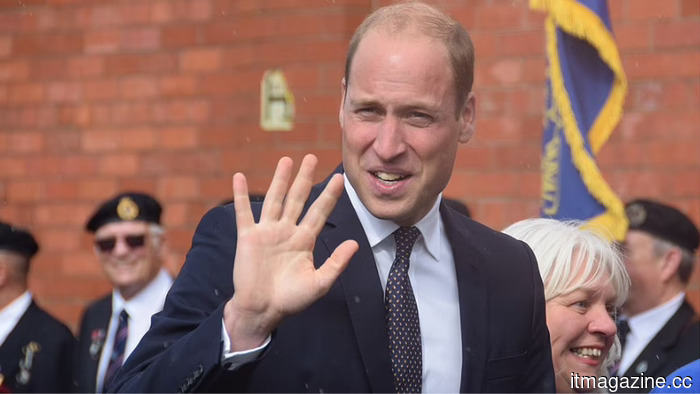 Prince William highlights homelessness prevention at London Tech Week.
The Prince of Wales will lead a panel at London Tech Week alongside Salesforce, Bloomberg Philanthropies, and NatWest, focusing on the role of data and technology in preventing homelessness.
Prince William highlights homelessness prevention at London Tech Week.
The Prince of Wales will lead a panel at London Tech Week alongside Salesforce, Bloomberg Philanthropies, and NatWest, focusing on the role of data and technology in preventing homelessness.
 Databricks is in discussions to achieve a valuation of up to $175 billion.
Databricks is negotiating to secure funding at a valuation of $165-175 billion, just four months after raising $5 billion at a $134 billion valuation. The CEO indicates plans for an IPO next year. These discussions are in the early stages, and the funding round has not yet been finalized.
Databricks is in discussions to achieve a valuation of up to $175 billion.
Databricks is negotiating to secure funding at a valuation of $165-175 billion, just four months after raising $5 billion at a $134 billion valuation. The CEO indicates plans for an IPO next year. These discussions are in the early stages, and the funding round has not yet been finalized.
 Databricks is in discussions to secure funding that could value the company at as much as $175 billion.
Databricks is in negotiations to secure funding at a valuation of $165-175 billion, just four months following a $5 billion round at a $134 billion valuation. The CEO indicates an IPO is planned for next year. These discussions are in the preliminary stages, and the funding round has yet to be finalized.
Databricks is in discussions to secure funding that could value the company at as much as $175 billion.
Databricks is in negotiations to secure funding at a valuation of $165-175 billion, just four months following a $5 billion round at a $134 billion valuation. The CEO indicates an IPO is planned for next year. These discussions are in the preliminary stages, and the funding round has yet to be finalized.
Isar Aerospace secures €270 million to expand its rocket manufacturing.
Germany's Isar Aerospace has secured €270 million to manufacture 40 rockets annually and develop a second launchpad, with a crucial orbital launch opportunity commencing on 15 June.