
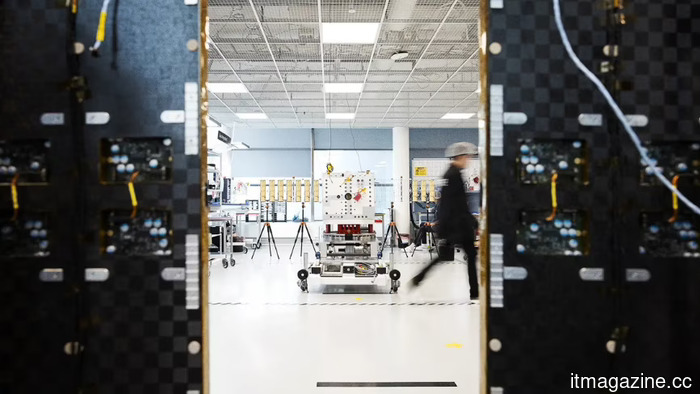
ICEYE reaches a €10 billion valuation following a €450 million fundraising round.
Six months ago, ICEYE had a valuation of €2.4 billion. Today, its worth has increased to over €10 billion. This remarkable increase exemplifies the defence-tech boom occurring in Europe.
The Finnish satellite firm successfully secured €450 million in a Series F funding round led by General Atlantic, resulting in a valuation surpassing €10 billion ($11.5 billion), marking a quadrupling since December. Taking into account a secondary sale to existing shareholders, the total amount raised approaches €1 billion, making it one of the largest venture funding rounds for a European defence-tech company.
New investors include Nokia, which has come in as a strategic backer, alongside the Qatar Investment Authority, TCV, and various Finnish state and pension funds.
ICEYE operates the world's largest fleet of synthetic-aperture radar satellites, with over 70 in orbit, capable of penetrating clouds, smoke, and darkness to capture images of the ground at any time. This capability has proven critical in Ukraine, where its data has monitored Russian military activities since 2022, and it is now also observing the Persian Gulf as demand rises in the Middle East.
Founded in 2014 as a spin-off from Aalto University, ICEYE initially focused on climate monitoring, but its defence sector has since become the driving force.
A clear indication of the business's shift is Poland's engagement with ICEYE; in May 2025, Warsaw contracted the company for approximately a €200 million sovereign reconnaissance system, and within a year, the Polish military was operating its own four-satellite constellation named POLSARIS.
Now, seven governments have purchased sovereign systems from ICEYE, a model that is gaining traction across Europe, the Middle East, and Asia, as nations prefer to own satellites rather than lease access.
The financial performance reflects this growth. ICEYE reported revenues exceeding €250 million and €100 million in EBITDA for 2025, currently maintains an order backlog exceeding €1.5 billion, and anticipates doubling its revenue this year to over €500 million. The company aims to increase satellite production from 50 annually to 100 by 2028. Co-founder and CEO Rafal Modrzewski stated, “Sovereign intelligence from space is entering a new era, and the window to build it is now.”
Nokia’s participation suggests future directions; radar satellites detect threats, and communication networks swiftly deliver information to responders. Nokia CEO Justin Hotard highlighted the importance of combining reliable connectivity with real-time visibility in modern defence, framing the collaboration as vital to enhancing European technological independence.
ICEYE's expansion is part of a broader influx of funding into European space and defence. On the same day, German rocket manufacturer Isar Aerospace secured €270 million, with investors increasingly flocking to the sector as governments ramp up military capabilities and Europe strives for satellite ownership.
ICEYE has hinted at a potential IPO in the future; at a valuation of €10 billion, with €1 billion newly available on its balance sheet, the company is in a position to be patient.
For a company that transitioned from climate observation to frontline mapping, the critical question remains whether the current strong demand can be sustained or if Europe’s space expansion is anticipating a wartime posture that persists beyond the conflicts currently fueling it.
Other articles
 Deliverance AI comes out of stealth mode with an annual recurring revenue of £6 million for sovereign AI.
UK startup Deliverance AI has emerged from stealth mode with an annual recurring revenue of £6 million, developing an 'agentic operating system' designed to manage governed AI within private, air-gapped settings.
Deliverance AI comes out of stealth mode with an annual recurring revenue of £6 million for sovereign AI.
UK startup Deliverance AI has emerged from stealth mode with an annual recurring revenue of £6 million, developing an 'agentic operating system' designed to manage governed AI within private, air-gapped settings.
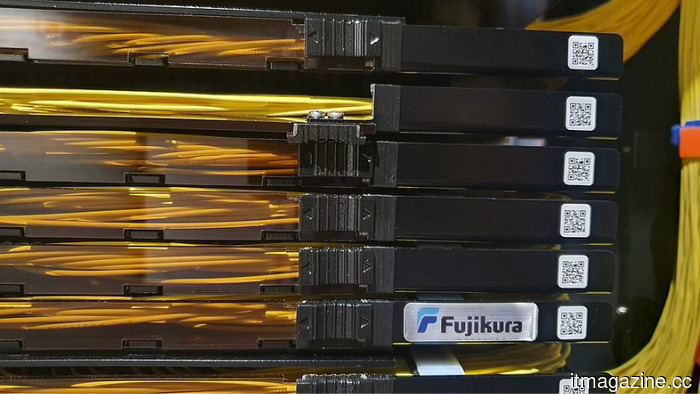 Fujikura increases prices for AI data center cables due to tightening supply.
Fujikura is increasing the prices of fibre-optic cables as almost all US hyperscalers are placing orders and supply remains limited. Although shares have fallen by 40%, the CEO asserts that the company will exceed its expectations.
Fujikura increases prices for AI data center cables due to tightening supply.
Fujikura is increasing the prices of fibre-optic cables as almost all US hyperscalers are placing orders and supply remains limited. Although shares have fallen by 40%, the CEO asserts that the company will exceed its expectations.
 Databricks is engaged in discussions to achieve a valuation of up to $175 billion.
Databricks is in discussions to raise funds at a valuation of $165-175 billion, just four months following a $5 billion funding round at a $134 billion valuation. The CEO indicates an IPO is anticipated next year. These discussions are still in the preliminary stages and the funding round has not yet been finalized.
Databricks is engaged in discussions to achieve a valuation of up to $175 billion.
Databricks is in discussions to raise funds at a valuation of $165-175 billion, just four months following a $5 billion funding round at a $134 billion valuation. The CEO indicates an IPO is anticipated next year. These discussions are still in the preliminary stages and the funding round has not yet been finalized.
 Databricks is in discussions to secure funding that could value the company at as much as $175 billion.
Databricks is in negotiations to secure funding at a valuation of $165-175 billion, just four months following a $5 billion round at a $134 billion valuation. The CEO indicates an IPO is planned for next year. These discussions are in the preliminary stages, and the funding round has yet to be finalized.
Databricks is in discussions to secure funding that could value the company at as much as $175 billion.
Databricks is in negotiations to secure funding at a valuation of $165-175 billion, just four months following a $5 billion round at a $134 billion valuation. The CEO indicates an IPO is planned for next year. These discussions are in the preliminary stages, and the funding round has yet to be finalized.
 BYD claims that demand is twice its capacity, yet its sales figures suggest otherwise.
Stella Li of BYD stated that China aims for 80% electric vehicle penetration, as sales of gasoline cars fall by 39%, and the Pentagon includes the automaker on its 1260H military list.
BYD claims that demand is twice its capacity, yet its sales figures suggest otherwise.
Stella Li of BYD stated that China aims for 80% electric vehicle penetration, as sales of gasoline cars fall by 39%, and the Pentagon includes the automaker on its 1260H military list.
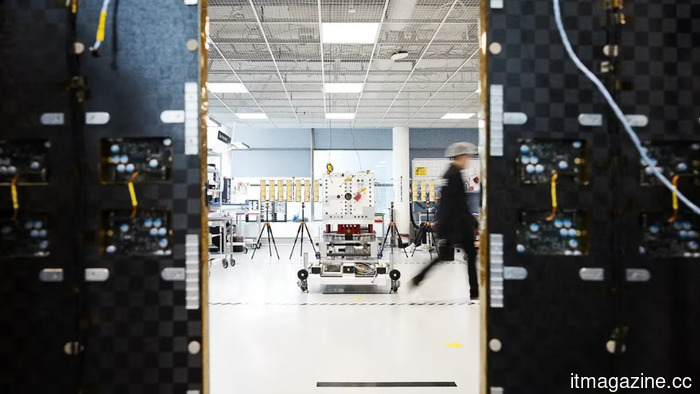 ICEYE achieves a €10 billion valuation following a €450 million fundraising round.
Finland's ICEYE secured €450 million in funding, led by General Atlantic, achieving a valuation of €10 billion, which is four times its value from six months ago, as governments accelerate efforts to acquire sovereign radar satellites.
ICEYE achieves a €10 billion valuation following a €450 million fundraising round.
Finland's ICEYE secured €450 million in funding, led by General Atlantic, achieving a valuation of €10 billion, which is four times its value from six months ago, as governments accelerate efforts to acquire sovereign radar satellites.
ICEYE reaches a €10 billion valuation following a €450 million fundraising round.
Finland's ICEYE secured €450 million in funding, spearheaded by General Atlantic, achieving a valuation of €10 billion, which marks a fourfold increase in just six months as countries hasten to acquire their own radar satellites.