
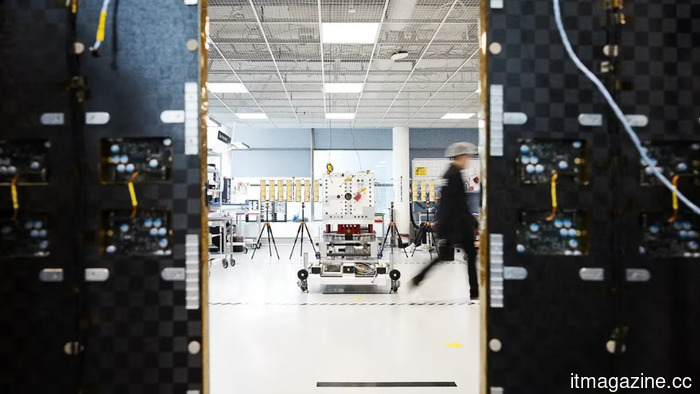
ICEYE achieves a €10 billion valuation following a €450 million fundraising round.
Six months prior, ICEYE was valued at €2.4 billion. Today, that valuation has surpassed €10 billion. This stark increase illustrates the booming defence-tech sector in Europe.
The Finnish satellite firm successfully secured €450 million in a Series F funding round led by General Atlantic, valuing the company at over €10 billion ($11.5 billion), marking a fourfold increase since December. Including a secondary sale for existing investors, the deal approaches €1 billion, making it one of the largest venture funding rounds for a European defence-tech company.
New investors include Nokia as a strategic backer, alongside the Qatar Investment Authority, TCV, and a number of Finnish state and pension funds.
ICEYE operates the world's largest fleet of synthetic-aperture radar satellites, exceeding 70 in number, with the ability to see through clouds, smoke, and darkness to acquire ground images at any time. This capability has proven vital in Ukraine, where its data has tracked Russian military activities since 2022, and it is now monitoring the Persian Gulf amid growing demand in the Middle East.
Founded in 2014 as a spin-off from Aalto University, the company initially focused on climate monitoring, but now its core business is centered on defence.
A clear indicator of this shift is Poland's engagement. In May 2025, Warsaw contracted ICEYE for a reconnaissance system costing approximately €200 million, and within a year, the Polish armed forces had established their own four-satellite constellation, named POLSARIS.
To date, seven governments have acquired sovereign systems from ICEYE, with this model gaining traction across Europe, the Middle East, and Asia, as nations prefer owning their satellites over leasing them.
The financial results reflect this growth. ICEYE reports revenue exceeding €250 million and €100 million in EBITDA for 2025, maintains an order backlog over €1.5 billion, and anticipates nearly doubling its revenue this year to over €500 million.
The company intends to increase satellite production from 50 to 100 annually by 2028. “Sovereign intelligence from space is entering a new era, and now is the time to build it,” stated co-founder and CEO Rafal Modrzewski.
Nokia's involvement suggests potential future developments. Radar satellites detect threats; communication networks relay this information to those who need to respond. “Modern defence increasingly relies on integrating trusted connectivity with real-time visibility,” noted Nokia CEO Justin Hotard, presenting the collaboration as a fundamental step towards European technological autonomy.
ICEYE's growth is part of a wider influx of investment into European space and defence. On the same day, German rocket manufacturer Isar Aerospace secured €270 million, as investors flock to the sector amid government rearmament and Europe's urgency to establish ownership of its satellites.
ICEYE has hinted at a future IPO; with a valuation of €10 billion and €1 billion newly available, the company can afford to bide its time.
For a company that began with climate observation and transitioned to frontline mapping, the pressing question remains whether such high demand can be sustained, or if Europe’s aerospace surge is accounting for a wartime posture that extends beyond the conflicts propelling it.
Other articles
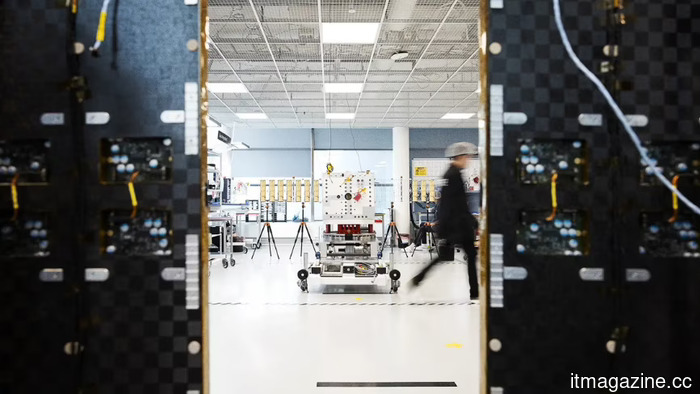 ICEYE reaches a €10 billion valuation following a €450 million fundraising round.
Finland's ICEYE secured €450 million in funding, spearheaded by General Atlantic, achieving a valuation of €10 billion, which marks a fourfold increase in just six months as countries hasten to acquire their own radar satellites.
ICEYE reaches a €10 billion valuation following a €450 million fundraising round.
Finland's ICEYE secured €450 million in funding, spearheaded by General Atlantic, achieving a valuation of €10 billion, which marks a fourfold increase in just six months as countries hasten to acquire their own radar satellites.
 Perplexity maintains its 2028 IPO strategy as OpenAI and Anthropic submit their filings.
Perplexity AI aims for an IPO in 2028, opting for a patient approach instead of rushing, while OpenAI and Anthropic both submit their filings confidentially. The CEO states that the timeline remains unchanged.
Perplexity maintains its 2028 IPO strategy as OpenAI and Anthropic submit their filings.
Perplexity AI aims for an IPO in 2028, opting for a patient approach instead of rushing, while OpenAI and Anthropic both submit their filings confidentially. The CEO states that the timeline remains unchanged.
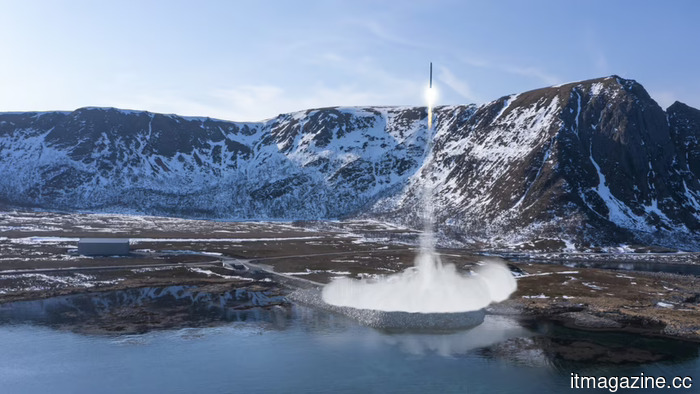 Isar Aerospace secures €270 million to expand its rocket manufacturing capabilities.
Germany's Isar Aerospace has secured €270 million to manufacture 40 rockets annually and establish a second launchpad, with a critical orbital launch opportunity set for 15 June.
Isar Aerospace secures €270 million to expand its rocket manufacturing capabilities.
Germany's Isar Aerospace has secured €270 million to manufacture 40 rockets annually and establish a second launchpad, with a critical orbital launch opportunity set for 15 June.
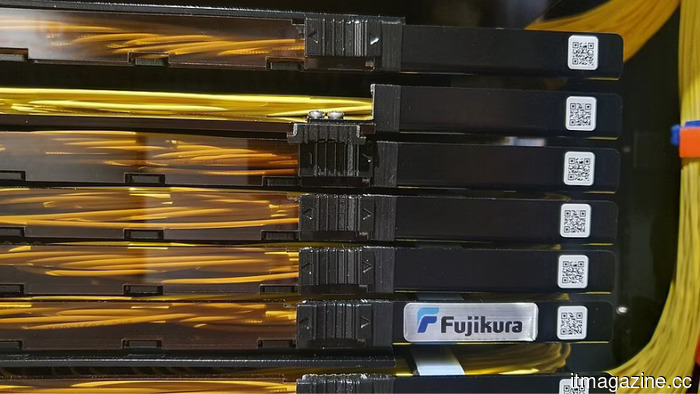 Fujikura increases prices for AI data center cables due to tightening supply.
Fujikura is increasing the prices of fibre-optic cables as almost all US hyperscalers place orders amid tight supply. While shares have fallen by 40%, the CEO assures that the company will surpass its projections.
Fujikura increases prices for AI data center cables due to tightening supply.
Fujikura is increasing the prices of fibre-optic cables as almost all US hyperscalers place orders amid tight supply. While shares have fallen by 40%, the CEO assures that the company will surpass its projections.
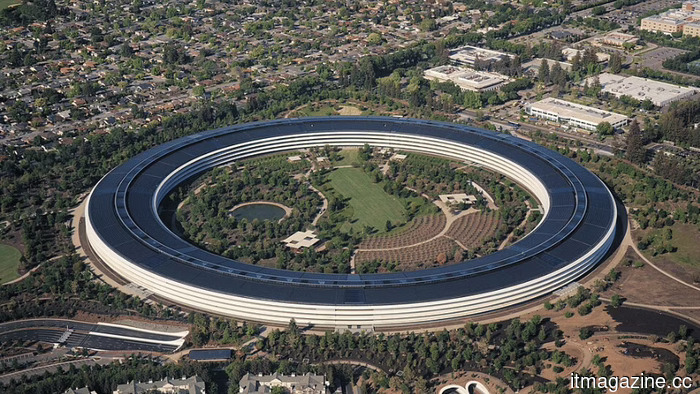 Apple revamps Siri using Google AI and Nvidia processors at WWDC.
Apple's updated Siri operates on a tailored Gemini model and Nvidia Blackwell GPUs. Federighi asserts that data is not stored at any time. Five new AI models utilize a three-layer privacy framework.
Apple revamps Siri using Google AI and Nvidia processors at WWDC.
Apple's updated Siri operates on a tailored Gemini model and Nvidia Blackwell GPUs. Federighi asserts that data is not stored at any time. Five new AI models utilize a three-layer privacy framework.
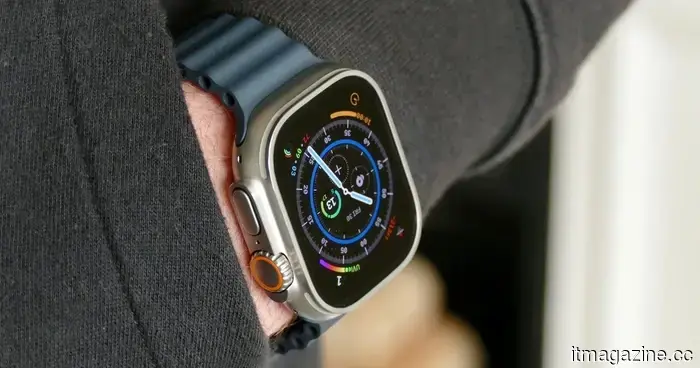 watchOS 27 eliminates support for many Apple Watch models, which is quite frustrating.
Apple announced at WWDC 2026 that watchOS 27 will not be compatible with the Apple Watch Series 8, the first-generation Apple Watch Ultra, or the Apple Watch SE 2. This update, scheduled for release this fall, represents the biggest single-cycle reduction in software support for Apple Watch.
watchOS 27 eliminates support for many Apple Watch models, which is quite frustrating.
Apple announced at WWDC 2026 that watchOS 27 will not be compatible with the Apple Watch Series 8, the first-generation Apple Watch Ultra, or the Apple Watch SE 2. This update, scheduled for release this fall, represents the biggest single-cycle reduction in software support for Apple Watch.
ICEYE achieves a €10 billion valuation following a €450 million fundraising round.
Finland's ICEYE secured €450 million in funding, led by General Atlantic, achieving a valuation of €10 billion, which is four times its value from six months ago, as governments accelerate efforts to acquire sovereign radar satellites.