
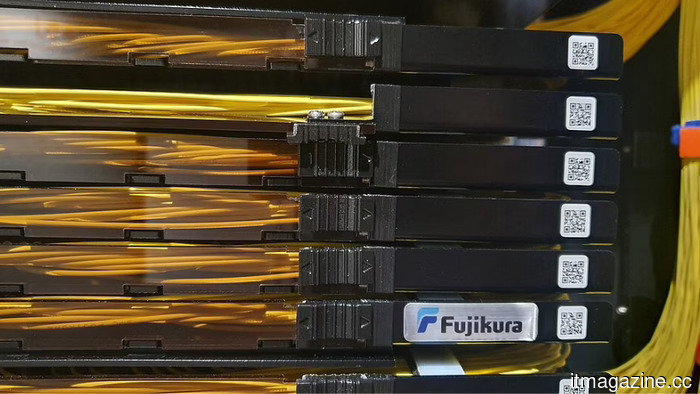
Fujikura increases prices for AI data centre cables due to tightening supply.
TL;DR: Fujikura is increasing prices for fibre-optic cables as nearly all US hyperscalers place orders amid tight supply. The CEO claims the company will surpass its forecasts, even though its shares have plummeted 40% since their peak in May.
Fujikura, a fibre-optic cable producer based in Tokyo, is raising prices on the cables that link servers in AI data centres. CEO Naoki Okada stated to Bloomberg that the firm is set to exceed its own predictions due to ongoing demand from nearly every significant US hyperscaler. "We provide a valuable product," Okada remarked. "We will raise prices a bit more."
Why cables are a limitation
AI data centres require significantly more fibre-optic cable than standard cloud facilities. The slender glass strands carry data through light pulses between GPUs, and the high volume of data generated during AI training and inference has turned cabling into a structural bottleneck, limiting how quickly new clusters can be launched.
Fujikura, together with Japan's Sumitomo Electric and Furukawa Electric, leads the high-end segment of this market. The supply crunch has granted them pricing power that few suppliers in the AI ecosystem possess.
The Meta and Nvidia indication
US competitor Corning sealed a $6 billion supply agreement with Meta and a separate $500 million stock deal with Nvidia. These agreements, announced in recent months, show that hyperscalers consider fibre-optic supply essential enough to secure years of capacity at premium rates.
Okada indicated that Fujikura is receiving orders from nearly all US hyperscalers. Some clients have already consented to higher prices for the company's key products, although Okada did not specify which clients or reveal the size of the price hikes.
The stock decline
Fujikura’s shares have fallen over 40% from a peak reached in May. This decline was prompted by annual and three-year profit forecasts that significantly missed analyst expectations, raising concerns about production capacity constraints, increasing competition, and supply chain issues.
Okada mentioned that the forecast was intentionally cautious and accounted for worst-case scenarios, including potential hydrogen shortages, which are necessary for manufacturing fibre-optic preforms, the glass rods used to create cables. "There is no way we will miss our annual forecast," he asserted.
The silent winners in the AI infrastructure supply chain
While chip manufacturers like Nvidia and memory firms like SK Hynix are the most apparent beneficiaries of the AI expansion, the physical layer—cables, connectors, cooling systems, and power distribution—has some of the tightest constraints.
Fujikura's ability to increase prices amid a 40% drop in its stock value tells a particular story: there is real demand, but the market doubts the company's capacity to scale operations quickly enough to realize it. If Okada's price increases and plans for optical component expansion succeed, "the results will be very positive," he said. The difference between that optimism and the stock price is where the opportunity lies.
Other articles
 Databricks is in discussions to secure funding that could value the company at as much as $175 billion.
Databricks is in negotiations to secure funding at a valuation of $165-175 billion, just four months following a $5 billion round at a $134 billion valuation. The CEO indicates an IPO is planned for next year. These discussions are in the preliminary stages, and the funding round has yet to be finalized.
Databricks is in discussions to secure funding that could value the company at as much as $175 billion.
Databricks is in negotiations to secure funding at a valuation of $165-175 billion, just four months following a $5 billion round at a $134 billion valuation. The CEO indicates an IPO is planned for next year. These discussions are in the preliminary stages, and the funding round has yet to be finalized.
 Apple revamps Siri using Google AI and Nvidia processors at WWDC.
Apple's updated Siri operates on a proprietary Gemini model along with Nvidia Blackwell GPUs. Federighi claims that data is not retained. Five new AI models employ a three-tier privacy framework.
Apple revamps Siri using Google AI and Nvidia processors at WWDC.
Apple's updated Siri operates on a proprietary Gemini model along with Nvidia Blackwell GPUs. Federighi claims that data is not retained. Five new AI models employ a three-tier privacy framework.
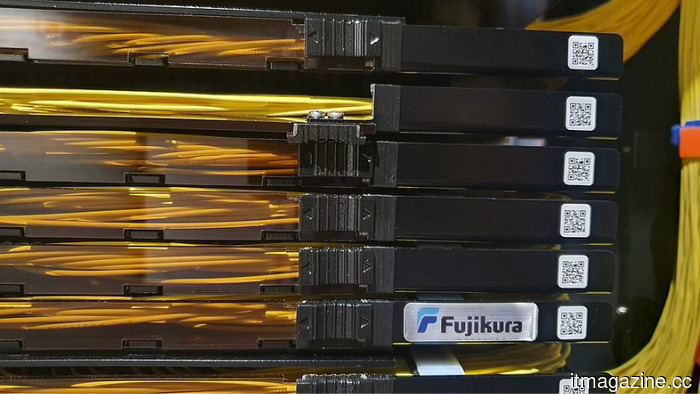 Fujikura increases prices for AI data center cables due to tightening supply.
Fujikura is increasing the prices of fibre-optic cables as almost all US hyperscalers are placing orders and supply remains limited. Although shares have fallen by 40%, the CEO asserts that the company will exceed its expectations.
Fujikura increases prices for AI data center cables due to tightening supply.
Fujikura is increasing the prices of fibre-optic cables as almost all US hyperscalers are placing orders and supply remains limited. Although shares have fallen by 40%, the CEO asserts that the company will exceed its expectations.
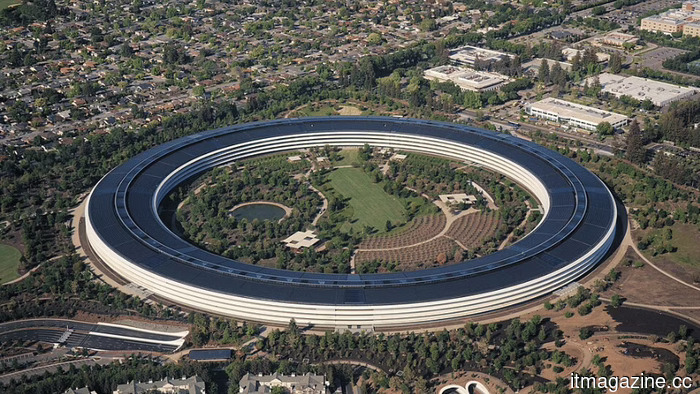 Apple revamps Siri using Google AI and Nvidia processors at WWDC.
Apple's updated Siri operates on a tailored Gemini model and Nvidia Blackwell GPUs. Federighi asserts that data is not stored at any time. Five new AI models utilize a three-layer privacy framework.
Apple revamps Siri using Google AI and Nvidia processors at WWDC.
Apple's updated Siri operates on a tailored Gemini model and Nvidia Blackwell GPUs. Federighi asserts that data is not stored at any time. Five new AI models utilize a three-layer privacy framework.
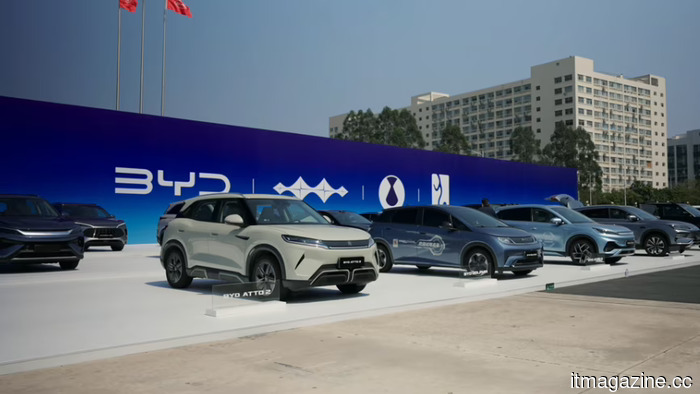 BYD claims that demand is twice its capacity, yet its sales figures suggest otherwise.
Stella Li of BYD stated that China aims for 80% electric vehicle penetration, as sales of gasoline cars fall by 39%, and the Pentagon includes the automaker on its 1260H military list.
BYD claims that demand is twice its capacity, yet its sales figures suggest otherwise.
Stella Li of BYD stated that China aims for 80% electric vehicle penetration, as sales of gasoline cars fall by 39%, and the Pentagon includes the automaker on its 1260H military list.
 Deliverance AI comes out of stealth mode with an annual recurring revenue of £6 million for sovereign AI.
UK startup Deliverance AI has emerged from stealth mode with an annual recurring revenue of £6 million, developing an 'agentic operating system' designed to manage governed AI within private, air-gapped settings.
Deliverance AI comes out of stealth mode with an annual recurring revenue of £6 million for sovereign AI.
UK startup Deliverance AI has emerged from stealth mode with an annual recurring revenue of £6 million, developing an 'agentic operating system' designed to manage governed AI within private, air-gapped settings.
Fujikura increases prices for AI data centre cables due to tightening supply.
Fujikura is increasing the prices of fibre-optic cables as nearly all US hyperscalers are placing orders amid a tight supply situation. Shares have declined by 40%, yet the CEO insists the company will surpass its projections.