

Deliverance AI emerges from stealth mode with an annual recurring revenue of £6 million, focusing on sovereign AI solutions.
Enterprise AI faces a stagnation issue, and the problem doesn’t lie with the models themselves. Companies have invested heavily in chips, private clouds, and pilot programs, only to see most of these initiatives halt before reaching full production. A London-based company named Deliverance AI believes it has identified the cause and has recently emerged from stealth mode to present a solution.
Founded less than a year ago, Deliverance AI claims to have achieved £6 million in annual recurring revenue, employed over 30 staff, and secured six enterprise customers within just three months of its founding. These figures are self-reported by the company and have not been independently verified, nor has Deliverance AI disclosed the names of these customers.
The launch coincided with London Tech Week, during which the UK government has been promoting a sovereign computing agenda supported by billions in private investment.
Deliverance AI offers what it refers to as an agentic operating system, which serves as a governed layer that manages AI agents within an organization’s own environment, facilitating task routing among various models, logging agent activities, and charging costs back to specific budget lines.
The intended audience includes governments, regulated sectors, and large enterprises—entities that handle the most sensitive information and must comply with numerous regulations.
“Enterprise AI cannot scale on mere trust,” stated Mick McNeil, the founder and CEO of the company. “Organizations with valuable data require AI that functions within their own environment, under their own controls, with clear governance regarding model usage, data flow, and decision-making processes.”
McNeil highlights a key difference between infrastructure and results. He argues that merely acquiring GPUs and cloud capacity does not equate to a functional AI system; the missing element is a place to operate agents, manage them, provide context, and ensure accountability.
His background gives him insight into the financial aspect; prior to establishing Deliverance AI, McNeil held senior positions at Microsoft, Northern Data Group, and Logicalis, focusing on cloud, high-performance computing, and AI.
The sovereignty argument
Deliverance AI emphasizes its jurisdictional stance. Being UK-founded and UK and EU-based, the company asserts that its platform can function in customer-controlled, on-premises, or fully air-gapped environments, as opposed to relying on US-managed infrastructure.
The primary concern it raises is exposure: utilizing AI through US-operated systems, the company contends, puts European data at risk from extraterritorial laws like the US CLOUD Act, which can compel American providers to share data regardless of its storage location.
This statement resonates amid a current European discourse. For the past year, Brussels and various national governments have been grappling with the EU's reliance on US cloud services, increasingly viewing it as a political risk than a simple technical challenge, prompting a surge of startups to present themselves as local alternatives to address Europe’s sovereignty dilemma.
Deliverance AI enters a competitive landscape that already features companies like Cosine, which has garnered support from British banks and defense firms advocating for a sovereign model. The term "sovereign" has sparked substantial debate within the industry, and not every product labeled as such effectively safeguards data from foreign access.
From pilots to production
Beneath its marketing approach, the product functions as an orchestration and governance layer. It delivers a runtime for agents, a mechanism for determining the best model based on performance, cost, risk, and governance, along with audit trails and cost attribution, and includes an embedded engineering team.
The routing capability also serves as a safeguard, ensuring customers are not chained to a single model, cloud, or vendor in a market that frequently re-prices.
The company claims that one customer instance reduced costs by nearly 75 percent, while also shortening task completion times. However, this is based on a single unnamed deployment and is self-reported, so it should be viewed as a claim rather than a verified benchmark.
The underlying issue it addresses is quite real: many enterprise AI pilot projects falter before reaching production, shifting expenditure rapidly towards AI-native, agentic solutions precisely because traditional per-seat software has ceased to be effective. Governance, rather than sheer capability, increasingly determines whether deployments succeed or fail.
Built on HPE and Nvidia
Deliverance AI is not independently creating the entire infrastructure. It reports that it operates on HPE Private Cloud AI, a private cloud system developed in partnership with Nvidia, and it claims this collaboration can implement governed agentic workflows within a customer’s environment in as little as four weeks.
On the computing front, the company has utilized Nvidia DGX systems and the smaller DGX Spark and is collaborating with Nvidia NemoClaw, the chipmaker's framework for managing autonomous agents under runtime controls, on workflows in private and regulated environments.
Both partners provided supportive statements. Anthony Hills, Nvidia’s regional director for enterprise and public sectors in the UK and Ireland, affirmed that the integration “provides a managed infrastructure designed for running governed agentic workflows within private and regulated environments.” James Brooks, HPE’s UKIMEA leader
Other articles
 BYD claims that demand is twice its capacity, yet its sales figures suggest otherwise.
Stella Li of BYD stated that China aims for 80% electric vehicle penetration, as sales of gasoline cars fall by 39%, and the Pentagon includes the automaker on its 1260H military list.
BYD claims that demand is twice its capacity, yet its sales figures suggest otherwise.
Stella Li of BYD stated that China aims for 80% electric vehicle penetration, as sales of gasoline cars fall by 39%, and the Pentagon includes the automaker on its 1260H military list.
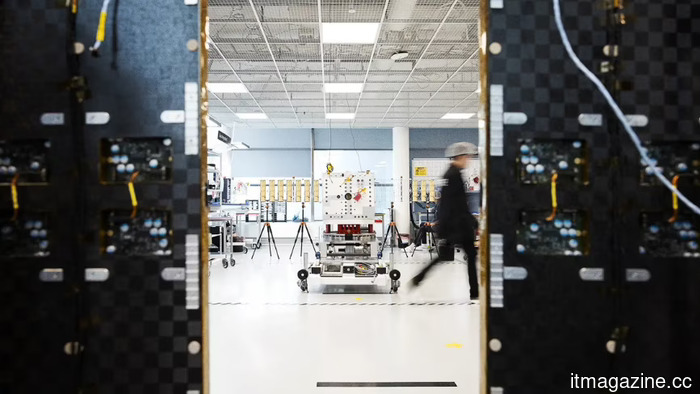 ICEYE reaches a €10 billion valuation following a €450 million fundraising round.
Finland's ICEYE secured €450 million in funding, spearheaded by General Atlantic, achieving a valuation of €10 billion, which marks a fourfold increase in just six months as countries hasten to acquire their own radar satellites.
ICEYE reaches a €10 billion valuation following a €450 million fundraising round.
Finland's ICEYE secured €450 million in funding, spearheaded by General Atlantic, achieving a valuation of €10 billion, which marks a fourfold increase in just six months as countries hasten to acquire their own radar satellites.
 Prince William highlights homelessness prevention at London Tech Week.
The Prince of Wales will lead a panel during London Tech Week alongside Salesforce, Bloomberg Philanthropies, and NatWest, focusing on the role of data and technology in preventing homelessness.
Prince William highlights homelessness prevention at London Tech Week.
The Prince of Wales will lead a panel during London Tech Week alongside Salesforce, Bloomberg Philanthropies, and NatWest, focusing on the role of data and technology in preventing homelessness.
 Perplexity maintains its plan for an IPO in 2028 as OpenAI and Anthropic submit their filings.
Perplexity AI aims for an IPO in 2028, opting for a measured approach instead of rushing, as both OpenAI and Anthropic submit their filings confidentially. The CEO indicates that the schedule remains unchanged.
Perplexity maintains its plan for an IPO in 2028 as OpenAI and Anthropic submit their filings.
Perplexity AI aims for an IPO in 2028, opting for a measured approach instead of rushing, as both OpenAI and Anthropic submit their filings confidentially. The CEO indicates that the schedule remains unchanged.
 China is creating a $295 billion plan for AI data centers aimed at excluding Nvidia.
China is creating a five-year plan worth approximately $295 billion to establish a national AI data center network, primarily utilizing 80% domestically developed technology, effectively excluding Nvidia and AMD.
China is creating a $295 billion plan for AI data centers aimed at excluding Nvidia.
China is creating a five-year plan worth approximately $295 billion to establish a national AI data center network, primarily utilizing 80% domestically developed technology, effectively excluding Nvidia and AMD.
 Databricks is in discussions to achieve a valuation of up to $175 billion.
Databricks is negotiating to secure funding at a valuation of $165-175 billion, just four months after raising $5 billion at a $134 billion valuation. The CEO indicates plans for an IPO next year. These discussions are in the early stages, and the funding round has not yet been finalized.
Databricks is in discussions to achieve a valuation of up to $175 billion.
Databricks is negotiating to secure funding at a valuation of $165-175 billion, just four months after raising $5 billion at a $134 billion valuation. The CEO indicates plans for an IPO next year. These discussions are in the early stages, and the funding round has not yet been finalized.
Deliverance AI emerges from stealth mode with an annual recurring revenue of £6 million, focusing on sovereign AI solutions.
UK startup Deliverance AI has emerged from stealth mode with an annual recurring revenue of £6 million, developing an 'agentic operating system' designed to manage governed AI in secure, air-gapped settings.