
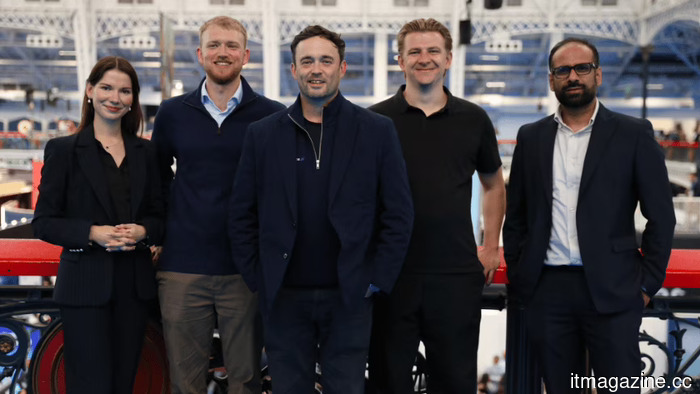
Deliverance AI comes out of stealth mode with an annual recurring revenue of £6 million for sovereign AI.
Enterprise AI is facing a stagnation issue, and the problem does not lie with the models themselves. Companies have invested heavily in chips, private clouds, and pilot projects, only to see many of these initiatives fail to reach production. A London-based company, Deliverance AI, believes it understands the cause and has recently emerged from stealth to offer a solution.
Established less than a year ago, Deliverance AI claims to have achieved £6 million in annual recurring revenue, hired over 30 employees, and onboarded six enterprise clients within three months of its founding. These figures are self-reported and not audited, and the company has not disclosed the names of any customers.
The timing of their launch coincided with London Tech Week, where the UK government has been advocating for a sovereign computing agenda supported by significant private investment.
Deliverance AI offers what it refers to as an agentic operating system, which is a managed layer running AI agents within an organization’s own environment. This system facilitates task routing among different models, logs agent activities, and allocates costs back to specific budget lines.
The target customers are primarily governments, regulated sectors, and large enterprises—entities that manage highly sensitive data and are accountable to numerous regulators.
"Enterprise AI cannot scale based on mere trust," stated Mick McNeil, the company's founder and CEO. "Organizations with the most valuable data require AI that functions within their own environment, under their own governance, clearly defining which models are utilized, the flow of data, and the decision-making processes."
McNeil emphasizes the difference between infrastructure and results. He argues that simply acquiring GPUs and cloud resources does not automatically create an effective AI system; the critical element is a platform for running agents, managing them, providing context, and ensuring accountability.
McNeil has extensive experience in this area, having held senior positions related to cloud computing, high-performance computing, and AI at Microsoft, Northern Data Group, and Logicalis prior to founding Deliverance AI.
The sovereignty argument
Deliverance AI’s core proposition is centered on jurisdiction. As a company founded in the UK and headquartered in the UK and EU, it claims its platform can operate within customer-controlled, on-premises, or entirely air-gapped environments, rather than on US-operated infrastructure.
The key selling point is privacy: the company contends that using US-controlled systems poses risks, as they leave European data susceptible to extraterritorial laws like the US CLOUD Act, which can require American providers to relinquish data regardless of its storage location.
This perspective is timely, as European institutions and national governments have grappled over the last year with the dependence on US cloud providers, which is increasingly viewed as a political risk rather than a purely technical issue. A wave of startups is positioning themselves as home-grown alternatives to tackle Europe’s sovereignty challenge.
Deliverance AI enters a competitive space that already includes companies like Cosine, which has garnered support from British banks and defense firms for a sovereign model. "Sovereign" has become a term of contention in the industry, and not all products bearing this label ensure data remains free from foreign access.
From pilots to production
Beneath the strategic positioning, Deliverance AI's product serves as an orchestration and governance layer, providing a runtime environment for agents, a model-routing feature that assigns tasks based on performance, cost, risk, and governance metrics, in addition to audit trails, cost attribution, and a dedicated engineering team.
The model-routing feature also serves as a safeguard, preventing customers from being locked into a single model, cloud provider, or vendor in a market that frequently changes pricing.
The company asserts that one of its customer implementations resulted in cost reductions of nearly 75% while also decreasing the time needed to complete tasks. However, this is based on a single unnamed deployment and represents a self-reported figure, so it should be interpreted as a claim rather than a verified standard.
The underlying issue they highlight is significant: many enterprise AI pilot projects stagnate before reaching production, with spending rapidly transitioning towards AI-native, agent-centric solutions as traditional per-seat software fails to meet expectations. The success or failure of deployments increasingly hinges on governance rather than raw capabilities.
Built on HPE and Nvidia
Deliverance AI isn't developing its technology independently. It claims to operate on HPE Private Cloud AI, a private cloud system co-developed with Nvidia, allowing for the establishment of governed agentic workflows within a customer's environment in four weeks.
In terms of computing resources, the company utilizes Nvidia DGX systems and the smaller DGX Spark, and is collaborating with Nvidia NemoClaw, the framework for managing autonomous agents within runtime controls, to facilitate workflows in private and regulated environments.
Both HPE and Nvidia provided supportive comments regarding the collaboration. Anthony Hills, Nvidia's regional director for the UK and Ireland's enterprise and public sector, stated that the partnership "offers a managed infrastructure tailored for executing governed agentic workflows within private and regulated environments." James Brooks, HPE’s UKIMEA hybrid
Other articles
 ICEYE achieves a €10 billion valuation following a €450 million fundraising.
ICEYE from Finland secured €450 million, with General Atlantic at the helm, achieving a valuation of €10 billion. This represents a fourfold increase in just six months as nations hasten to acquire sovereign radar satellite capabilities.
ICEYE achieves a €10 billion valuation following a €450 million fundraising.
ICEYE from Finland secured €450 million, with General Atlantic at the helm, achieving a valuation of €10 billion. This represents a fourfold increase in just six months as nations hasten to acquire sovereign radar satellite capabilities.
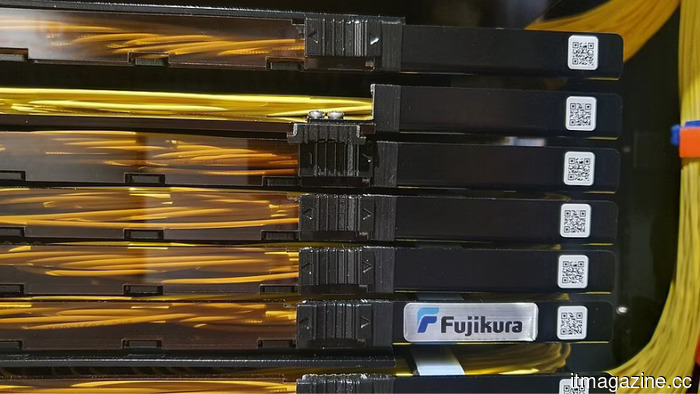 Fujikura increases prices for AI data center cables due to tightening supply.
Fujikura is increasing the prices of fibre-optic cables as almost all US hyperscalers place orders amid tight supply. While shares have fallen by 40%, the CEO assures that the company will surpass its projections.
Fujikura increases prices for AI data center cables due to tightening supply.
Fujikura is increasing the prices of fibre-optic cables as almost all US hyperscalers place orders amid tight supply. While shares have fallen by 40%, the CEO assures that the company will surpass its projections.
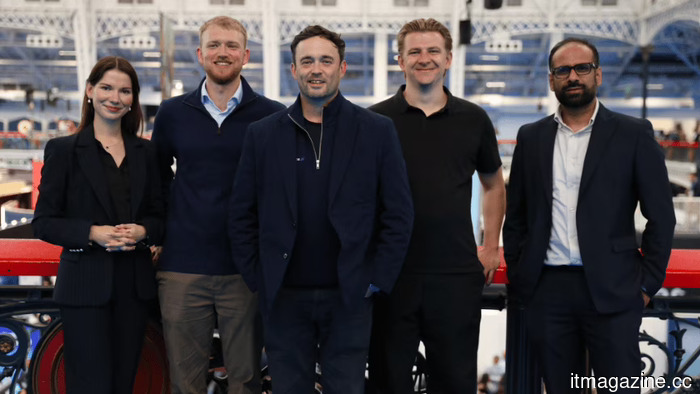 Deliverance AI emerges from stealth mode with an annual recurring revenue of £6 million, focusing on sovereign AI solutions.
UK startup Deliverance AI has emerged from stealth mode with an annual recurring revenue of £6 million, developing an 'agentic operating system' designed to manage governed AI in secure, air-gapped settings.
Deliverance AI emerges from stealth mode with an annual recurring revenue of £6 million, focusing on sovereign AI solutions.
UK startup Deliverance AI has emerged from stealth mode with an annual recurring revenue of £6 million, developing an 'agentic operating system' designed to manage governed AI in secure, air-gapped settings.
 From Campus to Commuting, the INIU Pocket Rocket P50 is Designed for a Mobile Lifestyle.
Graduation can signify a fresh start, yet battery anxiety tends to linger no matter where life takes you. Created for daily use, the INIU Pocket Rocket P50 is intended to alleviate concerns about staying powered up.
From Campus to Commuting, the INIU Pocket Rocket P50 is Designed for a Mobile Lifestyle.
Graduation can signify a fresh start, yet battery anxiety tends to linger no matter where life takes you. Created for daily use, the INIU Pocket Rocket P50 is intended to alleviate concerns about staying powered up.
 Isar Aerospace secures €270 million to expand its rocket manufacturing capabilities.
Germany's Isar Aerospace has secured €270 million to manufacture 40 rockets annually and establish a second launchpad, with a critical orbital launch opportunity set for 15 June.
Isar Aerospace secures €270 million to expand its rocket manufacturing capabilities.
Germany's Isar Aerospace has secured €270 million to manufacture 40 rockets annually and establish a second launchpad, with a critical orbital launch opportunity set for 15 June.
 Prince William highlights homelessness prevention at London Tech Week.
The Prince of Wales will lead a panel during London Tech Week alongside Salesforce, Bloomberg Philanthropies, and NatWest, focusing on the role of data and technology in preventing homelessness.
Prince William highlights homelessness prevention at London Tech Week.
The Prince of Wales will lead a panel during London Tech Week alongside Salesforce, Bloomberg Philanthropies, and NatWest, focusing on the role of data and technology in preventing homelessness.
Deliverance AI comes out of stealth mode with an annual recurring revenue of £6 million for sovereign AI.
UK startup Deliverance AI has emerged from stealth mode with an annual recurring revenue of £6 million, developing an 'agentic operating system' designed to manage governed AI within private, air-gapped settings.