
China is formulating a $295 billion plan for AI data centers to exclude Nvidia.
China aims to succeed in the AI competition using its own hardware. A recent strategy outlines its willingness to invest significantly and to eliminate American chips from its plans. According to Bloomberg, which cites informed sources, Beijing is preparing a plan to allocate approximately 2 trillion yuan ($295 billion) over the next five years to establish a national AI data center network.
This initiative, spearheaded by the influential National Development and Reform Commission, seeks to unify the country’s dispersed computing facilities into a cohesive, interconnected grid by 2028, primarily managed by state telecom giants China Mobile and China Telecom.
A key aspect of the plan is the sourcing of technology for these data centers. The blueprint stipulates that local suppliers, including Huawei, must supply at least 80 percent of the essential technology, including AI chips, thereby effectively excluding Nvidia and AMD. This echoes previous campaigns that fostered domestic champions like Huawei, with the current objective of replacing US technology throughout the AI sector and narrowing the gap with American research labs.
Funding for this initiative will mainly be obtained through sovereign debt, including long-term special government bonds, along with state capital for strategic industries, supplemented by bank loans and private investment. This construction effort is one part of a wider "Six Networks" program that encompasses water, power, and computing, and integrating the power grid could push the total investment beyond 5 trillion yuan.
“Elevating it to a national strategy ensures policy alignment and capital mobilization,” remarked Charlie Dai, a principal analyst at Forrester.
Despite its ambition, the financial figures are relatively modest when compared to the West. The $295 billion investment is spread over five years, while US companies, led by Meta and Microsoft, are expected to allocate about $725 billion for AI this year alone. Additionally, the Chinese amount does not account for private expenditures by firms like Alibaba and Tencent, and building data centers in China is generally less expensive.
The emphasis is less on the total amount and more on the coordinated effort: a state organizing debt, land, power, and chips to support a unified national grid.
The timing indicates a growing confidence in China’s own semiconductor capabilities. While Washington has relaxed restrictions, permitting Nvidia to sell its previous-generation H200 chips to Chinese buyers, shipments have yet to commence. In May, nine domestic AI chips from Huawei, Alibaba, Shanghai Biren, and Moore Threads passed a domestic security review, allowing them access to sensitive sectors.
Beijing is increasingly convinced it can bridge the gap independently. This aligns with a similar trend in the West, where initiatives in countries like Britain and various European states aim to reduce reliance on US technology, albeit from a different perspective: while Europe is concerned about dependence on America, China is striving to minimize its need for it.
While the plan is still in its early stages and subject to change, the direction of development is clear. The two largest economies in the world are working to establish separate AI supply chains, signaling the end of a unified global technology stack.
Other articles
 Isar Aerospace secures €270 million to expand its rocket manufacturing.
Germany's Isar Aerospace has secured €270 million to manufacture 40 rockets annually and to construct a second launchpad, with a crucial orbital launch window set to open on June 15.
Isar Aerospace secures €270 million to expand its rocket manufacturing.
Germany's Isar Aerospace has secured €270 million to manufacture 40 rockets annually and to construct a second launchpad, with a crucial orbital launch window set to open on June 15.
 Deliverance AI emerges from stealth mode with an annual recurring revenue of £6 million, focusing on sovereign AI solutions.
UK startup Deliverance AI has emerged from stealth mode with an annual recurring revenue of £6 million, developing an 'agentic operating system' designed to manage governed AI in secure, air-gapped settings.
Deliverance AI emerges from stealth mode with an annual recurring revenue of £6 million, focusing on sovereign AI solutions.
UK startup Deliverance AI has emerged from stealth mode with an annual recurring revenue of £6 million, developing an 'agentic operating system' designed to manage governed AI in secure, air-gapped settings.
 China is creating a $295 billion plan for AI data centers aimed at excluding Nvidia.
China is creating a five-year plan worth approximately $295 billion to establish a national AI data center network, primarily utilizing 80% domestically developed technology, effectively excluding Nvidia and AMD.
China is creating a $295 billion plan for AI data centers aimed at excluding Nvidia.
China is creating a five-year plan worth approximately $295 billion to establish a national AI data center network, primarily utilizing 80% domestically developed technology, effectively excluding Nvidia and AMD.
 Prince William highlights homelessness prevention at London Tech Week.
The Prince of Wales will lead a panel during London Tech Week alongside Salesforce, Bloomberg Philanthropies, and NatWest, focusing on the role of data and technology in preventing homelessness.
Prince William highlights homelessness prevention at London Tech Week.
The Prince of Wales will lead a panel during London Tech Week alongside Salesforce, Bloomberg Philanthropies, and NatWest, focusing on the role of data and technology in preventing homelessness.
 Prince William highlights homelessness prevention at London Tech Week.
The Prince of Wales will lead a panel at London Tech Week alongside Salesforce, Bloomberg Philanthropies, and NatWest, focusing on the role of data and technology in preventing homelessness.
Prince William highlights homelessness prevention at London Tech Week.
The Prince of Wales will lead a panel at London Tech Week alongside Salesforce, Bloomberg Philanthropies, and NatWest, focusing on the role of data and technology in preventing homelessness.
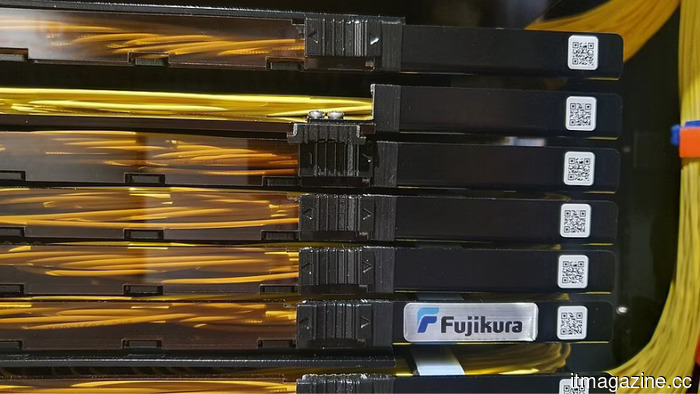 Fujikura increases prices for AI data center cables due to tightening supply.
Fujikura is increasing the prices of fibre-optic cables as almost all US hyperscalers place orders amid tight supply. While shares have fallen by 40%, the CEO assures that the company will surpass its projections.
Fujikura increases prices for AI data center cables due to tightening supply.
Fujikura is increasing the prices of fibre-optic cables as almost all US hyperscalers place orders amid tight supply. While shares have fallen by 40%, the CEO assures that the company will surpass its projections.
China is formulating a $295 billion plan for AI data centers to exclude Nvidia.
China is formulating a five-year plan worth approximately $295 billion to establish a national AI data-center network predominantly reliant on 80% domestic technology, sidelining Nvidia and AMD.