

China is creating a $295 billion plan for AI data centers aimed at excluding Nvidia.
China aims to secure victory in the AI domain through its own hardware. A new plan reveals the extent of its investment and efforts to exclude American chips. According to Bloomberg, which cites sources familiar with the initiative, Beijing is developing a strategy to allocate around 2 trillion yuan ($295 billion) over the next five years to establish a national network of AI data centers.
This initiative, spearheaded by the influential National Development and Reform Commission, seeks to integrate the country’s dispersed computing resources into a cohesive, interconnected grid by 2028, predominantly managed by state-owned telecom giants, China Mobile and China Telecom.
A key aspect of the plan pertains to the technology that these data centers will utilize. The blueprint stipulates that local providers, including Huawei, must supply at least 80 percent of the core technology, including AI chips, thereby effectively excluding Nvidia and AMD from the equation. This approach mirrors earlier campaigns that fostered national champions like Huawei, now focused on supplanting U.S. technology across the AI spectrum and narrowing the gap with American research institutions.
The funding will mainly come from sovereign debt, which includes ultra-long-term special government bonds, in addition to state funds designated for strategic sectors, supplemented by bank loans and private investment. This initiative forms part of a broader "Six Networks" program encompassing water, power, and computing, and integrating the power grid could raise the total investment beyond 5 trillion yuan.
“Elevating it to a national strategy ensures policy alignment and capital mobilization,” remarked Charlie Dai, a principal analyst at Forrester.
Despite the bold ambition, the financial figures, when compared to the West, are relatively modest. The $295 billion is spread over five years, while U.S. companies, led by Meta and Microsoft, are earmarking about $725 billion for AI in just this year. Additionally, the Chinese figure does not account for private investments from Alibaba and Tencent, and constructing Chinese data centers is less expensive.
The emphasis lies not merely on the total amount but on the coordination: a state consolidating debt, land, energy, and chips to support a unified national grid.
This development showcases China’s increasing confidence in its own semiconductor capabilities. Although Washington has relaxed restrictions, permitting Nvidia to sell its previous-generation H200 chips to Chinese customers, shipments have yet to commence. However, in May, nine domestic AI chips from companies such as Huawei, Alibaba, Shanghai Biren, and Moore Threads passed a security review, allowing them into sensitive industries.
China is growing increasingly convinced that it can independently meet its technological needs. This reflects a broader sovereignty trend gaining traction in the West, from Britain’s sovereign-AI initiatives to Europe’s efforts to reduce dependency on American cloud services. Yet while Europe is concerned about reliance on the U.S., China is striving to minimize its dependence. The initiative is still in its early stages, and specifics may evolve, but the direction is clear.
The two largest economies are separately attempting to isolate their own AI supply chains, marking the decline of a single global infrastructure.
Altri articoli
 Perplexity maintains its 2028 IPO strategy as OpenAI and Anthropic submit their filings.
Perplexity AI aims for an IPO in 2028, opting for a patient approach instead of rushing, while OpenAI and Anthropic both submit their filings confidentially. The CEO states that the timeline remains unchanged.
Perplexity maintains its 2028 IPO strategy as OpenAI and Anthropic submit their filings.
Perplexity AI aims for an IPO in 2028, opting for a patient approach instead of rushing, while OpenAI and Anthropic both submit their filings confidentially. The CEO states that the timeline remains unchanged.
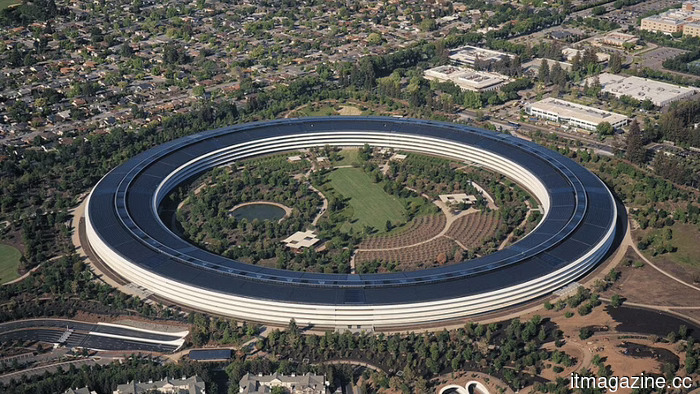 Apple revamps Siri using Google AI and Nvidia processors at WWDC.
Apple's updated Siri operates on a proprietary Gemini model along with Nvidia Blackwell GPUs. Federighi claims that data is not retained. Five new AI models employ a three-tier privacy framework.
Apple revamps Siri using Google AI and Nvidia processors at WWDC.
Apple's updated Siri operates on a proprietary Gemini model along with Nvidia Blackwell GPUs. Federighi claims that data is not retained. Five new AI models employ a three-tier privacy framework.
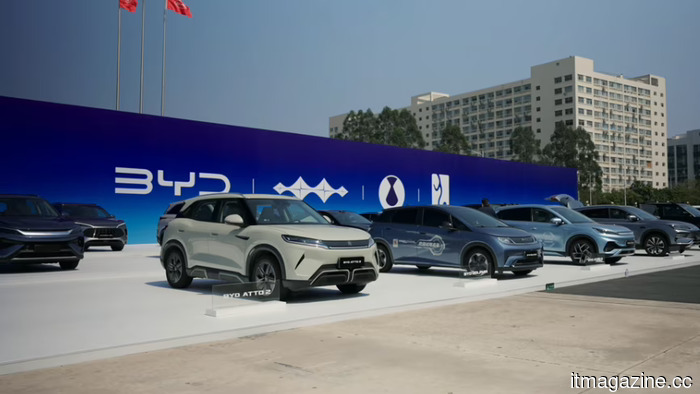 BYD claims that demand is twice its capacity, yet its sales figures present a different narrative.
Stella Li from BYD states that China aims for 80% electric vehicle penetration, as sales of gasoline cars drop by 39% and the Pentagon includes the automaker on its 1260H military list.
BYD claims that demand is twice its capacity, yet its sales figures present a different narrative.
Stella Li from BYD states that China aims for 80% electric vehicle penetration, as sales of gasoline cars drop by 39% and the Pentagon includes the automaker on its 1260H military list.
 Can a single app substitute for your VPN, ad blocker, and antivirus?
Bundled security platforms strive to make online safety easier, but this convenience often has its drawbacks. For many years, digital security solutions were offered individually. A VPN safeguarded internet traffic, antivirus programs scanned for harmful downloads, and ad blockers eliminated intrusive content. Over time, numerous individuals assembled a variety of tools and memberships across their devices. Recommended Videos This method [...]
Can a single app substitute for your VPN, ad blocker, and antivirus?
Bundled security platforms strive to make online safety easier, but this convenience often has its drawbacks. For many years, digital security solutions were offered individually. A VPN safeguarded internet traffic, antivirus programs scanned for harmful downloads, and ad blockers eliminated intrusive content. Over time, numerous individuals assembled a variety of tools and memberships across their devices. Recommended Videos This method [...]
 Prince William highlights homelessness prevention at London Tech Week.
The Prince of Wales will lead a panel during London Tech Week alongside Salesforce, Bloomberg Philanthropies, and NatWest, focusing on the use of data and technology to combat homelessness.
Prince William highlights homelessness prevention at London Tech Week.
The Prince of Wales will lead a panel during London Tech Week alongside Salesforce, Bloomberg Philanthropies, and NatWest, focusing on the use of data and technology to combat homelessness.
 China is preparing a $295 billion plan for AI data centers aimed at excluding Nvidia.
China is creating a five-year plan valued at around $295 billion to establish a national AI data center network that will rely on 80% domestic technology, effectively sidelining Nvidia and AMD.
China is preparing a $295 billion plan for AI data centers aimed at excluding Nvidia.
China is creating a five-year plan valued at around $295 billion to establish a national AI data center network that will rely on 80% domestic technology, effectively sidelining Nvidia and AMD.
China is creating a $295 billion plan for AI data centers aimed at excluding Nvidia.
China is creating a five-year plan worth approximately $295 billion to establish a national AI data center network, primarily utilizing 80% domestically developed technology, effectively excluding Nvidia and AMD.