

China develops a $295 billion AI data center strategy to exclude Nvidia.
China aims to secure a lead in the AI race using its own hardware. A new plan reveals the extent of its financial commitment and the lengths it will go to eliminate U.S. chips from its operations.
According to Bloomberg, which cites knowledgeable sources, Beijing is formulating a strategy to invest approximately 2 trillion yuan ($295 billion) over the next five years to develop a national network of AI data centers. This initiative, spearheaded by the influential National Development and Reform Commission, seeks to unify the country’s dispersed computing resources into a cohesive, interconnected system by 2028, primarily managed by major state telecom companies like China Mobile and China Telecom.
A key aspect of the plan is the technology that these data centers will utilize. The proposal stipulates that local suppliers, including Huawei, must supply at least 80 percent of the core technology, including AI chips, effectively sidelining Nvidia and AMD. This mirrors past efforts to nurture national champions like Huawei, now focused on supplanting U.S. technology across the AI spectrum and closing the gap with American laboratories.
Funding will primarily come from sovereign debt, including ultra-long-term specialized government bonds, as well as state investments in strategic industries. Additionally, bank loans and private capital will bolster these efforts. This initiative is part of a larger "Six Networks" program that encompasses water, power, and computing infrastructure, and integrating the power grid could elevate the total expenditure to over 5 trillion yuan. "Elevating it to a national strategy ensures policy alignment and capital mobilization," noted Charlie Dai, a principal analyst at Forrester.
Despite the ambition, the financial figures appear modest compared to the West. The $295 billion is allocated over five years; major U.S. companies like Meta and Microsoft are expected to allocate around $725 billion for AI this year alone. The Chinese figure also does not account for private investments from Alibaba and Tencent, and constructing data centers in China is generally less expensive.
The crux of the initiative lies not in the absolute amount, but in the orchestration: the state coordinating debt, land, energy, and chips towards a unified national infrastructure.
This move reflects China’s growing confidence in its domestically produced silicon. While Washington has relaxed restrictions, permitting Nvidia to sell its older-generation H200 chips to Chinese customers, actual shipments have yet to commence. In May, nine domestic AI chips from Huawei, Alibaba, Shanghai Biren, and Moore Threads passed a national security review, allowing their use in sensitive industries.
Beijing is increasingly convinced of its ability to meet its own needs. This sovereignty mindset is budding in the West, as seen in Britain’s push for sovereign AI and Europe’s effort to reduce dependency on U.S. cloud services, albeit with a twist: while Europe is concerned about reliance on America, China is building to minimize that dependence. Although the plan is still in its early stages and details may evolve, the overarching direction is clear.
The two largest economies are effectively isolating their AI supply chains, signaling the end of a unified global framework.
Other articles
 Deliverance AI emerges from stealth mode with an annual recurring revenue of £6 million for sovereign AI.
UK-based startup Deliverance AI has emerged from stealth mode, reporting an annual recurring revenue of £6 million and developing an "agentic operating system" designed to manage governed AI within private, air-gapped settings.
Deliverance AI emerges from stealth mode with an annual recurring revenue of £6 million for sovereign AI.
UK-based startup Deliverance AI has emerged from stealth mode, reporting an annual recurring revenue of £6 million and developing an "agentic operating system" designed to manage governed AI within private, air-gapped settings.
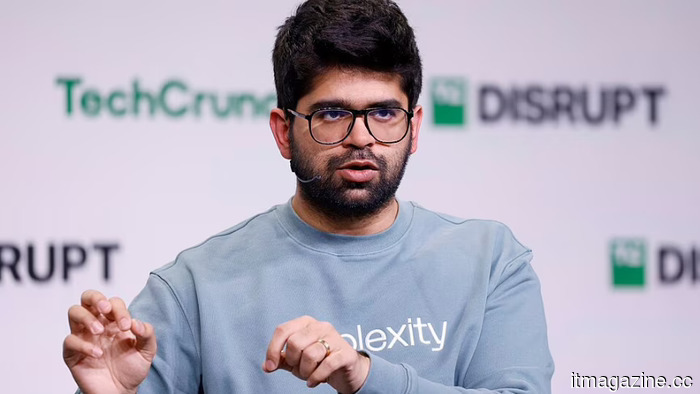 Perplexity maintains its plan for an IPO in 2028 as OpenAI and Anthropic submit their filings.
Perplexity AI aims for an IPO in 2028, opting for a measured approach instead of rushing, as both OpenAI and Anthropic submit their filings confidentially. The CEO indicates that the schedule remains unchanged.
Perplexity maintains its plan for an IPO in 2028 as OpenAI and Anthropic submit their filings.
Perplexity AI aims for an IPO in 2028, opting for a measured approach instead of rushing, as both OpenAI and Anthropic submit their filings confidentially. The CEO indicates that the schedule remains unchanged.
 Deliverance AI comes out of stealth mode with an annual recurring revenue of £6 million for sovereign AI.
UK startup Deliverance AI has emerged from stealth mode with an annual recurring revenue of £6 million, developing an 'agentic operating system' designed to manage governed AI within private, air-gapped settings.
Deliverance AI comes out of stealth mode with an annual recurring revenue of £6 million for sovereign AI.
UK startup Deliverance AI has emerged from stealth mode with an annual recurring revenue of £6 million, developing an 'agentic operating system' designed to manage governed AI within private, air-gapped settings.
 From College to Commuting, the INIU Pocket Rocket P50 Is Designed for a Mobile Lifestyle
Graduation might signify a fresh start, yet battery anxiety often lingers as we move on to new chapters in life. Crafted for daily use, the INIU Pocket Rocket P50 is intended to help you keep powered up, alleviating one concern from your mind.
From College to Commuting, the INIU Pocket Rocket P50 Is Designed for a Mobile Lifestyle
Graduation might signify a fresh start, yet battery anxiety often lingers as we move on to new chapters in life. Crafted for daily use, the INIU Pocket Rocket P50 is intended to help you keep powered up, alleviating one concern from your mind.
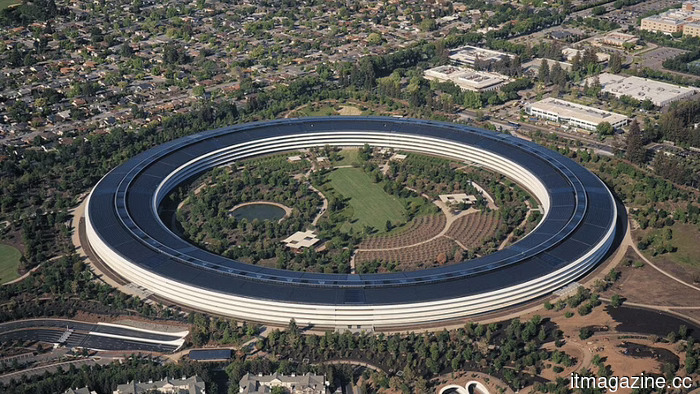 Apple revamps Siri using Google AI and Nvidia processors at WWDC.
Apple's updated Siri operates on a proprietary Gemini model along with Nvidia Blackwell GPUs. Federighi claims that data is not retained. Five new AI models employ a three-tier privacy framework.
Apple revamps Siri using Google AI and Nvidia processors at WWDC.
Apple's updated Siri operates on a proprietary Gemini model along with Nvidia Blackwell GPUs. Federighi claims that data is not retained. Five new AI models employ a three-tier privacy framework.
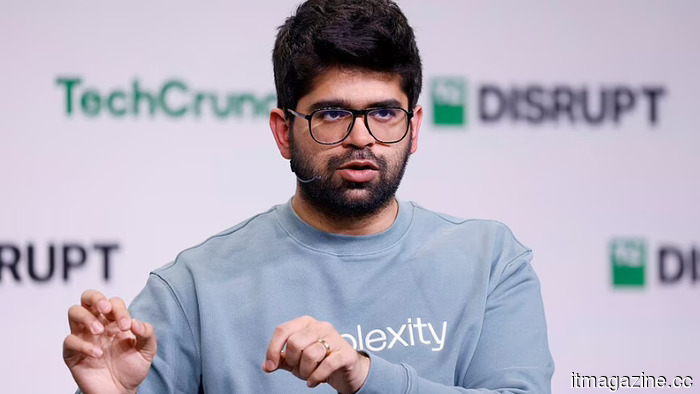 Perplexity maintains its 2028 IPO strategy as OpenAI and Anthropic submit their filings.
Perplexity AI aims for an IPO in 2028, opting for a patient approach instead of rushing, while OpenAI and Anthropic both submit their filings confidentially. The CEO states that the timeline remains unchanged.
Perplexity maintains its 2028 IPO strategy as OpenAI and Anthropic submit their filings.
Perplexity AI aims for an IPO in 2028, opting for a patient approach instead of rushing, while OpenAI and Anthropic both submit their filings confidentially. The CEO states that the timeline remains unchanged.
China develops a $295 billion AI data center strategy to exclude Nvidia.
China is formulating a five-year plan worth approximately $295 billion to establish a national AI data center network that will be predominantly powered by 80% domestic technology, thereby reducing reliance on Nvidia and AMD.