
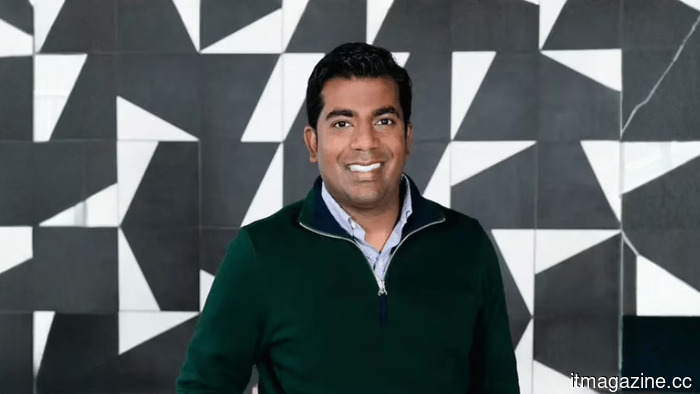
Beacon secures $225 million for its 'anti-PE' AI consolidation.
Private equity typically invests in companies, removes costs, and sells them for profit. In contrast, a two-year-old startup named Beacon has secured hundreds of millions to pursue nearly the opposite strategy, leveraging AI to facilitate its operations.
Beacon, an “AI-native” holding company based in Toronto and San Francisco, announced on Tuesday that it had raised $225 million in a Series C funding round led by General Catalyst and HarbourVest, with participation from Lightspeed, Intrepid Growth Partners, and BDT & MSD Partners' affiliated funds, among others. This funding boosts the company's total investment to over half a billion dollars in just two years.
The company has also strengthened its leadership team by appointing Mark Schaaf, former CTO of Instacart and Superhuman, as chief operating and product officer, and Goutham Buchi, who was recently CTO at AngelList, as chief technology officer.
Beacon's approach is distinctive. It targets small, profitable, often founder-led software companies that focus on the “everyday economy”—including youth sports leagues, campgrounds, manufacturers, and unions—typically generating less than $20 million in annual recurring revenue.
Beacon then reconstructs these businesses on a shared, AI-driven platform, utilizing an in-house “acceleration team” of engineers and product managers to automate back-office tasks like accounting and payroll, as well as to enhance the products themselves. Currently, it is acquiring a company approximately once a week, an increase from once every two weeks a year ago, and claims that this strategy has led to over 50 percent EBITDA growth across its portfolio in the past year.
“The cost of developing high-quality code is declining, which we see as a generational opportunity to update the technical foundations of underserved industries that make up more than 55 percent of US GDP,” stated Nilam Ganenthiran, Beacon’s founder and CEO, who is a former president of Instacart.
This idea—leveraging affordable AI-generated code to modernize outdated software—is the core of their business strategy. Ganenthiran even refers to Beacon as the “anti-private equity firm”: unlike traditional approaches that focus on cutting costs and exiting in five to seven years, Beacon intends to retain its companies indefinitely, reinvest, and keep founders involved through earn-outs.
This strategy is supported by the same transformation that has significantly reduced software development costs over the past two years.
Beacon represents a prominent example of a rapidly expanding venture concept: AI-enabled roll-ups, which are also attracting investments in fields like accounting and other professional services.
General Catalyst has invested heavily in the AI-vertical software landscape, recently supporting the HR platform Factorial through an outcomes-based investment approach, as this strategy gains traction in an environment where AI is redefining conventional SaaS and making pre-AI software firms more attractive for acquisition.
However, there are genuine concerns. The AI roll-up model is largely unproven over time, and it remains uncertain whether merging numerous small acquisitions will result in a sustainable entity or lead to unmanageable integration issues.
The growth and EBITDA statistics come directly from Beacon. Additionally, there’s a notable point: when the company secured its $250 million Series B funding at a $1 billion valuation last November, Ganenthiran had indicated that it would be the last round. Yet, just seven months later, it has raised a larger amount without disclosing a new valuation.
Nonetheless, the gamble is clear. Beacon is wagering that the unremarkable software used by youth soccer leagues and campgrounds will hold greater value once integrated with AI, believing that retaining such assets indefinitely is preferable to flipping them.
With over half a billion dollars in funding and a senior leadership team from Silicon Valley, it now has the means to determine if the “anti-private equity” approach is genuinely a new model or simply traditional private equity with improved marketing and advanced technology.
Other articles
 Thoma Bravo claims that the 'SaaSpocalypse' has come to an end.
Orlando Bravo of Thoma Bravo states that the 'SaaSpocalypse' has ended and that AI is providing a boost for software. However, the recovery is inconsistent, and the expenses associated with AI agents are increasing.
Thoma Bravo claims that the 'SaaSpocalypse' has come to an end.
Orlando Bravo of Thoma Bravo states that the 'SaaSpocalypse' has ended and that AI is providing a boost for software. However, the recovery is inconsistent, and the expenses associated with AI agents are increasing.
 Safari is finally addressing its extensions issue. Unlike Chrome, Apple will allow you to develop your own extensions.
Safari is introducing an AI-driven extension builder that enables users to articulate the browser tool they desire. This could assist Apple in addressing one of Safari's long-standing shortcomings without competing against Chrome's extensive add-on collection.
Apple outlines the AI models that support the updated Siri.
Apple's third-generation Foundation Models, developed in collaboration with Google, feature a 20 billion-parameter on-device model that operates from flash storage, along with three cloud-based models.
Safari is finally addressing its extensions issue. Unlike Chrome, Apple will allow you to develop your own extensions.
Safari is introducing an AI-driven extension builder that enables users to articulate the browser tool they desire. This could assist Apple in addressing one of Safari's long-standing shortcomings without competing against Chrome's extensive add-on collection.
Apple outlines the AI models that support the updated Siri.
Apple's third-generation Foundation Models, developed in collaboration with Google, feature a 20 billion-parameter on-device model that operates from flash storage, along with three cloud-based models.
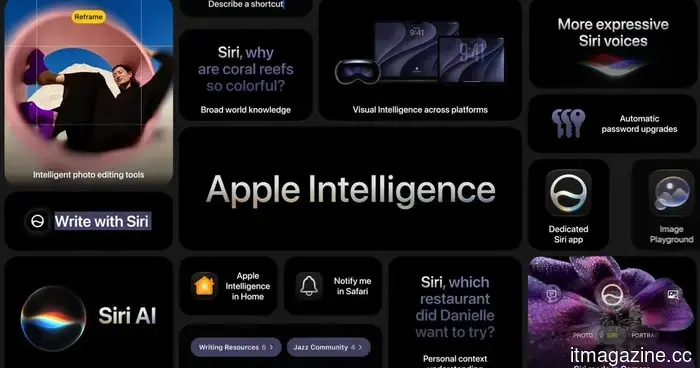 iOS 27 is full of features. Here's a rundown of the minor updates you might have overlooked.
iOS 27 includes numerous prominent features, but the smaller updates to Mail, iCloud Shared Albums, accessibility, Home, Maps, and network switching might be the ones that stand out to users the most.
iOS 27 is full of features. Here's a rundown of the minor updates you might have overlooked.
iOS 27 includes numerous prominent features, but the smaller updates to Mail, iCloud Shared Albums, accessibility, Home, Maps, and network switching might be the ones that stand out to users the most.
 Klarna introduces US savings accounts with a 3.28% interest rate through WebBank.
Klarna introduces its high-yield savings account in the US with a 3.28% APY, offered through the FDIC-insured WebBank. This rate is lower than those of Marcus (3.4%) and SoFi (3.8%). Specifics regarding deposits have not been revealed.
Klarna introduces US savings accounts with a 3.28% interest rate through WebBank.
Klarna introduces its high-yield savings account in the US with a 3.28% APY, offered through the FDIC-insured WebBank. This rate is lower than those of Marcus (3.4%) and SoFi (3.8%). Specifics regarding deposits have not been revealed.
 Anthropic broadens access to Mythos even after labeling it as perilous.
Anthropic states that Mythos is too risky for public distribution, yet granted access to 150 additional organizations. Only 14% of over 10,000 identified critical vulnerabilities have been resolved. The claims remain unverified.
Anthropic broadens access to Mythos even after labeling it as perilous.
Anthropic states that Mythos is too risky for public distribution, yet granted access to 150 additional organizations. Only 14% of over 10,000 identified critical vulnerabilities have been resolved. The claims remain unverified.
Beacon secures $225 million for its 'anti-PE' AI consolidation.
Beacon secured $225 million in a Series C funding round led by General Catalyst to purchase 'Main Street' software companies and enhance them with AI, now acquiring approximately one each week.