

As Apple advances AI in its software, the RAM crisis has caught up, making your devices seem outdated.
iOS 27 indicates the direction of Apple's AI strategy, revealing why devices with 8GB are beginning to fall behind.
Apple's upcoming significant AI distinction appears to be less about software limitations and more related to memory requirements. The specifications for iOS 27's most advanced on-device AI model imply that certain devices designed for Apple Intelligence won't be able to run the most powerful version locally.
This distinction places the iPhone 17 Pro and iPhone Air in a separate category compared to older hardware that is compatible with Apple Intelligence. Apple has conditioned consumers to anticipate long-lasting devices, but the emergence of AI is making hardware specifications increasingly significant, particularly for those who have previously viewed RAM as an insignificant detail.
Understanding the significance of RAM
The primary factor at play is memory. For the latest on-device AI model in iOS 27, a minimum of 12GB of RAM is required on compatible iPads and Macs, with the iPhone 17 Pro and iPhone Air specifically mentioned as supporting iPhone functions.
This situation leaves many existing Apple Intelligence devices in a challenging position. An 8GB device may still benefit from numerous AI features, but it could miss out on the most robust local model.
For users, the equation for upgrades is shifting rapidly. While processor speed remains relevant, RAM is increasingly becoming a critical specification influencing whether a device is equipped for Apple's forthcoming AI developments.
Implications of local AI processing
A device may be compatible with Apple Intelligence yet lack access to the optimal on-device model. This discrepancy affects the overall experience since local processing is associated with the performance, privacy, and hardware-centric experience that Apple promotes in relation to AI.
Private Cloud Compute allows Apple to support a wider range of devices without requiring all tasks to run on the device itself. However, this results in a notable distinction between what can be handled by your device and what relies on Apple’s servers for processing.
This is where devices with 8GB of RAM begin to seem outdated, even if they remain functional. They may not become obsolete overnight, but they might stop being seen as the most reliable choice for future enhancements from Apple.
The importance of memory in your next upgrade
The practical takeaway is clear: if Apple's AI direction is important to you, RAM should be a primary consideration.
View memory as a long-term AI specification rather than merely a multitasking feature. This means evaluating RAM alongside the chip generation, particularly for iPads and Macs, and keeping an eye out for whether more iPhones default to configurations beyond 8GB.
The next set of devices Apple introduces with increased memory will provide significant insight into the future of AI on iPhone, iPad, and Mac. Currently, support for Apple Intelligence alone does not paint the complete picture.







Other articles
 Smartphones are being held responsible for decreasing birth rates, with research emphasizing the influence of the iPhone.
Two recent studies suggest that the introduction of smartphones, starting with the launch of the iPhone in 2007, has played a major role in the decline of birth rates both in the US and around the world.
Smartphones are being held responsible for decreasing birth rates, with research emphasizing the influence of the iPhone.
Two recent studies suggest that the introduction of smartphones, starting with the launch of the iPhone in 2007, has played a major role in the decline of birth rates both in the US and around the world.
 Google AI Plus is now available for $4.99 per month and offers double the storage.
Google is reducing the price of its AI Plus subscription from $7.99 to $4.99 per month and increasing the cloud storage from 200GB to 400GB.
Google AI Plus is now available for $4.99 per month and offers double the storage.
Google is reducing the price of its AI Plus subscription from $7.99 to $4.99 per month and increasing the cloud storage from 200GB to 400GB.
 The film organization in the UK is preserving internet memes and viral videos. Among them is "Charlie bit my finger."
The British Film Institute is conserving 430 viral videos and memes, such as Charlie bit my finger, Badgers, and the livestream featuring Liz Truss and a lettuce.
The film organization in the UK is preserving internet memes and viral videos. Among them is "Charlie bit my finger."
The British Film Institute is conserving 430 viral videos and memes, such as Charlie bit my finger, Badgers, and the livestream featuring Liz Truss and a lettuce.
 France's official messaging service Tchap suffers from an account breach.
France's government messaging platform Tchap was compromised through a stolen account. Authorities state that only public channels were affected, while a hacker alleges that 73,000 accounts were involved.
France's official messaging service Tchap suffers from an account breach.
France's government messaging platform Tchap was compromised through a stolen account. Authorities state that only public channels were affected, while a hacker alleges that 73,000 accounts were involved.
 As Apple advances its software with AI, the RAM shortage has caught up, leaving your devices feeling outdated.
Apple's iOS 27 AI requirements indicate that RAM is increasingly becoming the new barrier for upgrades. While devices with 8GB of RAM are still supported, they are not as equipped to handle Apple's most advanced on-device AI functionalities.
As Apple advances its software with AI, the RAM shortage has caught up, leaving your devices feeling outdated.
Apple's iOS 27 AI requirements indicate that RAM is increasingly becoming the new barrier for upgrades. While devices with 8GB of RAM are still supported, they are not as equipped to handle Apple's most advanced on-device AI functionalities.
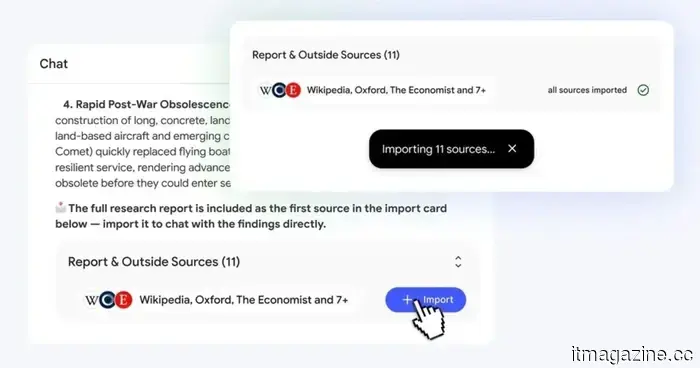 NotebookLM now has the capability to write code, create spreadsheets, and search for sources on your behalf.
Google has enhanced NotebookLM by integrating Gemini 3.5, a cloud-based environment for executing code, and has increased support for file output.
NotebookLM now has the capability to write code, create spreadsheets, and search for sources on your behalf.
Google has enhanced NotebookLM by integrating Gemini 3.5, a cloud-based environment for executing code, and has increased support for file output.
As Apple advances AI in its software, the RAM crisis has caught up, making your devices seem outdated.
According to Apple’s iOS 27 AI requirements, RAM appears to be the new barrier for upgrades. While devices with 8GB of RAM are still supported, they are not as equipped to handle Apple's most advanced on-device AI functionalities.