
Apple revamps Siri using Google AI and Nvidia processors at WWDC.
**TL;DR** Apple has developed a new version of Siri based on a custom 1.2 trillion-parameter Gemini model, utilizing Nvidia Blackwell GPUs in Google Cloud. Federighi asserts that requests are not stored. The company presented five new AI models along with a three-layer privacy architecture.
Apple's most significant AI update announced at WWDC 2026 was the introduction of an architecture rather than a feature. The revamped Siri operates on a custom-built 1.2 trillion-parameter model derived from Google’s Gemini technology, hosted on Google Cloud infrastructure powered by Nvidia Blackwell B200 GPUs. For a company that prioritizes privacy, relying on a competing cloud provider for AI processing demands a high level of trust engineering.
The three-tiered approach
Siri requests are now directed through three distinct levels. Basic tasks are processed on-device using Apple’s models. Requests that are moderately complex are sent to Apple’s Private Cloud Compute servers. The most complex reasoning tasks are handled by Google Cloud. At each level, Apple claims that queries are anonymized and tokenized, ensuring that neither Apple employees nor Google can associate requests with individual users.
Federighi's statement
At a WWDC media event, software chief Craig Federighi stated, “We do not utilize any models that Google offers to its clients. Your requests remain entirely private. They are never stored and are inaccessible to anyone.”
Reports suggest that the agreement with Google prevents the company from using Apple user data to train future models. Nvidia’s confidential computing capability encrypts data during processing on Blackwell GPUs, providing an additional layer of security beyond the contractual agreement. There has yet to be an independent audit of the Google Cloud aspect, and the clauses preventing training could potentially be revised in future agreements.
The five new models
Apple introduced the third generation of its Apple Foundation Models (AFM), consisting of five models derived from Gemini: AFM Core, Core Advanced, Cloud, Cloud Pro, and Cloud Image. The most advanced, AFM Cloud Pro, provides performance that is “comparable” to Google’s leading Gemini models, according to AI VP Amar Subramanya, although this claim has not been independently verified. All five models are specifically designed for Apple Silicon, trained with proprietary data and reinforcement learning techniques. The on-device models perform basic functions without any data leaving the user's device.
The awkwardness of the situation
Just a year earlier, Federighi and marketing chief Greg Joswiak rejected the notion of a “bolted-on chatbot” during WWDC 2025. Now, Siri functions as a conversational chatbot. When asked about the change, Federighi remarked that “We consider Siri not as a standalone chatbot, but as an inherent conversational tool used in real-time.”
Recently, Apple settled a $250 million class action lawsuit regarding the marketing of AI features in 2024 that were not fully developed by the time of the iPhone 16 launch. The company admitted through Siri engineering lead Mike Rockwell that prior efforts to improve the assistant “did not meet Apple’s standards.”
The issue of reliance on Google
The agreement with Google is estimated to be worth $1 billion annually. It allows Apple to access cutting-edge AI technologies without developing them independently, but it also establishes a dependency on a firm that is both Apple’s largest competitor in mobile operating systems and its primary source of search revenue.
For users, the pressing question is whether Apple’s privacy framework is robust enough to handle the combination of Google models, Nvidia hardware, and cloud processing. For investors, the important query is whether Apple’s late entry into AI can regain lost ground while attempting to build everything internally. WWDC 2026 serves as Apple’s response to both concerns, with September — when the features will be available — being the time for users to determine their trust in the system.
Otros artículos
 Fujikura increases prices for AI data center cables due to tightening supply.
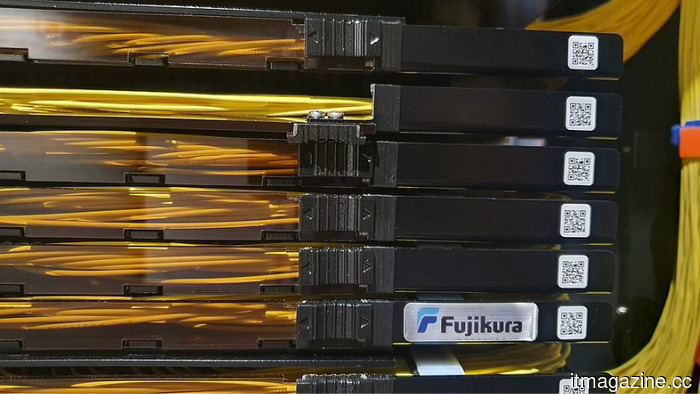
Fujikura is increasing the prices of fibre-optic cables as almost all US hyperscalers are placing orders and supply remains limited. Although shares have fallen by 40%, the CEO asserts that the company will exceed its expectations.
Fujikura increases prices for AI data center cables due to tightening supply.
Fujikura is increasing the prices of fibre-optic cables as almost all US hyperscalers are placing orders and supply remains limited. Although shares have fallen by 40%, the CEO asserts that the company will exceed its expectations.
 Databricks is engaged in discussions to achieve a valuation of up to $175 billion.
Databricks is in discussions to raise funds at a valuation of $165-175 billion, just four months following a $5 billion funding round at a $134 billion valuation. The CEO indicates an IPO is anticipated next year. These discussions are still in the preliminary stages and the funding round has not yet been finalized.
Databricks is engaged in discussions to achieve a valuation of up to $175 billion.
Databricks is in discussions to raise funds at a valuation of $165-175 billion, just four months following a $5 billion funding round at a $134 billion valuation. The CEO indicates an IPO is anticipated next year. These discussions are still in the preliminary stages and the funding round has not yet been finalized.
 BYD claims that demand is twice its capacity, yet its sales figures present a different narrative.
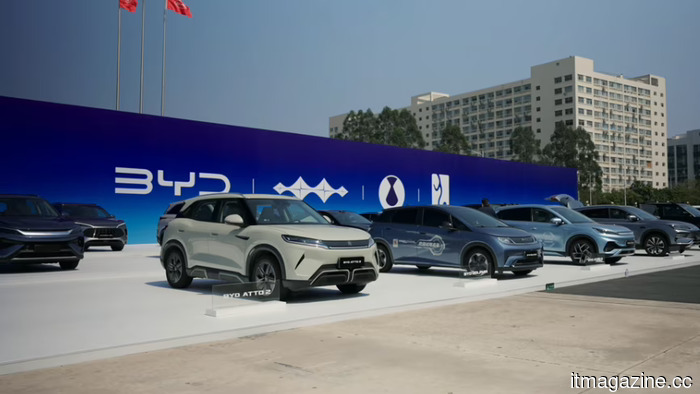
Stella Li from BYD states that China aims for 80% electric vehicle penetration, as sales of gasoline cars drop by 39% and the Pentagon includes the automaker on its 1260H military list.
BYD claims that demand is twice its capacity, yet its sales figures present a different narrative.
Stella Li from BYD states that China aims for 80% electric vehicle penetration, as sales of gasoline cars drop by 39% and the Pentagon includes the automaker on its 1260H military list.
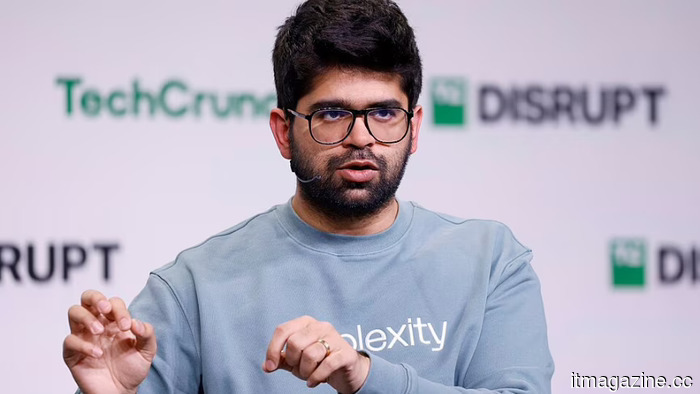 Perplexity maintains its plan for an IPO in 2028 as OpenAI and Anthropic submit their filings.
Perplexity AI aims for an IPO in 2028, opting for a measured approach instead of rushing, as both OpenAI and Anthropic submit their filings confidentially. The CEO indicates that the schedule remains unchanged.
Perplexity maintains its plan for an IPO in 2028 as OpenAI and Anthropic submit their filings.
Perplexity AI aims for an IPO in 2028, opting for a measured approach instead of rushing, as both OpenAI and Anthropic submit their filings confidentially. The CEO indicates that the schedule remains unchanged.
 Prince William highlights homelessness prevention at London Tech Week.
The Prince of Wales will lead a panel during London Tech Week alongside Salesforce, Bloomberg Philanthropies, and NatWest, focusing on the use of data and technology to combat homelessness.
Prince William highlights homelessness prevention at London Tech Week.
The Prince of Wales will lead a panel during London Tech Week alongside Salesforce, Bloomberg Philanthropies, and NatWest, focusing on the use of data and technology to combat homelessness.
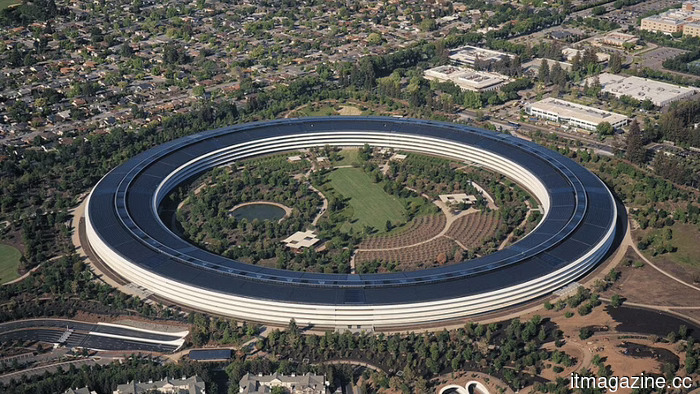 Apple revamps Siri using Google AI and Nvidia processors at WWDC.
Apple's updated Siri operates on a proprietary Gemini model along with Nvidia Blackwell GPUs. Federighi claims that data is not retained. Five new AI models employ a three-tier privacy framework.
Apple revamps Siri using Google AI and Nvidia processors at WWDC.
Apple's updated Siri operates on a proprietary Gemini model along with Nvidia Blackwell GPUs. Federighi claims that data is not retained. Five new AI models employ a three-tier privacy framework.
Apple revamps Siri using Google AI and Nvidia processors at WWDC.
Apple's updated Siri operates on a tailored Gemini model and Nvidia Blackwell GPUs. Federighi asserts that data is not stored at any time. Five new AI models utilize a three-layer privacy framework.