
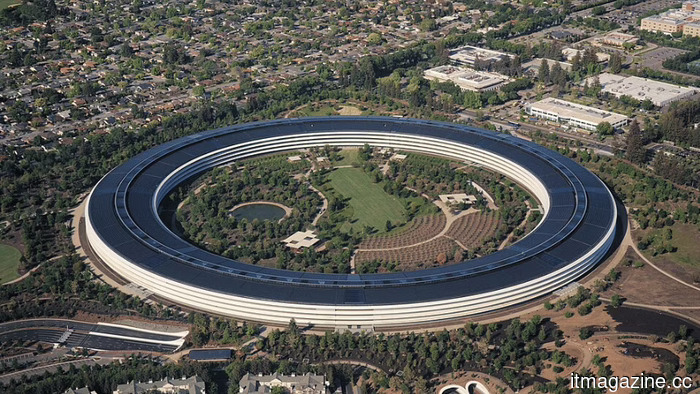
Apple reengineers Siri using Google AI and Nvidia processors at WWDC.
**TL;DR** Apple has rebuilt Siri using a custom 1.2 trillion-parameter Gemini model hosted on Nvidia Blackwell GPUs in Google Cloud. Federighi states that requests are never stored. The company introduced five new AI models and a three-tier privacy system.
At WWDC 2026, Apple’s most significant announcement regarding AI was not about a new feature, but rather an architecture shift. The revamped Siri operates on a specially designed 1.2 trillion-parameter model based on Google’s Gemini technology, hosted on Google Cloud's infrastructure utilizing Nvidia Blackwell B200 GPUs. For a company that prioritizes privacy, relying on its main competitor's cloud for AI processing involves a significant level of trust.
**The Three-Tier System**
Apple has implemented a three-layer system for routing Siri queries. Simple tasks are processed locally on the device using Apple’s models, while moderately complex requests are sent to Apple’s Private Cloud Compute servers. The most demanding tasks are directed to Google Cloud. Apple ensures that at every level, queries are anonymized and tokenized, preventing either Apple or Google from associating requests with individual users.
**What Federighi Said**
Craig Federighi, Apple’s software chief, emphasized at a WWDC media event, “We use none of the models that Google deploys to its customers. Your requests are completely private to you. They’re never stored. They’re never accessible to anyone.” The agreement with Google reportedly prohibits them from using Apple user data for training future models. Additionally, Nvidia’s confidential computing feature encrypts data during processing on the Blackwell GPUs, providing an extra layer of security on top of the contractual restrictions. There has yet to be an independent audit of the Google Cloud tier, and contractual terms regarding training can be renegotiated in the future.
**The Five New Models**
Apple has launched the third generation of its Apple Foundation Models (AFM), which includes five models derived from Gemini: AFM Core, Core Advanced, Cloud, Cloud Pro, and Cloud Image. The most robust, AFM Cloud Pro, is said to achieve quality comparable to Google’s leading Gemini models, although independent benchmarks have not verified this claim. All five models are tailored for Apple Silicon, trained using proprietary data and reinforcement learning techniques. The on-device models are capable of managing basic tasks without transmitting any data outside the device.
**Why This is Awkward**
Just a year prior, Federighi and marketing executive Greg Joswiak dismissed the concept of a "bolted-on chatbot" at WWDC 2025. Now, Siri has evolved into a conversational chatbot. When asked about the change, Federighi explained, “We see Siri not as a separate chatbot, but rather as an integral but conversational tool that you use in the moment.” Apple also resolved a $250 million class action lawsuit last month regarding the marketing of AI features in 2024 that were not operational at the launch of the iPhone 16. Siri engineering lead Mike Rockwell acknowledged that prior efforts to enhance the assistant "didn’t meet Apple’s standards."
**The Google Dependency Question**
The arrangement with Google is reportedly valued at about $1 billion annually. It allows Apple to access top-tier AI technology without developing it independently, but it also creates reliance on Google, which is both Apple's main competitor in mobile operating systems and its largest source of search revenue. Users may wonder if Apple’s privacy architecture can withstand the integration of Google models, Nvidia hardware, and cloud processing. Investors are questioning whether Apple’s late entry into the AI space can regain lost ground from its in-house development efforts. WWDC 2026 serves as Apple’s response to these concerns, while users will have the opportunity to evaluate it in September when the features are released.
Altri articoli
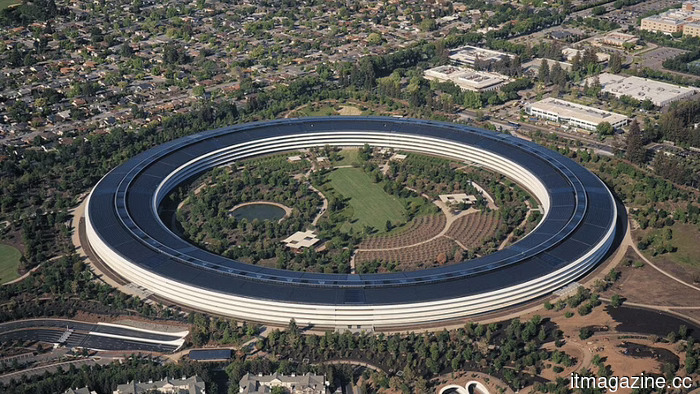 Apple revamps Siri using Google AI and Nvidia processors at WWDC.
Apple's updated Siri operates on a proprietary Gemini model along with Nvidia Blackwell GPUs. Federighi claims that data is not retained. Five new AI models employ a three-tier privacy framework.
Apple revamps Siri using Google AI and Nvidia processors at WWDC.
Apple's updated Siri operates on a proprietary Gemini model along with Nvidia Blackwell GPUs. Federighi claims that data is not retained. Five new AI models employ a three-tier privacy framework.
 China is formulating a $295 billion plan for AI data centers to exclude Nvidia.
China is formulating a five-year plan worth approximately $295 billion to establish a national AI data-center network predominantly reliant on 80% domestic technology, sidelining Nvidia and AMD.
China is formulating a $295 billion plan for AI data centers to exclude Nvidia.
China is formulating a five-year plan worth approximately $295 billion to establish a national AI data-center network predominantly reliant on 80% domestic technology, sidelining Nvidia and AMD.
 Isar Aerospace secures €270 million to expand its rocket manufacturing.
Germany's Isar Aerospace has secured €270 million to manufacture 40 rockets annually and develop a second launchpad, with a crucial orbital launch opportunity commencing on 15 June.
Isar Aerospace secures €270 million to expand its rocket manufacturing.
Germany's Isar Aerospace has secured €270 million to manufacture 40 rockets annually and develop a second launchpad, with a crucial orbital launch opportunity commencing on 15 June.
 Databricks is engaged in discussions to achieve a valuation of up to $175 billion.
Databricks is in discussions to raise funds at a valuation of $165-175 billion, just four months following a $5 billion funding round at a $134 billion valuation. The CEO indicates an IPO is anticipated next year. These discussions are still in the preliminary stages and the funding round has not yet been finalized.
Databricks is engaged in discussions to achieve a valuation of up to $175 billion.
Databricks is in discussions to raise funds at a valuation of $165-175 billion, just four months following a $5 billion funding round at a $134 billion valuation. The CEO indicates an IPO is anticipated next year. These discussions are still in the preliminary stages and the funding round has not yet been finalized.
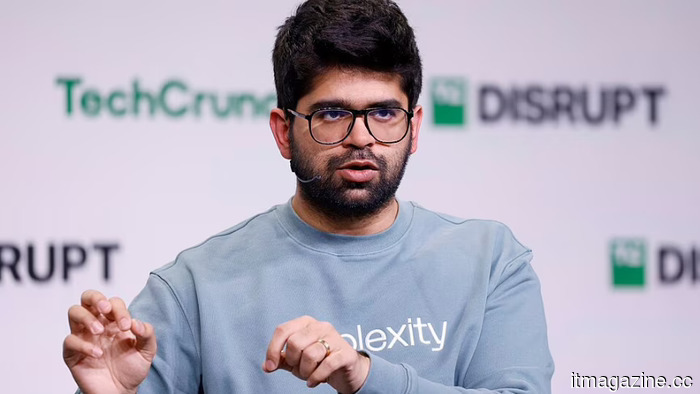 Perplexity maintains its plan for an IPO in 2028 as OpenAI and Anthropic submit their filings.
Perplexity AI aims for an IPO in 2028, opting for a measured approach instead of rushing, as both OpenAI and Anthropic submit their filings confidentially. The CEO indicates that the schedule remains unchanged.
Perplexity maintains its plan for an IPO in 2028 as OpenAI and Anthropic submit their filings.
Perplexity AI aims for an IPO in 2028, opting for a measured approach instead of rushing, as both OpenAI and Anthropic submit their filings confidentially. The CEO indicates that the schedule remains unchanged.
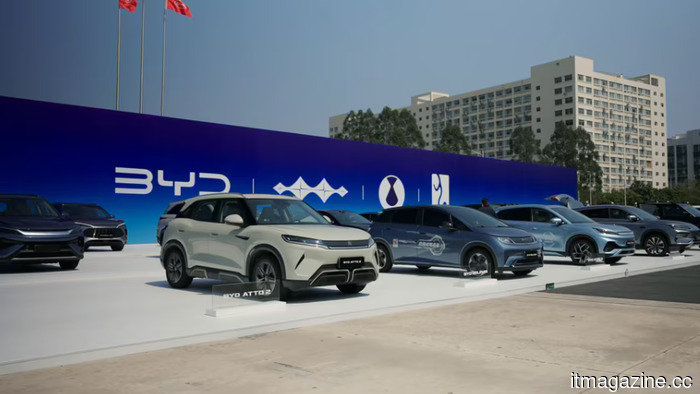 BYD claims that demand is twice the level of its capacity, yet its sales figures tell a different tale.
Stella Li from BYD indicates that China aims for 80% electric vehicle market penetration, as gasoline car sales drop by 39% and the Pentagon includes the automaker in its 1260H military roster.
BYD claims that demand is twice the level of its capacity, yet its sales figures tell a different tale.
Stella Li from BYD indicates that China aims for 80% electric vehicle market penetration, as gasoline car sales drop by 39% and the Pentagon includes the automaker in its 1260H military roster.
Apple reengineers Siri using Google AI and Nvidia processors at WWDC.
Apple's latest version of Siri operates on a tailored Gemini model and utilizes Nvidia Blackwell GPUs. Federighi states that data is not stored at any point. Five new AI models implement a three-tier privacy framework.