
Apple outlines the AI models that support the updated Siri.
The highlight of Apple’s developer conference was the reinvention of Siri. However, a more intriguing aspect lies beneath the surface: the AI models that Apple developed to operate it, one of which is too large to be housed within an iPhone’s memory, yet still runs on the device.
In a technical announcement released alongside WWDC, Apple provided details on the third generation of its Apple Foundation Models, which consists of five models characterized as “custom-built in collaboration with Google.”
Two of these models operate on-device: AFM 3 Core, a 3-billion-parameter model for routine tasks, and AFM 3 Core Advanced, the most capable on-device model. The remaining three function in the cloud: AFM 3 Cloud, a reliable server model; ADM 3 Cloud, an image model supporting Image Playground and Genmoji; and AFM 3 Cloud Pro, designed for advanced tool usage and complex thought processes.
The remarkable engineering is found in Core Advanced.
The latest buzz from the EU tech landscape, insights from our founder Boris, and some questionable AI-generated artwork. Subscribe for free to receive it weekly in your inbox!
This is a 20-billion-parameter, inherently multimodal model that typically resides in a data center rather than on a mobile device. Apple's innovation lies in storing the entire model in flash storage as opposed to the much smaller available working memory. Using a method its researchers refer to as Instruction-Following Pruning, the model makes routing choices once per prompt, loading only a limited selection of “expert” parameters into memory, ranging from 1 to 4 billion at a time, while keeping a core group of shared experts constantly active.
This allows Apple to scale the model “far beyond traditional DRAM limits,” the company claims, and enhances the more nuanced voices and improved dictation capabilities in this year’s software.
The cloud-based models rely on Apple’s Private Cloud Compute, ensuring that user data is not stored or shared with anyone, including Apple itself. For the advanced Cloud Pro model, Apple collaborated with Google and Nvidia to extend that privacy framework to Nvidia GPUs within Google Cloud.
The partnership with Google is a crucial detail to unpack. Coverage of the keynote varied, suggesting that Apple’s models were “derived from Gemini” or contained no Google technology whatsoever.
The technical post presents a more nuanced perspective: the AFM family is Apple’s proprietary design, “custom-built in collaboration with Google,” and trained using Google’s cloud TPUs, while the complex reasoning capabilities behind the new Siri reportedly utilize a significant custom Google model. In essence, while the models are proprietary to Apple, the heavy lifting and much of the infrastructure come from Google.
For developers, a significant change is the introduction of the Foundation Models framework.
Applications can interface directly with the on-device model, and this year, Apple introduced a model-abstraction layer that allows developers to incorporate third-party models, like Anthropic’s Claude or Google’s Gemini, without needing to rewrite their code. Additionally, iOS 27 will enable users to select a competing assistant as their default option. This marks a surprisingly open approach for Apple, even if its own intelligence features still won't be available in the EU on the same schedule.
As always, there’s a caveat regarding the numbers. Apple’s post is filled with favorable comparisons, such as AFM 3 Cloud being favored over last year’s model in 64.7 percent of prompts, and expressive voices rated at 4.15 on a 5-point scale compared to 3.87 for the previous version. However, these are Apple’s own evaluations rather than independent benchmarks, and the models are still in beta.
A more comprehensive technical report is expected later this summer.
Nonetheless, after two years of criticism for an underperforming assistant, Apple is making a strong case that the foundation is finally solid: a compact, private model for everyday tasks, larger ones secured within its cloud for more complex challenges, and Google’s powerful infrastructure where Apple still needs support.
The real challenge will be whether this holds up beyond Apple’s internal evaluations.
Other articles
 Klarna introduces US savings accounts with a 3.28% interest rate through WebBank.
Klarna introduces its high-yield savings account in the US with a 3.28% APY, offered through the FDIC-insured WebBank. This rate is lower than those of Marcus (3.4%) and SoFi (3.8%). Specifics regarding deposits have not been revealed.
Klarna introduces US savings accounts with a 3.28% interest rate through WebBank.
Klarna introduces its high-yield savings account in the US with a 3.28% APY, offered through the FDIC-insured WebBank. This rate is lower than those of Marcus (3.4%) and SoFi (3.8%). Specifics regarding deposits have not been revealed.
 As Apple advances its software with AI, the RAM shortage has caught up, leaving your devices feeling outdated.
Apple's iOS 27 AI requirements indicate that RAM is increasingly becoming the new barrier for upgrades. While devices with 8GB of RAM are still supported, they are not as equipped to handle Apple's most advanced on-device AI functionalities.
As Apple advances its software with AI, the RAM shortage has caught up, leaving your devices feeling outdated.
Apple's iOS 27 AI requirements indicate that RAM is increasingly becoming the new barrier for upgrades. While devices with 8GB of RAM are still supported, they are not as equipped to handle Apple's most advanced on-device AI functionalities.
 The UK is reassessing its £330 million agreement with Palantir regarding the NHS.
The UK government is reevaluating the NHS's £330 million contract with Palantir and might activate a break clause for 2027, following concerns from MPs who deemed dependence on the US company a vulnerability.
The UK is reassessing its £330 million agreement with Palantir regarding the NHS.
The UK government is reevaluating the NHS's £330 million contract with Palantir and might activate a break clause for 2027, following concerns from MPs who deemed dependence on the US company a vulnerability.
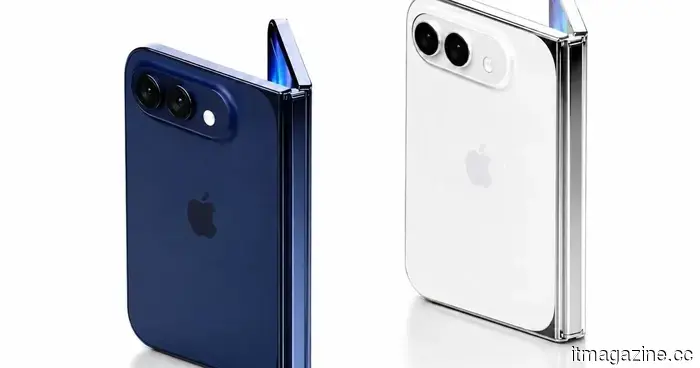 iOS 27 provides the strongest indication that a foldable iPhone is imminent.
The modifications to SwiftUI and the introduction of new iOS 27 framework references imply that Apple might be preparing applications for an iPhone capable of functioning on two separate displays.
iOS 27 provides the strongest indication that a foldable iPhone is imminent.
The modifications to SwiftUI and the introduction of new iOS 27 framework references imply that Apple might be preparing applications for an iPhone capable of functioning on two separate displays.
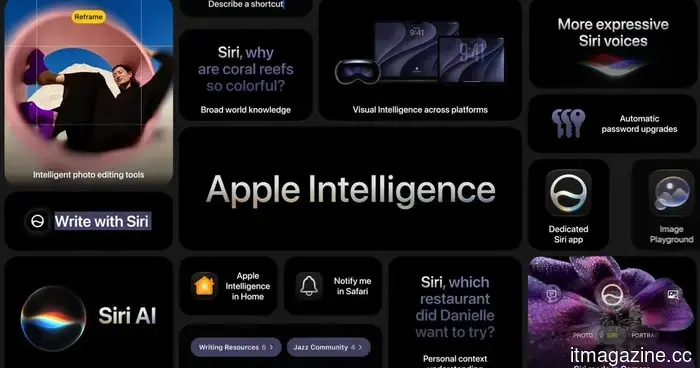 iOS 27 is full of features. Here's a rundown of the minor updates you might have overlooked.
iOS 27 includes numerous prominent features, but the smaller updates to Mail, iCloud Shared Albums, accessibility, Home, Maps, and network switching might be the ones that stand out to users the most.
iOS 27 is full of features. Here's a rundown of the minor updates you might have overlooked.
iOS 27 includes numerous prominent features, but the smaller updates to Mail, iCloud Shared Albums, accessibility, Home, Maps, and network switching might be the ones that stand out to users the most.
 The transition from generative AI to agentic AI in corporate finance.
The finance department at AT&T is utilizing LangGraph-driven agentic workflows to streamline the preparation of journal entries in accordance with SOX regulations. This includes finance-managed playbooks, audit trails at the node level, and clearly defined boundaries for human approval.
The transition from generative AI to agentic AI in corporate finance.
The finance department at AT&T is utilizing LangGraph-driven agentic workflows to streamline the preparation of journal entries in accordance with SOX regulations. This includes finance-managed playbooks, audit trails at the node level, and clearly defined boundaries for human approval.
Apple outlines the AI models that support the updated Siri.
Apple's third-generation Foundation Models, developed in collaboration with Google, feature a 20 billion-parameter on-device model that operates from flash storage, along with three cloud-based models.