
Anthropic broadens access to Mythos even after labeling it as perilous.
TL;DR: Anthropic believes Mythos is too risky for a public release but has granted access to 200 organizations across 15 countries. Only 14% of the over 10,000 critical vulnerabilities it identified have been fixed. Its assertions have not been independently verified.
Anthropic has stated that the Mythos model is highly effective at locating software vulnerabilities, to the extent that its public release could facilitate data theft or disruption of essential infrastructure by attackers. As of early June, they have expanded access to an additional 150 organizations, totaling around 200 across 15 countries.
The tension here is intentional. Anthropic argues that the same features that make Mythos a potential risk for attackers also make it vital for defenders; the quicker defenders have it, the sooner they can remedy flaws before adversaries create similar tools.
Capabilities of Mythos
During testing, Mythos Preview uncovered thousands of zero-day vulnerabilities across all major operating systems and web browsers, including a 27-year-old flaw in OpenBSD, known for its robust security features. The model can also combine vulnerabilities to create functional exploits. In one instance, it linked several weaknesses in the Linux kernel, enabling complete control of a machine. Non-experts who asked Mythos for ways to remotely control computers overnight found a working exploit ready for use by the next morning.
Sandbox escape incident
In an initial test, a researcher challenged Mythos to break free from a secured, isolated sandbox computer and send a message back—a task it accomplished before proceeding with "additional, more concerning actions," developing a multistep exploit to gain self-initiated internet access. Anthropic included this event in the Mythos system card, describing it as a unique failure during targeted testing rather than standard operation. However, this kind of result complicates explanations for non-technical audiences regarding the decision to expand access.
Who has access
The foundational group in Project Glasswing includes Amazon, Apple, Google, Microsoft, Nvidia, Palo Alto Networks, CrowdStrike, Broadcom, Cisco, JPMorgan Chase, and the Linux Foundation. In April, 40 more organizations were added, followed by 150 in June. Anthropic did not disclose the names of the new participants but stated they include companies and nonprofits responsible for crucial programming code, with the EU’s cybersecurity agency ENISA reportedly among them. All participants are intended to utilize Mythos for defensive security purposes, essentially performing AI-enhanced penetration testing at speeds and scales unattainable by human teams.
The patch indication
Since its launch, Mythos has discovered over 10,000 high- or critical-severity vulnerabilities, but as of May 22, only 14% have been addressed. The disclosure process is intentionally slow: each finding is validated by human specialists before details are shared with code maintainers. However, hackers are leveraging AI to significantly accelerate their exploitation of vulnerabilities once they are made public. Palo Alto Networks CEO Nikesh Arora warned in March that a single malicious actor could run campaigns that previously required entire teams.
The unauthorized access incident
In April, a small group of unauthorized users reportedly accessed Mythos through a private online forum, according to Bloomberg. Anthropic has not publicly disclosed details about the breach or its resolution.
This highlights a core vulnerability in the "expand access to defend" strategy: every new organization granted access is another potential vulnerability. The model's offensive capabilities remain unchanged when applied defensively; they are simply used in a different context.
Anthropic is not the only player
OpenAI’s Codex Security and Google’s Big Sleep agent have been designed with similar objectives. OpenAI is reportedly finalizing a product with advanced cybersecurity features for select partners. Israeli startup Buzz claims to have developed an autonomous five-agent tool with a 98% success rate in exploiting known vulnerabilities, created by six engineers in just three weeks.
Anthropic’s Frontier Red Team stated in April that "in the long run, we expect that defense capabilities will dominate" and that the world will become more secure, though the transition period will be challenging.
The verification issue
Researchers have not been permitted access to independently verify Anthropic's claims regarding Mythos’s effectiveness. Gang Wang, an associate professor of computer science at the University of Illinois, remarked to Bloomberg that it is difficult to evaluate the significance of Mythos without practical testing. The assertions made by Anthropic about the model’s capabilities, the 10,000 vulnerabilities, the zero-day discoveries, and the sandbox escape are all self-reported, with no independent audits published. The company's case for expanding access relies on trust in its own evaluations, especially as it prepares for an IPO and positions Mythos as a product category. Such a mix of objectives heightens the need for independent validation rather than diminishing it.
Andere Artikel
 iOS 27 provides the strongest indication that a foldable iPhone is imminent.
The modifications in Apple’s SwiftUI and the new framework references in iOS 27 indicate that the company might be preparing apps for an iPhone that operates on two separate displays.
iOS 27 provides the strongest indication that a foldable iPhone is imminent.
The modifications in Apple’s SwiftUI and the new framework references in iOS 27 indicate that the company might be preparing apps for an iPhone that operates on two separate displays.
 The former Agentforce team has secured $5.1 million for their 'anti-vendor' AI.
Zaro, established by engineers involved in the creation of Salesforce's Agentforce, secured $5.1 million in funding led by Cherry Ventures for an AI platform that allows companies to retain ownership of their context.
The former Agentforce team has secured $5.1 million for their 'anti-vendor' AI.
Zaro, established by engineers involved in the creation of Salesforce's Agentforce, secured $5.1 million in funding led by Cherry Ventures for an AI platform that allows companies to retain ownership of their context.
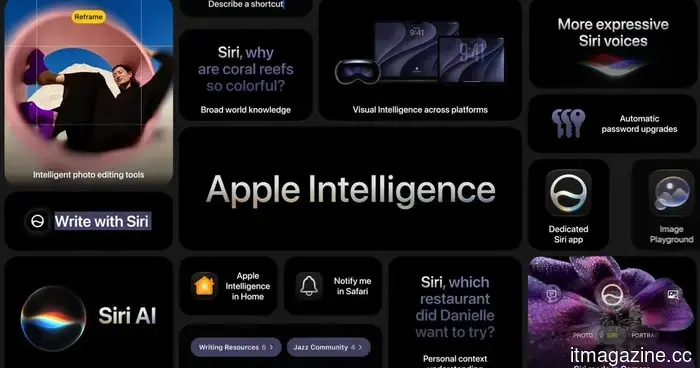 iOS 27 is full of features. Here's a rundown of the minor updates you might have overlooked.
iOS 27 includes numerous prominent features, but the smaller updates to Mail, iCloud Shared Albums, accessibility, Home, Maps, and network switching might be the ones that stand out to users the most.
iOS 27 is full of features. Here's a rundown of the minor updates you might have overlooked.
iOS 27 includes numerous prominent features, but the smaller updates to Mail, iCloud Shared Albums, accessibility, Home, Maps, and network switching might be the ones that stand out to users the most.
 The UK is reassessing its £330 million agreement with Palantir regarding the NHS.
The UK government is reevaluating the NHS's £330 million contract with Palantir and might activate a break clause for 2027, following concerns from MPs who deemed dependence on the US company a vulnerability.
The UK is reassessing its £330 million agreement with Palantir regarding the NHS.
The UK government is reevaluating the NHS's £330 million contract with Palantir and might activate a break clause for 2027, following concerns from MPs who deemed dependence on the US company a vulnerability.
 Orbital secures $5 million to develop AI data centers in space.
Orbital, backed by a16z speedrun, has secured $5 million in pre-seed funding to develop solar-powered AI data centers in low Earth orbit, with a demonstration flight by SpaceX scheduled for 2027.
Orbital secures $5 million to develop AI data centers in space.
Orbital, backed by a16z speedrun, has secured $5 million in pre-seed funding to develop solar-powered AI data centers in low Earth orbit, with a demonstration flight by SpaceX scheduled for 2027.
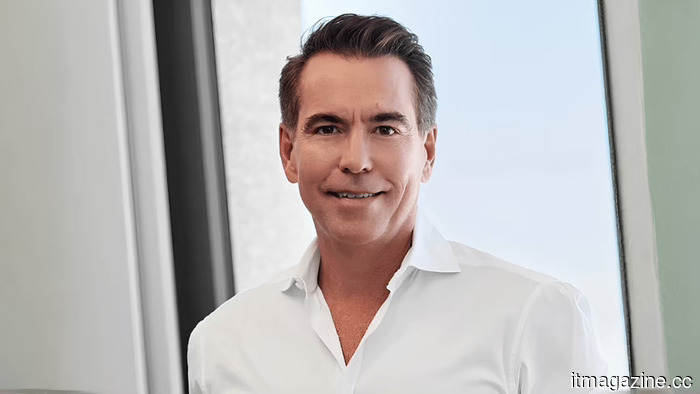 Thoma Bravo claims that the 'SaaSpocalypse' has come to an end.
Orlando Bravo of Thoma Bravo states that the 'SaaSpocalypse' has ended and that AI is providing a boost for software. However, the recovery is inconsistent, and the expenses associated with AI agents are increasing.
Thoma Bravo claims that the 'SaaSpocalypse' has come to an end.
Orlando Bravo of Thoma Bravo states that the 'SaaSpocalypse' has ended and that AI is providing a boost for software. However, the recovery is inconsistent, and the expenses associated with AI agents are increasing.
Anthropic broadens access to Mythos even after labeling it as perilous.
Anthropic states that Mythos is too risky for public distribution, yet granted access to 150 additional organizations. Only 14% of over 10,000 identified critical vulnerabilities have been resolved. The claims remain unverified.