
.jpg)
9 top HRIS systems for large enterprises (2026)
Guides for purchasing enterprise HRIS systems frequently highlight the same five names, a list that has remained unchanged for a decade. Most of these platforms were developed for a workforce model that is now outdated. With the rise of remote-first teams, distributed payroll across various countries, AI-enhanced workforce strategy, and heightened employee experience expectations from a generation accustomed to consumer applications, the requirements for large organizations from an HRIS have evolved significantly. The older systems serve well for rigid, centralized management of headcounts, but fall short for companies needing flexibility and user-friendly systems that employees can easily access without requiring support tickets.
This evaluation examines nine HRIS platforms for enterprises from a procurement perspective, focusing on the total cost of ownership, deployment timelines, global readiness, integration capabilities, and how effectively each platform addresses the challenges of a 2026 workforce.
Common mistakes made by enterprise buyers during HRIS selection
Many enterprise HRIS assessments prioritize feature checklists over usability. For instance, a platform with 400 configurable fields is ineffective if managers are reluctant to log in. Moreover, procurement teams often equate "enterprise-grade" with "tailored for Fortune 500 companies," which confines mid-market and upper-mid-market organizations to systems designed for bureaucracies with 50,000 employees, even when their actual workforce ranges from 500 to 5,000.
Three common evaluation oversights appear in nearly every enterprise HRIS RFP:
1. **Implementation delays:** The most significant expense related to enterprise HRIS isn't the licensing cost, but the deployment timeframe of 9 to 18 months that can drain internal resources, postpone ROI, and induce change fatigue before users even begin using the system. Platforms that achieve a live status in weeks rather than months mitigate this delay.
2. **Adoption as a success metric:** If a substantial portion of your workforce—say, 60%—avoids using the HRIS and instead resorts to email or Slack for their requests, then the platform has failed, irrespective of its features. Therefore, enterprise buyers should prioritize user experience as a procurement criterion rather than view it as merely desirable.
3. **Global readiness versus global marketing:** Several HRIS providers claim to offer global solutions, but fewer can effectively manage payroll in multiple countries, ensure compliance with jurisdiction-specific laws, or facilitate local workflows without third-party integrations. The distinction between stating "we serve clients in 40 nations" and being able to “manage your UK payroll in-house” is significant.
**HiBob**
**Overview:** An enterprise-ready HRIS featuring open APIs, customizable workflows, and a multi-country payroll system.
**Strengths:** HiBob provides open APIs for two-way data synchronization with existing technology, supports single sign-on (SSO) and System for Cross-domain Identity Management (SCIM) provisioning for identity management, and integrates with a marketplace covering tools already used by enterprise IT departments. It runs on a centralized data layer, managing self-service workflows, analytics, and automation rules. The Talent Suite supports hiring processes, performance reviews with 360-degree feedback, and provides 9-box calibration. The Payroll Suite effectively manages payroll in the US and UK, while the Global Payroll Hub allows local connections through no-code setups. HR planning features include interactive organizational charts, AI modeling for scenarios, and compensation benchmarking utilizing Mercer data. Approval processes, onboarding courses, and compliance checklists can be tailored by region, department, or entity without the need for coding or consultants. The platform enjoys favorable ratings on G2 (4.5/5 from over 1,800 reviews) and Capterra (4.6/5 from over 167 reviews). Josh Bersin has referred to it as “the Instagram of HCM platforms,” referencing its user-friendly experience that drives adoption without extensive change management.
**Weaknesses:** The lack of public pricing hampers early vendor comparisons during formal RFP processes. Organizations with more than 20,000 employees within a single entity might find greater configurability in Workday or SAP SuccessFactors. Native payroll support spans only the US and UK; other regions require third-party integrations through the Global Payroll Hub.
**Pricing:** Not disclosed. Modular pricing based on chosen suites (Core, Talent, Payroll, Planning) and employee count. Custom quotes available via hibob.com.
**Workday**
An established name for large-scale organizations, especially Fortune 500 companies, with dedicated implementation teams.
**Strengths:** Workday provides a unified cloud architecture covering financial management, human capital management, and planning. Companies with over 10,000 employees favor it for its extensive configurability, compliance with regulations in various countries, and strong integration between HR and finance data. Its reporting features accommodate complex organizational structures and cost center hierarchies effectively.
**Weaknesses:** Users on G2 rate it 4.1/5 (1,613 reviews) due to a steep learning curve. Report generation is sluggish for intricate queries, and the interface is seen more as functional
.jpg)
.jpg)
.jpg)
.jpg)
.jpg)
.jpg)
.jpg)
Other articles
 France's secure messaging service Tchap suffers from an account breach.
The French government's messaging platform Tchap was compromised through a stolen account. Officials state that only public rooms were affected, while a hacker alleges that 73,000 accounts were involved.
OneAdvanced develops an artificial intelligence triage system for the NHS in collaboration with Nvidia.
OneAdvanced has introduced Care Navigator, a triage LLM for the NHS hosted in the UK, developed in collaboration with Nvidia. They claim it competes with Claude while providing inference costs that are up to 150 times lower.
France's secure messaging service Tchap suffers from an account breach.
The French government's messaging platform Tchap was compromised through a stolen account. Officials state that only public rooms were affected, while a hacker alleges that 73,000 accounts were involved.
OneAdvanced develops an artificial intelligence triage system for the NHS in collaboration with Nvidia.
OneAdvanced has introduced Care Navigator, a triage LLM for the NHS hosted in the UK, developed in collaboration with Nvidia. They claim it competes with Claude while providing inference costs that are up to 150 times lower.
 Vertical Aerospace has completed a second flight with its VX4 prototype.
The last VX4 prototype from Vertical Aerospace completed its first piloted flight on June 5, increasing testing capabilities ahead of the Critical Design Review for its Valo air taxi.
Vertical Aerospace has completed a second flight with its VX4 prototype.
The last VX4 prototype from Vertical Aerospace completed its first piloted flight on June 5, increasing testing capabilities ahead of the Critical Design Review for its Valo air taxi.
 Vertical Aerospace has conducted a flight with a second prototype of the VX4.
Vertical Aerospace's last VX4 prototype completed its first piloted flight on 5 June, effectively doubling testing capabilities prior to the Critical Design Review for its Valo air taxi.
Vertical Aerospace has conducted a flight with a second prototype of the VX4.
Vertical Aerospace's last VX4 prototype completed its first piloted flight on 5 June, effectively doubling testing capabilities prior to the Critical Design Review for its Valo air taxi.
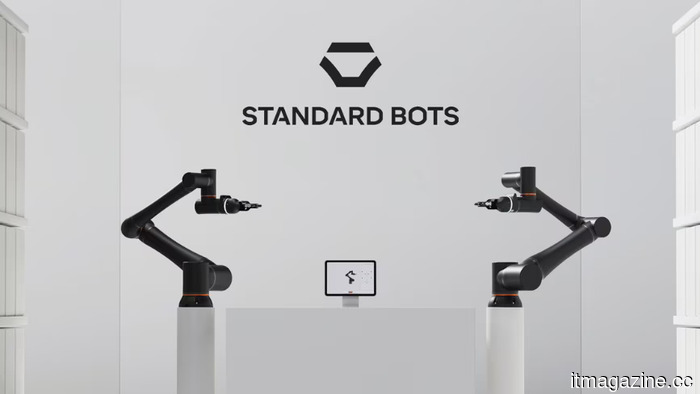 Standard Bots achieves a $1 billion valuation following a $200 million fundraising round for robotics.
US robotic arm manufacturer Standard Bots secured $200 million at a valuation of $1 billion, with General Catalyst leading the investment, to expand its Long Island factory as the US seeks to compete with China.
Standard Bots achieves a $1 billion valuation following a $200 million fundraising round for robotics.
US robotic arm manufacturer Standard Bots secured $200 million at a valuation of $1 billion, with General Catalyst leading the investment, to expand its Long Island factory as the US seeks to compete with China.
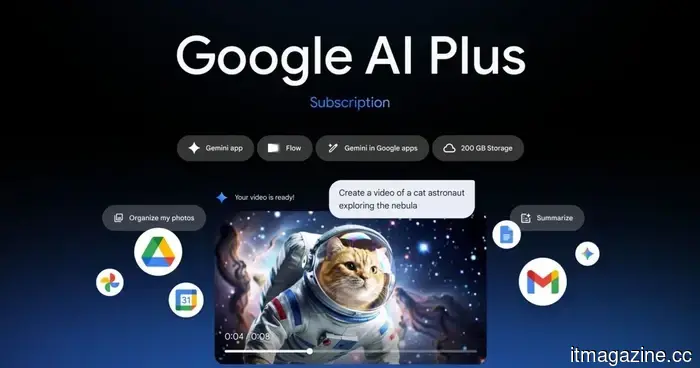 Google AI Plus now costs $4.99 per month and offers double the storage.
Google is reducing the price of its AI Plus subscription from $7.99 to $4.99 per month and increasing cloud storage from 200GB to 400GB.
Google AI Plus now costs $4.99 per month and offers double the storage.
Google is reducing the price of its AI Plus subscription from $7.99 to $4.99 per month and increasing cloud storage from 200GB to 400GB.
9 top HRIS systems for large enterprises (2026)
Enterprise HRIS platforms assessed based on total cost of ownership, implementation timelines, global suitability, and their alignment with the realities of a distributed workforce in 2026. Slug: best-hris-systems-large-organizations-2026