
.jpg)
9 top HRIS solutions for large enterprises (2026)
Buying guides for enterprise HRIS typically recommend the same five platforms, a list that has remained unchanged for a decade. Many of these systems were designed for a workforce model that is now outdated. The rise of remote-first teams, multi-country payroll, AI-driven workforce planning, and increased employee experience expectations from a consumer app-savvy generation have significantly altered what large organizations require from an HRIS. Traditional systems are suitable for rigid, centralized headcount management but fall short for companies that need flexibility and a user-friendly approach that doesn't require a support ticket to get started.
This analysis reviews nine HRIS systems for enterprises, focusing on aspects such as total cost of ownership, deployment timelines, global capabilities, integration depth, and how well each system accommodates the needs of a 2026 workforce.
Common Errors in Enterprise HRIS Selection
Enterprise HRIS evaluations often prioritize feature checklists while undervaluing usability. A platform boasting 400 configurable fields is pointless if managers are reluctant to log in. Procurement teams also mistakenly equate “enterprise-grade” with “suitable for Fortune 500 companies,” which forces mid-market organizations into systems tailored for bureaucracies with 50,000 employees, despite their actual headcount being between 500 and 5,000.
Three frequent blind spots occur in nearly every enterprise HRIS RFP:
1. **Implementation Delays:** The primary expense for an enterprise HRIS isn't the licensing fee, but rather the 9-to-18-month implementation period that consumes internal resources, postpones ROI, and leads to change fatigue even before employees use the system. Platforms that can launch in weeks significantly lessen this burden.
2. **Adoption as a Success Indicator:** If 60% of the workforce avoids using the HRIS and relies on email or Slack for requests, the platform has failed, regardless of its features. Enterprise buyers should prioritize user experience as a key factor in procurement, rather than a mere luxury.
3. **Global Coverage vs. Marketing Claims:** Many HRIS vendors assert that they offer global services. However, few can facilitate native payroll in multiple countries, ensure jurisdiction-specific compliance, or support localized workflows without additional third-party tools. The difference between “we have clients in 40 countries” and “we manage your UK payroll in-house” is substantial.
**HiBob**
*HiBob Homepage*
HiBob is an enterprise-grade HRIS featuring open APIs, configurable workflows, and a multi-country payroll infrastructure.
**Strengths:**
Bob offers open APIs for bidirectional data synchronization with existing technology stacks, supports SSO and SCIM provisioning for identity management, and provides access to an integration marketplace that includes tools used by enterprise IT teams. Constructed on a shared data layer rather than through piecemeal acquisitions, Bob Core addresses self-service workflows, people analytics, and automation rules. The Talent Suite encompasses hiring, performance evaluations with 360-degree feedback, and 9-box calibration, while the Payroll Suite manages both native US (federal and state tax filing) and UK payroll (HMRC, IR35, P11D, P60), as well as a Global Payroll Hub connecting to local providers through no-code setup. The HR Planning Suite offers workforce planning with interactive org charts, AI scenario modeling, and compensation benchmarking powered by Mercer data. Approval chains, onboarding processes, and compliance checklists can be customized by region, department, or entity without needing coding or external consultancy. G2 reviewers rate Bob 4.5/5 based on over 1,811 reviews, while Capterra users give it 4.6/5 from over 167 reviews. Josh Bersin refers to it as "the Instagram of HCM platforms," highlighting the user-friendly experience that promotes adoption without extensive change management.
**Weaknesses:**
The lack of published pricing can hinder early vendor comparisons during RFP processes. Organizations with over 20,000 employees in a single legal entity may find more extensive matrix-hierarchy configuration options in Workday or SAP SuccessFactors. Native payroll is limited to the US and UK, with other markets handled through third-party integrations via the Global Payroll Hub.
**Pricing:**
Not publicly available. Modular pricing is based on suite selection (Core, Talent, Payroll, Planning) and employee number. Custom quotes can be obtained through hibob.com.
**Workday**
*Workday*
Workday is an established choice for Fortune 500 companies, offering dedicated implementation teams.
**Strengths:**
Workday provides integrated financial management, human capital management, and planning within a single cloud structure. It is the preferred choice for large organizations with over 10,000 employees, noted for its extensive configuration options, regulatory compliance across various countries, and seamless integration of HR and finance data. The reporting engine is adept at managing complex organizational structures with matrix management, cost center hierarchies, and multi-entity consolidation. Workday also maintains strong relationships with Big Four consulting firms, which is important for businesses that rely on external advisors
.jpg)
.jpg)
.jpg)
.jpg)
.jpg)
.jpg)
.jpg)
Other articles
 NinjaOne's valuation reaches $12.3 billion, doubling in a secondary funding round.
Austin-based IT operations company NinjaOne has more than doubled its valuation to $12.3 billion in a secondary funding round exceeding $400 million, strengthening its capitalization table in anticipation of a potential IPO.
NinjaOne's valuation reaches $12.3 billion, doubling in a secondary funding round.
Austin-based IT operations company NinjaOne has more than doubled its valuation to $12.3 billion in a secondary funding round exceeding $400 million, strengthening its capitalization table in anticipation of a potential IPO.
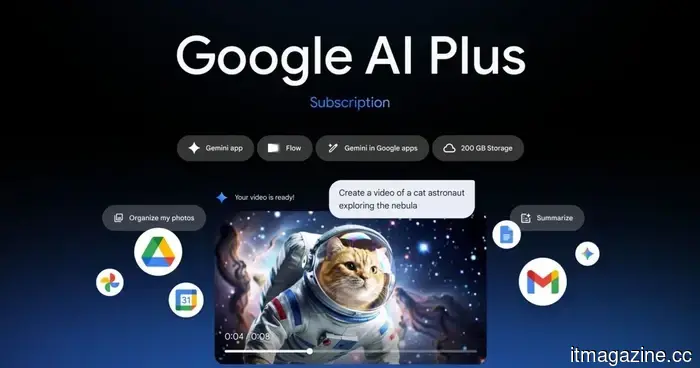 Google AI Plus now costs $4.99 per month and offers double the storage.
Google is reducing the price of its AI Plus subscription from $7.99 to $4.99 per month and increasing cloud storage from 200GB to 400GB.
Google AI Plus now costs $4.99 per month and offers double the storage.
Google is reducing the price of its AI Plus subscription from $7.99 to $4.99 per month and increasing cloud storage from 200GB to 400GB.
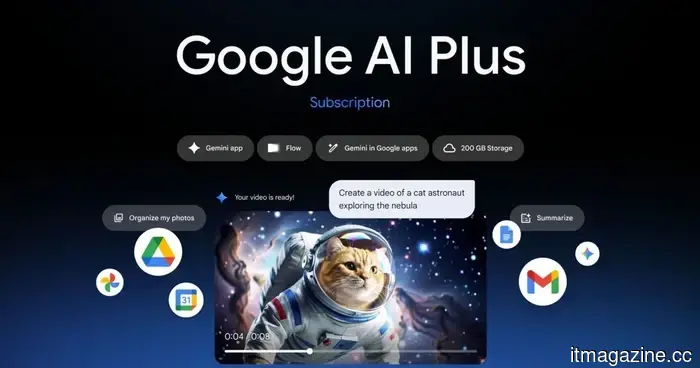 Google AI Plus is now available for $4.99 per month and offers double the storage.
Google is reducing the price of its AI Plus subscription from $7.99 to $4.99 per month and increasing the cloud storage from 200GB to 400GB.
Google AI Plus is now available for $4.99 per month and offers double the storage.
Google is reducing the price of its AI Plus subscription from $7.99 to $4.99 per month and increasing the cloud storage from 200GB to 400GB.
 Vertical Aerospace has completed a second flight with its VX4 prototype.
The last VX4 prototype from Vertical Aerospace completed its first piloted flight on June 5, increasing testing capabilities ahead of the Critical Design Review for its Valo air taxi.
Vertical Aerospace has completed a second flight with its VX4 prototype.
The last VX4 prototype from Vertical Aerospace completed its first piloted flight on June 5, increasing testing capabilities ahead of the Critical Design Review for its Valo air taxi.
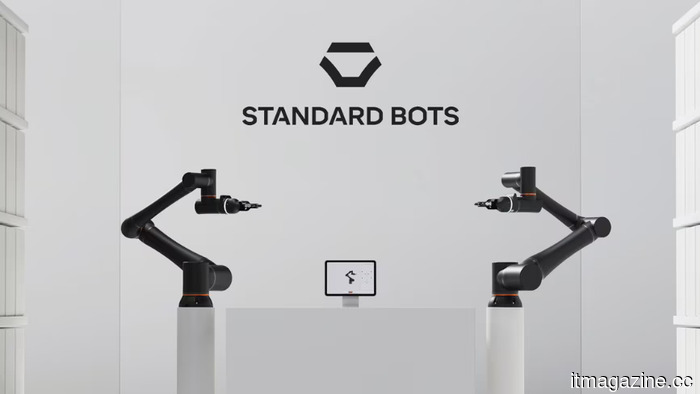 Standard Bots reaches a $1 billion valuation following a $200 million funding round in robotics.
US robot-arm manufacturer Standard Bots secured $200 million at a valuation of $1 billion, with General Catalyst leading the investment, to expand its Long Island facility as the US aims to compete with China.
Standard Bots reaches a $1 billion valuation following a $200 million funding round in robotics.
US robot-arm manufacturer Standard Bots secured $200 million at a valuation of $1 billion, with General Catalyst leading the investment, to expand its Long Island facility as the US aims to compete with China.
 NinjaOne's valuation increases to $12.3 billion in a secondary funding round.
Austin-based IT operations company NinjaOne more than doubled its valuation to $12.3 billion in a secondary round exceeding $400 million, enhancing its cap table in anticipation of a potential IPO.
NinjaOne's valuation increases to $12.3 billion in a secondary funding round.
Austin-based IT operations company NinjaOne more than doubled its valuation to $12.3 billion in a secondary round exceeding $400 million, enhancing its cap table in anticipation of a potential IPO.
9 top HRIS solutions for large enterprises (2026)
Enterprise HRIS platforms assessed based on total cost of ownership, deployment schedules, global preparedness, and their alignment with the dynamics of a distributed workforce in 2026. Slug: best-hris-systems-large-organizations-2026