
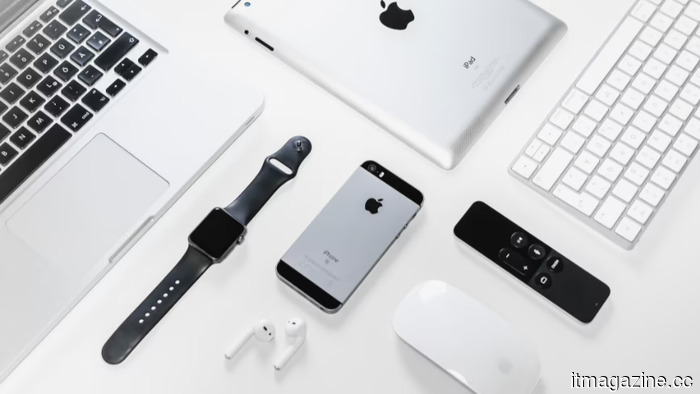
For a second time, Apple Intelligence has been postponed in Europe, and this time there is no estimated timeline.
TL;DR: Apple announced that EU regulators have rejected all its proposals to offer Siri AI on iPhone and iPad under the Digital Markets Act (DMA). However, users of Mac, Watch, and Vision Pro will have access to it.
On Monday, Apple informed that the new Siri AI assistant, which was presented earlier at WWDC 2026, will not be available for iPhone and iPad users in the European Union when iOS 27 and iPadOS 27 launch later this year. The company explained that all proposals submitted to EU regulators over several months to introduce this feature in Europe had been rejected, while other virtual assistants were supported. There is no indication of when EU users might gain access to Siri AI on their most commonly used Apple devices.
“We're extremely disappointed that our EU users won’t have Siri AI on iPhone or iPad when we roll out our latest software updates later this year,” stated Craig Federighi, Apple’s senior vice president of Software Engineering. He noted that the European Commission's “refusal to engage constructively on solutions preserving privacy and security” has left the company without a viable solution.
This limitation applies solely to iOS and iPadOS. EU users will still be able to use Siri AI on macOS 27, visionOS 27, and watchOS 27, highlighting that the DMA categorizes iOS as a gatekeeper platform subject to interoperability rules. Additionally, developers based in the EU will not be able to test or utilize the new Siri AI functionalities for their applications on iPhone and iPad.
Apple's main argument is that the European Commission’s interpretation of the DMA would obligate the company to provide third-party virtual assistants with the same extensive system access as Siri AI, allowing actions such as reading and sending messages, making purchases, accessing files, and performing operations across apps. Apple contends that this process would occur without adequate “essential protections” for user visibility and control. They referenced security studies indicating that AI systems can be exploited to steal personal data, modify files, and alter account settings without user consent.
In response to these issues, Apple developed a system called Trusted System Agent, designed to permit competing virtual assistants to safely access similar features as Siri AI on EU devices. The company also proposed to introduce Siri AI in Europe while gradually implementing the Trusted System Agent over an 18-month period. However, both proposals were rejected by the European Commission, which, according to Apple, did not accept any alternatives.
This marks the second instance where Apple’s AI features have faced delays in the EU due to the DMA. The company initially withheld its AI suite from European iPhones upon its U.S. launch in October 2024 due to regulatory uncertainties. That initial set of features was ultimately made available in Europe with iOS 18.4 in April 2025, following prolonged negotiations. The pattern has now emerged again with a more advanced set of capabilities, yet without a resolution in sight.
The situation reflects ongoing tensions between Apple and the European Commission concerning DMA compliance. As of March, the Free Software Foundation Europe reported that Apple had not created new solutions in response to any of the 56 formal interoperability requests made under the DMA. Among 16 closures disclosed, 10 were denied for technical reasons, two were dismissed as already resolved, and three were classified as out of scope. Additionally, Apple has faced enforcement actions under the DMA for limiting how developers communicate with users about alternative payment options.
The EU delay exacerbates Apple’s existing regulatory challenges in its other major restricted market. In March, Apple Intelligence briefly launched in China without authorization, leading to potential penalties under Beijing’s AI governance framework. Siri AI will also be unavailable in China upon the release of iOS 27, as Apple continues to navigate that country’s regulatory demands.
Apple's portrayal of the delay shifts the blame onto the Commission, using stronger language than in its previous statements about the DMA. The company described the regulators’ stance as an “extreme interpretation” of the law, suggesting they require AI systems to have “nearly unlimited access” to user devices. This characterization is likely to be contested, as the DMA’s interoperability provisions aim to prevent gatekeepers from utilizing integration advantages to eliminate competitors—a principle consistently applied by the Commission in its enforcement.
For approximately 450 million individuals residing in the EU, the most substantial Siri upgrade in 15 years—which coincides with a breaking partnership between Apple and OpenAI—will not be accessible on their pocket devices. While they can utilize it on a Mac, Apple Watch, or Vision Pro headset, it will not be available on an iPhone. Given that the feature is designed for personal context, conversational history, and always-available assistance, this platform gap represents a significant limitation, making the difference between having the feature and lacking it for most users.
Other articles
 Xteink X4 review: I was skeptical about this compact e-reader, but it helped improve my bad screen habits.
The Xteink X4 is simple to share, even simpler to integrate into your daily carry, and is a delightfully appealing gadget that could capture the book lover in you without straining your budget.
Xteink X4 review: I was skeptical about this compact e-reader, but it helped improve my bad screen habits.
The Xteink X4 is simple to share, even simpler to integrate into your daily carry, and is a delightfully appealing gadget that could capture the book lover in you without straining your budget.
 The new AI capabilities of the Apple Home app are set to simplify your life.
Apple Intelligence is being integrated into the Home app, allowing it to analyze your camera footage, provide summaries of events, and enable you to search for clips based on their content.
The new AI capabilities of the Apple Home app are set to simplify your life.
Apple Intelligence is being integrated into the Home app, allowing it to analyze your camera footage, provide summaries of events, and enable you to search for clips based on their content.
 The Slayer is making a comeback in DOOM: The Dark Ages Revelations with a lethal new weapon.
Bethesda has announced the release of DOOM: The Dark Ages Revelations, a new campaign expansion set to launch on July 7, featuring new levels, demons, playable flashbacks, and a formidable Chain Spear.
The Slayer is making a comeback in DOOM: The Dark Ages Revelations with a lethal new weapon.
Bethesda has announced the release of DOOM: The Dark Ages Revelations, a new campaign expansion set to launch on July 7, featuring new levels, demons, playable flashbacks, and a formidable Chain Spear.
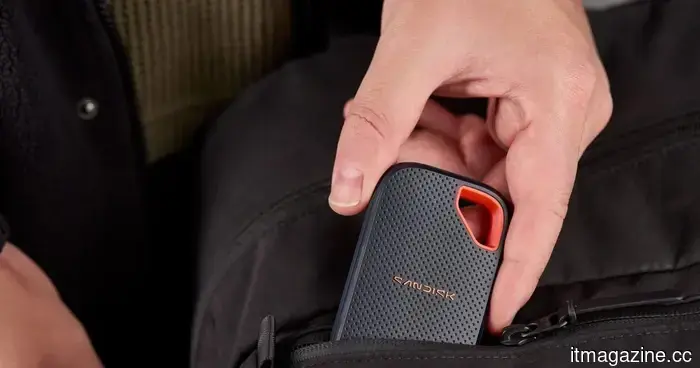 The SANDISK Extreme Portable SSD is transforming your perspective on storage upgrades.
Seeking a more intelligent solution for increasing storage without replacing your laptop? The SANDISK Extreme Portable SSD provides fast performance, versatile capacities of up to 4TB, and easy plug-and-play functionality.
The SANDISK Extreme Portable SSD is transforming your perspective on storage upgrades.
Seeking a more intelligent solution for increasing storage without replacing your laptop? The SANDISK Extreme Portable SSD provides fast performance, versatile capacities of up to 4TB, and easy plug-and-play functionality.
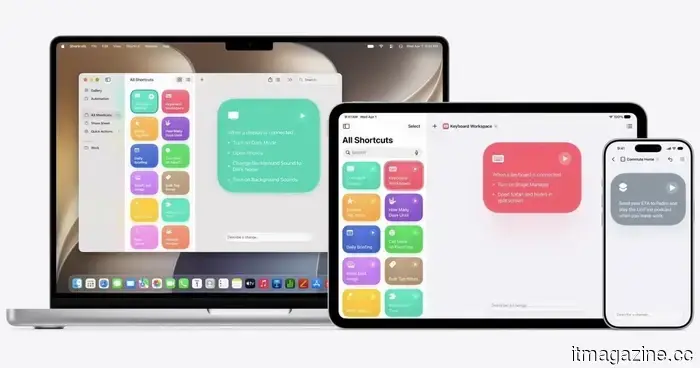 iOS 27 has simplified Shortcuts to the point where you have no reason not to utilize them.
iOS 27 employs Apple Intelligence to allow you to create Shortcuts simply by describing them in everyday language. You can say goodbye to the hassle of managing countless actions to streamline your daily activities.
iOS 27 has simplified Shortcuts to the point where you have no reason not to utilize them.
iOS 27 employs Apple Intelligence to allow you to create Shortcuts simply by describing them in everyday language. You can say goodbye to the hassle of managing countless actions to streamline your daily activities.
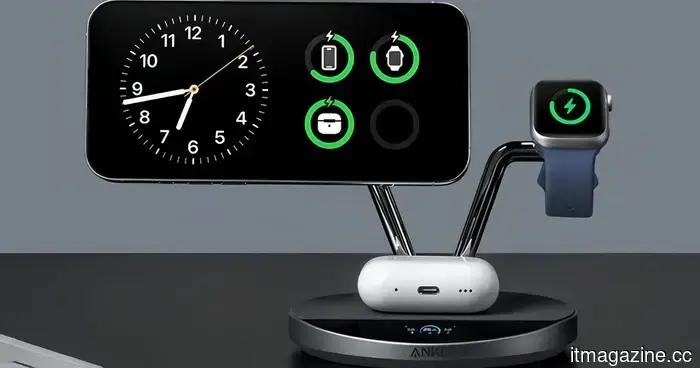 Anker has introduced an ideal 3-in-1 charger for Apple devices, but it is not available for purchase yet.
Anker's latest Prime 3-in-1 charger not only charges your iPhone but also actively cools it and displays real-time power and temperature information on a built-in touchscreen.
Anker has introduced an ideal 3-in-1 charger for Apple devices, but it is not available for purchase yet.
Anker's latest Prime 3-in-1 charger not only charges your iPhone but also actively cools it and displays real-time power and temperature information on a built-in touchscreen.
For a second time, Apple Intelligence has been postponed in Europe, and this time there is no estimated timeline.
Apple has stated that EU regulators have turned down all suggestions to implement Siri AI on iPhone and iPad in accordance with the DMA. Currently, there is no schedule for when the feature will be available in the EU.