
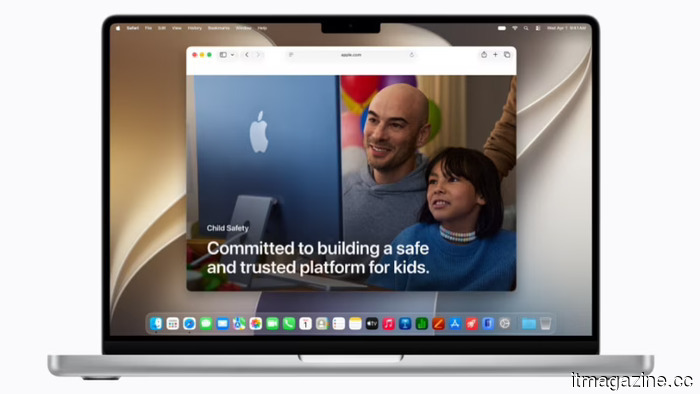
Apple showcases its most significant update to parental controls in years, just weeks ahead of regulatory deadlines in the UK and US.
Apple has revealed significant child safety updates for iOS 27, which include new features such as Ask to Browse, Time Allowances, and protection against violent content, as regulators in the UK and US impose deadlines for better controls. During WWDC 2026, the company introduced a range of parental control tools that enhance parental authority over their children's online activities, including what they can view, who they can contact, and how long they spend on apps. These updates are set to launch this autumn with iOS 27, iPadOS 27, and macOS 27, coinciding with UK Prime Minister Keir Starmer's three-month ultimatum for Apple and Google to implement device-level controls preventing children from accessing or sharing explicit images. In parallel, the US Congress is progressing the Kids Online Safety Act, which gained approval from the House Energy and Commerce Committee in March amid ongoing lawsuits from school districts regarding social media addiction.
Among the most notable features is Ask to Browse, which requires children to seek parental permission before visiting new websites in Safari. This feature operates on iPhone, iPad, and Mac, complementing the existing Ask to Buy system for app downloads. These controls allow parents to manage approvals for both app and web content from a single child account.
Apple is also launching Time Allowances, enabling parents to set daily limits across app categories like Entertainment, Games, and Social Media, rather than individually managing each app. The system offers age-based recommendations based on expert research as a starting guide. Additionally, parents can design daily schedules that restrict access to certain apps during specific times, such as school hours or mealtimes.
The Communication Safety feature, which currently blurs nudity in Messages and FaceTime for users under 18, will expand to include blocking of violent content in shared images and videos, addressing a noted gap in Apple’s existing protections. This enhancement uses on-device machine learning to identify harmful content before it appears, aligning with Apple’s commitment to privacy by processing sensitive data on the device without using external servers.
The revamped Screen Time provides parents with an overview of their children's average device usage and most-used apps, allowing quick access adjustments with a simple tap. Parents can easily limit access during family time or extend it if a child needs extra time to complete a task in an app. This new interface replaces the previously complex settings menu that many parents found difficult to manage since the introduction of Screen Time in iOS 12.
Apple is collaborating with the American Academy of Pediatrics to modify the AAP’s Family Media Plan into a helpful guide for parents configuring their devices. It also introduced developer tools like a Declared Age Range API, allowing apps to request a child’s age range without revealing their exact birthday, and PermissionKit, enabling apps to channel new-contact requests through parents for approval. A SensitiveContentAnalysis framework assists developers in identifying nudity and violence within their applications.
The timing of these updates is significant. Starmer’s announcement, made during London Tech Week on June 8, demanded that Apple and Google create controls preventing children from taking, sending, receiving, or viewing nude images at the device level. Currently, Apple’s Communication Safety system only provides warnings rather than outright blocking in certain cases and does not encompass all image-sharing pathways in the operating system. It remains to be seen whether the new features will meet Starmer’s requirements, with the UK government indicating it may legislate if the companies do not adhere voluntarily.
In the US, the Kids Online Safety Act passed the House Energy and Commerce Committee on March 5, backed by a party-line 28-24 vote, while an updated COPPA 2.0 also received unanimous support in the Senate. This legislation mandates platforms to carry out risk assessments, implement robust privacy settings for minors by default, and provide parents with meaningful oversight tools. Apple has publicly supported KOSA, and the ongoing litigation regarding child safety has led to billions in settlements against social media companies in 2026.
These child safety enhancements are part of a broader software rollout for WWDC 2026 that includes a revamped Siri AI, improvements to Apple Intelligence, and overall performance upgrades for iOS 27. A child account, required for users under 13 and available for those up to 18, ensures age-appropriate protections are in place from the moment of device setup. Parents are guided through the account creation process during the initial device setup and can start their child off with a few essential apps, a curated selection, or a custom choice.
Apple’s vice president of Health and Fitness, Sumbul Desai, emphasized that the company's approach is based on recognizing the uniqueness of each child. The tools are created to allow parents to customize protections rather than impose a one-size-fits-all solution. However, whether this philosophy of parental discretion will satisfy regulators who increasingly demand obligatory, device-level enforcement poses a critical challenge for Apple ahead of Starmer's September deadline.
Other articles
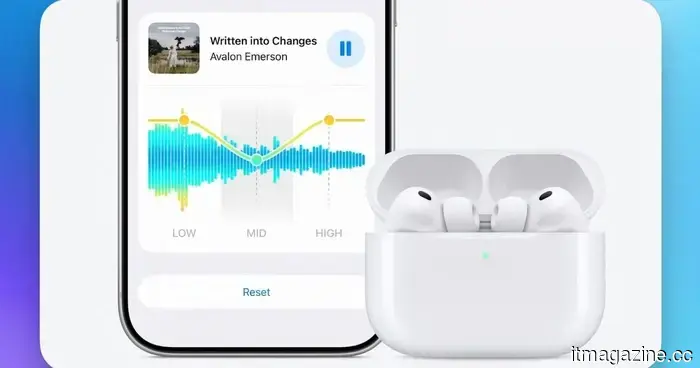 AirPods are finally receiving a personalized EQ to adjust the listening experience.
Apple is now allowing you to customize your AirPods according to your preferences. A new custom EQ setting will be introduced with iOS 27, enabling you to modify the bass, mids, and highs to suit your liking.
AirPods are finally receiving a personalized EQ to adjust the listening experience.
Apple is now allowing you to customize your AirPods according to your preferences. A new custom EQ setting will be introduced with iOS 27, enabling you to modify the bass, mids, and highs to suit your liking.
 For a second time, Apple Intelligence has been postponed in Europe, and this time there is no estimated timeline.
Apple has stated that EU regulators have turned down all suggestions to implement Siri AI on iPhone and iPad in accordance with the DMA. Currently, there is no schedule for when the feature will be available in the EU.
For a second time, Apple Intelligence has been postponed in Europe, and this time there is no estimated timeline.
Apple has stated that EU regulators have turned down all suggestions to implement Siri AI on iPhone and iPad in accordance with the DMA. Currently, there is no schedule for when the feature will be available in the EU.
 Apple's latest child safety features launch amid increasing pressure on major technology companies.
Apple's newest child safety update allows parents greater authority over their children's downloading, browsing, viewing, and contact options, as governments urge Big Tech to enhance online protections for kids.
Apple's latest child safety features launch amid increasing pressure on major technology companies.
Apple's newest child safety update allows parents greater authority over their children's downloading, browsing, viewing, and contact options, as governments urge Big Tech to enhance online protections for kids.
 The new AI capabilities of the Apple Home app are set to simplify your life.
Apple Intelligence is being integrated into the Home app, allowing it to analyze your camera footage, provide summaries of events, and enable you to search clips based on their content.
The new AI capabilities of the Apple Home app are set to simplify your life.
Apple Intelligence is being integrated into the Home app, allowing it to analyze your camera footage, provide summaries of events, and enable you to search clips based on their content.
 Cipher Digital secures $810 million through junk bonds to construct an additional Amazon data center in Texas.
Cipher Digital is offering $810 million in high-yield bonds to finance its Stingray data center located in West Texas, which has been leased to Amazon for a period of 15 years, with a yield of 6.25%.
Cipher Digital secures $810 million through junk bonds to construct an additional Amazon data center in Texas.
Cipher Digital is offering $810 million in high-yield bonds to finance its Stingray data center located in West Texas, which has been leased to Amazon for a period of 15 years, with a yield of 6.25%.
 The resurgence of Xbox exclusives begins with Gears of War and Clockwork Revolution.
Microsoft has confirmed that Gears of War: E-Day and Clockwork Revolution will be exclusive to Xbox consoles, with both titles also set to be available on PC and through Game Pass.
The resurgence of Xbox exclusives begins with Gears of War and Clockwork Revolution.
Microsoft has confirmed that Gears of War: E-Day and Clockwork Revolution will be exclusive to Xbox consoles, with both titles also set to be available on PC and through Game Pass.
Apple showcases its most significant update to parental controls in years, just weeks ahead of regulatory deadlines in the UK and US.
At WWDC 2026, Apple showcased new child safety features such as Ask to Browse, Time Allowances, and gore-blocking, as regulatory deadlines in the UK and US become more stringent.