
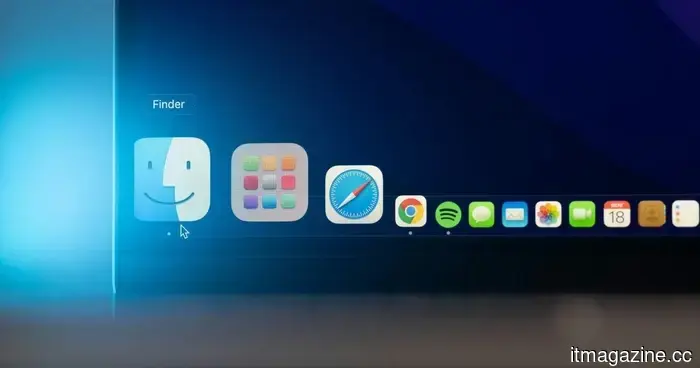
MacOS 27 may finally conclude Intel Mac support and introduce enhanced features for Siri.
Apple's upcoming major update for Mac software might signal the beginning of the end for Intel-powered Macs while advancing AI-driven experiences. New speculation about macOS 27 indicates that Apple is poised to implement notable changes, including enhanced Siri functionalities and updates to its debated "Liquid Glass" design.
Reports suggest that macOS 27 could be the first version to drastically cut or eliminate support for Intel Macs, finalizing a transition Apple initiated in 2020 with the introduction of its initial Apple Silicon chips. Although Apple has increasingly concentrated on M-series processors over the years, macOS 27 may be the most apparent indication that the company aims to move away from Intel hardware. This isn't entirely unprecedented news, as Apple had already been looking to phase out Intel Macs with the release of macOS Tahoe last year.
The timeline aligns with Apple's usual software support cycle. Intel Macs have already begun missing out on certain Apple Intelligence features rolled out during the AI advancement across iPhones, iPads, and Macs. Fully terminating support would enable Apple to concentrate more on AI, machine learning, and optimizations tailored to Apple Silicon.
Apple seems prepared to fully adopt its AI-driven future for Macs.
One of the most discussed potential changes pertains to Siri. Reports indicate that Apple is working on a significantly upgraded version of the assistant that would engage in more natural dialogues, exhibit contextual understanding, and provide better app integration. Despite facing criticism for a slower rollout compared to competitors like Google and OpenAI, macOS 27 could play a crucial role in Apple's overall Apple Intelligence initiative.
The update may also enhance Apple's newer "Liquid Glass" visual aesthetic, which reportedly emphasizes translucent layers, reflective interface components, and smoother animations throughout macOS. Initial responses to this design direction have varied, with some users appreciating its modern look, while others believe it emphasizes style over clarity and usability.
Apple is also anticipated to further incorporate AI-driven productivity tools into macOS. Features such as summarization, writing assistance, smarter searches, and proactive suggestions could become more integrated into the operating system as Apple aims to make AI feel inherent to the Mac experience rather than a standalone tool.
However, for those still using Intel Macs, the rumored changes in support may be the most significant concern. Millions of Intel-based MacBooks and desktops are still actively used, particularly in businesses, educational institutions, and creative fields. If Apple significantly reduces compatibility, many users might confront challenging decisions regarding upgrades sooner than anticipated.
macOS 27 might provide insight into Apple’s long-term vision for the Mac.
The anticipated update reflects a broader transformation within Apple's ecosystem. The company is increasingly developing software tailored to its custom chips, enabling closer integration between hardware and software features. Apple Silicon Macs already offer significant advantages in battery life, performance efficiency, and AI processing compared to older Intel systems.
Halting Intel support would also streamline development for Apple and third-party developers by decreasing the variety of architectures they need to accommodate. However, it might frustrate long-time Mac users whose devices may still operate effectively despite the lack of future software updates.
Apple is expected to formally present macOS 27 during WWDC 2026, where the company will likely elaborate on its next-generation AI strategy for Macs, iPhones, and iPads. Until then, many of the reported features are speculative, but the rumors strongly indicate that Apple is gearing up for one of the most significant changes in Mac history since its shift away from Intel commenced.


Other articles
 Meta's AI feed is beginning to resemble a late-night dive into the depths of the internet.
Reports indicate that Meta’s AI application is inundated with clickbait, false narratives, and engagement-focused AI-generated content as the company shifts towards a more social AI experience.
Meta's AI feed is beginning to resemble a late-night dive into the depths of the internet.
Reports indicate that Meta’s AI application is inundated with clickbait, false narratives, and engagement-focused AI-generated content as the company shifts towards a more social AI experience.
 Google is eager to integrate Gemini into all aspects of your phone now.
According to reports, Google is enhancing Gemini's integration with Google Contacts, which may enable the AI assistant to manage calls, messages, and tasks related to contacts more seamlessly on Android devices.
Google is eager to integrate Gemini into all aspects of your phone now.
According to reports, Google is enhancing Gemini's integration with Google Contacts, which may enable the AI assistant to manage calls, messages, and tasks related to contacts more seamlessly on Android devices.
 According to reports, astronauts sought shelter after activities on Russia’s faulty ISS module raised alarms.
Astronauts on the ISS have reportedly taken precautionary shelter measures following repair efforts on Russia's long-problematic Zvezda module, which have sparked new concerns about potential air leaks.
According to reports, astronauts sought shelter after activities on Russia’s faulty ISS module raised alarms.
Astronauts on the ISS have reportedly taken precautionary shelter measures following repair efforts on Russia's long-problematic Zvezda module, which have sparked new concerns about potential air leaks.
 Meta's AI feed is beginning to resemble a late-night internet deep dive.
Reports indicate that Meta's AI app is being overwhelmed by clickbait, misleading stories, and AI-generated posts designed for engagement, as the company shifts towards a more social AI experience.
Meta's AI feed is beginning to resemble a late-night internet deep dive.
Reports indicate that Meta's AI app is being overwhelmed by clickbait, misleading stories, and AI-generated posts designed for engagement, as the company shifts towards a more social AI experience.
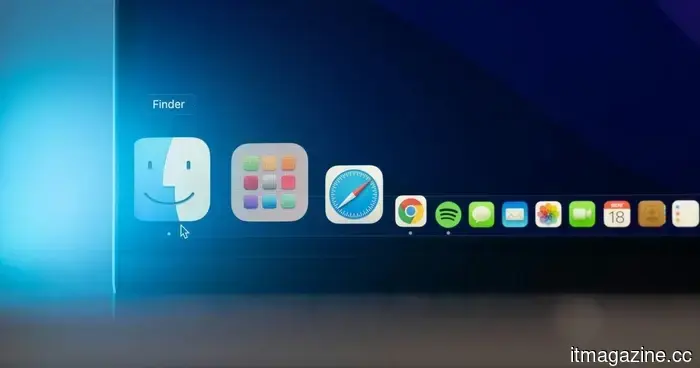 MacOS 27 might ultimately discontinue support for Intel Macs and introduce more advanced Siri features.
Rumors indicate that macOS 27 may discontinue support for Intel Macs while also bringing enhanced Siri capabilities, AI-driven tools, and improvements to Apple’s Liquid Glass design aesthetics.
MacOS 27 might ultimately discontinue support for Intel Macs and introduce more advanced Siri features.
Rumors indicate that macOS 27 may discontinue support for Intel Macs while also bringing enhanced Siri capabilities, AI-driven tools, and improvements to Apple’s Liquid Glass design aesthetics.
 Google is eager to integrate Gemini into every aspect of your phone now.
Google is said to be enhancing Gemini’s integration with Google Contacts, which may enable the AI assistant to manage calls, messages, and tasks related to contacts more seamlessly on Android.
Google is eager to integrate Gemini into every aspect of your phone now.
Google is said to be enhancing Gemini’s integration with Google Contacts, which may enable the AI assistant to manage calls, messages, and tasks related to contacts more seamlessly on Android.
MacOS 27 may finally conclude Intel Mac support and introduce enhanced features for Siri.
There are claims that macOS 27 may discontinue support for Intel Macs, while also incorporating enhanced Siri functionalities, AI-driven tools, and improvements to Apple’s Liquid Glass design aesthetic.