
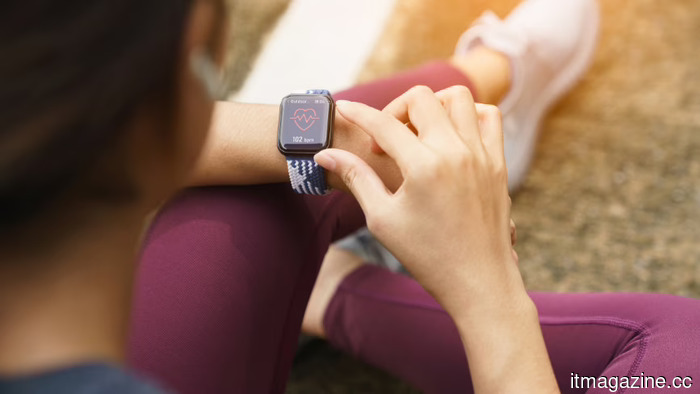
The Apple Watch is now 11 years old and is beginning to lose its impact. Competitors without screens are gaining traction in the upcoming phase.
TL;DR The innovation of the Apple Watch has plateaued as Whoop, Oura, and Fitbit Air reshape the wearables market. Key health executives are leaving, and Oura has filed for an IPO.
The Apple Watch has reportedly generated $100 billion in total sales and revolutionized the smartwatch sector. However, eleven years after its debut, the pace of innovation has diminished, causing the product line to lose traction. Bloomberg’s Mark Gurman indicates that Apple may risk lagging in the next stage of the industry it pioneered.
Consumer interests are shifting away from screen-dominated devices. Whoop, Oura, and Google’s $100 Fitbit Air have created billion-dollar enterprises centered around screenless bands and rings that focus on recovery, sleep, and passive health tracking. An increasing number of consumers are seeking to avoid another screen vying for their attention.
Apple’s Health app is part of the issue. After years of investment, it remains cluttered, clinical, and ineffective at generating actionable insights. Gurman comments that it often resembles the experience of reviewing charts in a waiting room rather than a contemporary consumer platform. Competing applications from Whoop and Oura are considered to be “in a different league.”
Eddy Cue from Apple, who uses both Oura and Whoop, has advocated for a more comprehensive health strategy internally. A proposed AI health coaching service, codenamed Mulberry, was recently scaled back after Cue assumed control over Apple’s health group. Gurman anticipates that features from that project may not debut until later in the iOS 27 update cycle.
Leadership instability is notable. Former COO Jeff Williams, who managed health initiatives for many years, retired last year. Tim Cook will step down as CEO in September. Jay Blahnik, the head of Fitness+, is departing amid legal issues concerning management behavior.
Health and Apple Watch marketing head Stan Ng recently announced his retirement. Another senior marketing manager, Eric Charles, also left this month. Apple has gradually lost health and hardware talent to Oura, marking a real brain drain.
Incoming CEO John Ternus aims to keep health at the forefront of Apple’s future, promising new services that integrate hardware and AI. However, the turnover in leadership brings into question the company’s urgency regarding health technology.
This year’s watchOS 27 is set to prioritize stability and minor refinements over significant new features. Enhancements in heart-rate tracking are forthcoming, but the update is seen as incremental rather than transformative.
Apple is increasingly turning to promotions to boost Apple Watch sales. Amazon and Best Buy have provided unusually deep discounts. Additionally, Apple has included the watch in its education store with direct discounts for the first time, a rarity for Apple hardware.
The glucose monitoring initiative could represent a significant breakthrough. Originating during the Steve Jobs era, it seeks to identify elevated blood sugar levels without the need for finger pricks. Oversight of the project has recently shifted from platform architecture chief Tim Millet to Zongjian Chen, an engineering lead known for delivering results.
This transition is interpreted by some as a sign of genuine progress towards a consumer-ready product. Nonetheless, Apple’s advancements in health have been hindered by workplace unrest, delays, caution, and a tendency towards incremental improvements. The same risk aversion that caused Apple to fall behind in generative AI is evident in its wearables as well.
iOS 27 will feature various AI functionalities, including natural language capabilities in the Shortcuts app, wallpaper creation through Image Playground, and a new grammar checker. The redesigned Siri app with auto-deleting chats represents a key consumer AI feature, but none of these directly tackle the gaps in health and wearables.
Oura, the Finnish smart ring manufacturer, has confidentially filed for a US initial public offering. Gurman observes that Apple “probably should have acquired” Oura years ago. The company that could have been under Apple's umbrella is now poised to enter the public market as a competitor.
The wearables market is simultaneously expanding in multiple directions. Meta is selling seven million pairs of Ray-Ban smart glasses annually, while Apple is testing its own smart glasses for 2027. Google is working on Android XR glasses in collaboration with Samsung. Competition is no longer confined to wrist-worn devices.
Apple also announced that iOS 27 will natively support alternatives to AirPlay to comply with the EU Digital Markets Act. Users will have the option to set Google Cast or other services as their default streaming platform. Additionally, the AirPods settings panel is undergoing a significant update.
Cook has expressed his desire for Apple to be recognized for its contributions to healthcare. The company that created the most successful smartwatch in history now faces the decision of whether to develop a screenless, AI-driven health device that aligns with market trends. If Apple chooses not to proceed, Whoop, Oura, and Google will undoubtedly take the lead.
Other articles
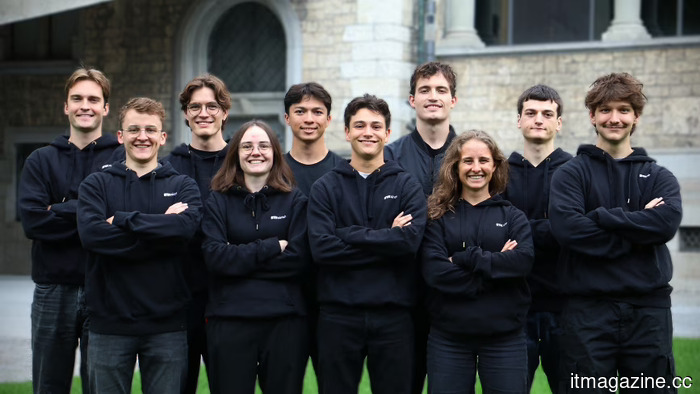 This startup in Zurich has developed a robot with four arms designed for space stations. Each hour it saves for astronauts is valued at $140,000.
Orbit Robotics' Helios employs tendon-driven arms to navigate through microgravity and manage cargo. Maintenance accounts for 35% of crew time in orbit.
This startup in Zurich has developed a robot with four arms designed for space stations. Each hour it saves for astronauts is valued at $140,000.
Orbit Robotics' Helios employs tendon-driven arms to navigate through microgravity and manage cargo. Maintenance accounts for 35% of crew time in orbit.
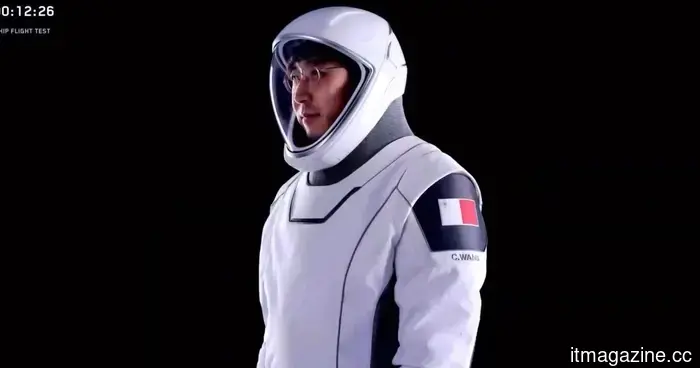 A billionaire from the cryptocurrency world will guide humanity to Mars aboard Musk's Starship.
The inaugural human journey to Mars by SpaceX might be commanded by Chun Wang, a cryptocurrency billionaire who has already completed one private astronaut mission.
A billionaire from the cryptocurrency world will guide humanity to Mars aboard Musk's Starship.
The inaugural human journey to Mars by SpaceX might be commanded by Chun Wang, a cryptocurrency billionaire who has already completed one private astronaut mission.
 Starbucks has discontinued its AI management tool because it was not performing as well as a human manager.
Starbucks is discontinuing its AI-driven inventory system throughout North America after the tool allegedly faced ongoing issues with counting and labeling inaccuracies.
Starbucks has discontinued its AI management tool because it was not performing as well as a human manager.
Starbucks is discontinuing its AI-driven inventory system throughout North America after the tool allegedly faced ongoing issues with counting and labeling inaccuracies.
 From humidity to energy: Researchers demonstrate how kitchen objects can generate power for wearables and smart home gadgets.
A novel biodegradable gadget composed of gelatin, table salt, and activated charcoal has the ability to produce electricity from the moisture in the air, paving the way for innovative battery-free wearable technology.
From humidity to energy: Researchers demonstrate how kitchen objects can generate power for wearables and smart home gadgets.
A novel biodegradable gadget composed of gelatin, table salt, and activated charcoal has the ability to produce electricity from the moisture in the air, paving the way for innovative battery-free wearable technology.
 Apple Preview is perhaps the most undervalued application on Mac. Here are seven features you might not be aware of that it offers.
Apple Preview has subtly evolved into one of the most robust applications on your Mac. From modifying PDFs to eliminating image backgrounds, here are 7 features it offers that may surprise you.
Apple Preview is perhaps the most undervalued application on Mac. Here are seven features you might not be aware of that it offers.
Apple Preview has subtly evolved into one of the most robust applications on your Mac. From modifying PDFs to eliminating image backgrounds, here are 7 features it offers that may surprise you.
 The AI security gap that no one is willing to acknowledge is already present.
The leak of the Anthropic Claude Code source code uncovered more than just a packaging mistake; it highlighted the significant lead attackers have with AI compared to the challenges defenders face in keeping up.
The AI security gap that no one is willing to acknowledge is already present.
The leak of the Anthropic Claude Code source code uncovered more than just a packaging mistake; it highlighted the significant lead attackers have with AI compared to the challenges defenders face in keeping up.
The Apple Watch is now 11 years old and is beginning to lose its impact. Competitors without screens are gaining traction in the upcoming phase.
Whoop, Oura, and Google's Fitbit Air are transforming wearables through AI coaching and passive tracking. In contrast, Apple's Health app still seems to be in a state of limbo.