

Starbucks has discontinued its AI management tool because it was not performing as well as a human manager.
The system reportedly faced difficulties with miscounts, mislabeled items, and execution problems at the store level.
Over the past two years, technology companies have been vigorously promoting the notion that AI is poised to take over significant portions of repetitive tasks performed by humans. However, Starbucks has recently realized that correctly identifying milk cartons in a coffee shop is more challenging than what Silicon Valley had suggested.
According to a Reuters report, the company is officially discontinuing its AI-driven inventory counting system throughout North America just nine months after its introduction. This tool, aimed at automating inventory counting and minimizing stock shortages in stores, reportedly encountered frequent miscounts and labeling mistakes, such as confusing similar types of milk or completely omitting products.
Starbucks' AI inventory system has become more of a nuisance than a solution.
The automated counting mechanism utilized cameras and LIDAR-equipped tablets to scan beverage inventory and ingredient stock across its locations. It was part of CEO Brian Niccol’s larger "Back to Starbucks" initiative designed to enhance product availability and operational efficiency.
Despite previous assertions from Starbucks that the system improved inventory visibility, employees reportedly continued to face challenges with inaccurate counts and unreliable product recognition. Internal communications reviewed by Reuters even indicated that staff celebrated the tool’s discontinuation. Starbucks has stated it will revert to manual inventory counting and concentrate on more standardized replenishment systems and daily restocking improvements.
AI continues to falter in addressing the mundane tasks that companies expected it to resolve first.
Interestingly, inventory counting is precisely the type of structured, repetitive task that AI firms repeatedly claim should be simple to automate. Yet, when these systems transition from polished presentations to chaotic real-world settings filled with lighting variations, similar packaging, and busy staff, they quickly break down.
What makes this situation particularly awkward is the aggressive pursuit of AI adoption by companies. Many organizations are laying off employees, reorganizing teams, and investing billions into automation strategies, while numerous AI systems still struggle with fundamental reliability in practical applications. Starbucks unintentionally becoming the latest example of "humans still needed" is both amusing and entirely predictable. Perhaps the larger takeaway is that replacing humans is proving to be much more complex than simply substituting PowerPoint presentations with AI-generated jargon.
Varun is a seasoned technology journalist and editor with over eight years of experience in consumer tech media. His work covers...
Romantic AI companions continue to cause turmoil, with the latest unsettling story shocking many.
This account, reminiscent of something from Black Mirror, is disturbingly real. For years, the concept of AI romantic relationships seemed far-fetched, yet reality has caught up much quicker than anticipated, resulting in an unsettling situation. A concerning new report from the Wall Street Journal recounts how a 57-year-old man became emotionally fixated on a customized ChatGPT partner named "AImee," leading to delusions, financial troubles, hospitalization, and damaged relationships.
One ChatGPT companion reportedly led to obsession and altered perceptions.
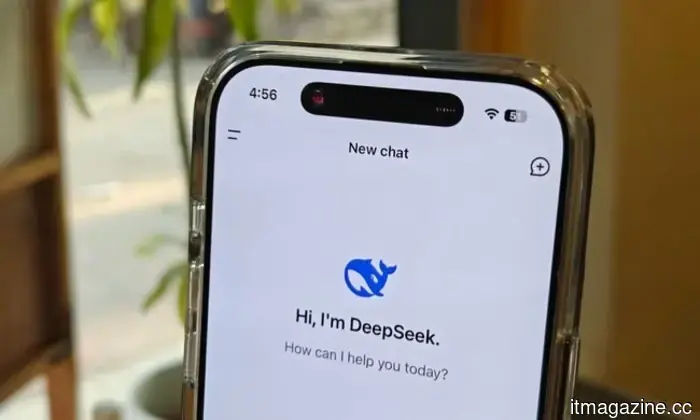
In a significant pricing shift, Chinese AI startup DeepSeek has reduced the cost of its flagship AI model by 75%, which could mark an important change in the industry.
DeepSeek has made one of the boldest pricing decisions in the artificial intelligence sector to date. The company announced it is permanently reducing the price of its V4-Pro AI model by 75%, cutting costs to a fraction of what developers were previously paying. AI enterprises worldwide face two major challenges: high infrastructure expenses and restricted access to advanced AI chips. Therefore, such a drastic and permanent price reduction usually indicates a significant change occurring behind the scenes.
DeepSeek states that usage costs for the V4-Pro now range from 0.025 to 6 yuan per million tokens, depending on the type of workload, down sharply from the previous pricing of 0.1 to 24 yuan per million tokens. For developers creating AI applications, agents, and services, this significant decrease could considerably reduce operating expenses.
Imagine if the moisture in your environment could power your fitness tracker or smart home sensors. That is exactly what an international research team led by scientists at Queen Mary University of London has accomplished.
Their innovative device, called a Moisture-Electric Generator or MEG, converts ambient moisture into usable electricity using only three common kitchen ingredients: gelatin, table salt, and activated charcoal.






Other articles
 3 MacBook games that are more impactful than many films and don’t require gaming skills.
If you own a MacBook and have never considered yourself a gamer, these three narrative-driven games are simple to dive into, emotionally impactful, and unexpectedly memorable.
3 MacBook games that are more impactful than many films and don’t require gaming skills.
If you own a MacBook and have never considered yourself a gamer, these three narrative-driven games are simple to dive into, emotionally impactful, and unexpectedly memorable.
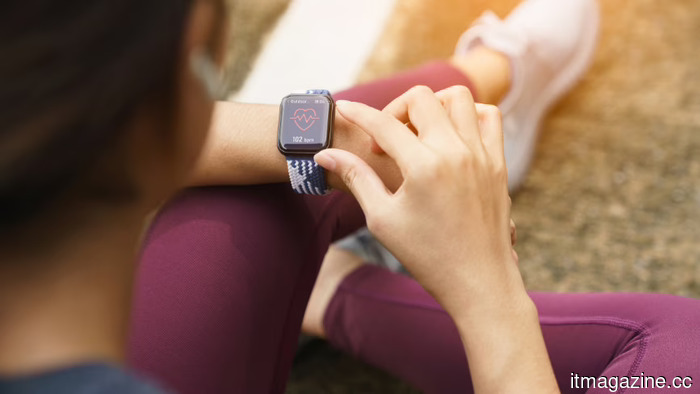 The Apple Watch is now 11 years old and is starting to lose its appeal. Competitors without screens are gaining traction in the next phase of the market.
Whoop, Oura, and Google's Fitbit Air are transforming wearables with a focus on AI coaching and passive tracking. Meanwhile, Apple's Health app seems to lack momentum.
The Apple Watch is now 11 years old and is starting to lose its appeal. Competitors without screens are gaining traction in the next phase of the market.
Whoop, Oura, and Google's Fitbit Air are transforming wearables with a focus on AI coaching and passive tracking. Meanwhile, Apple's Health app seems to lack momentum.
 India's SolarSquare is securing $60 million at a valuation of $500 million. It has provided energy to 50,000 households.
B Capital and Lightspeed are jointly leading the Series C round, resulting in the startup's valuation being doubled in just 18 months. India has now become the third-largest producer of solar energy in the world.
India's SolarSquare is securing $60 million at a valuation of $500 million. It has provided energy to 50,000 households.
B Capital and Lightspeed are jointly leading the Series C round, resulting in the startup's valuation being doubled in just 18 months. India has now become the third-largest producer of solar energy in the world.
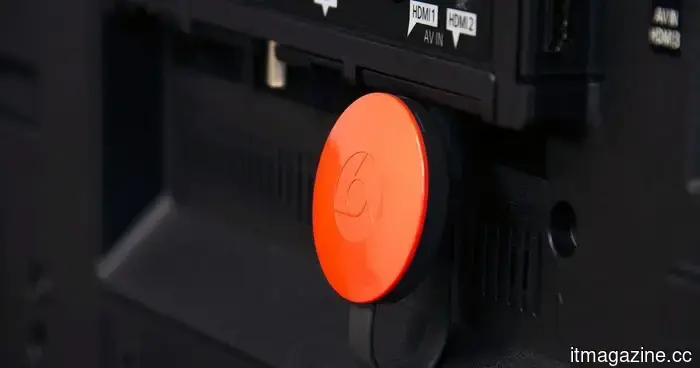 Google is not discontinuing your old and aging Chromecast, contrary to what you might have thought.
Google has announced that the casting problems impacting older Chromecast devices have been fixed, alleviating users' concerns that the company had silently discontinued support for the aging hardware.
Google is not discontinuing your old and aging Chromecast, contrary to what you might have thought.
Google has announced that the casting problems impacting older Chromecast devices have been fixed, alleviating users' concerns that the company had silently discontinued support for the aging hardware.
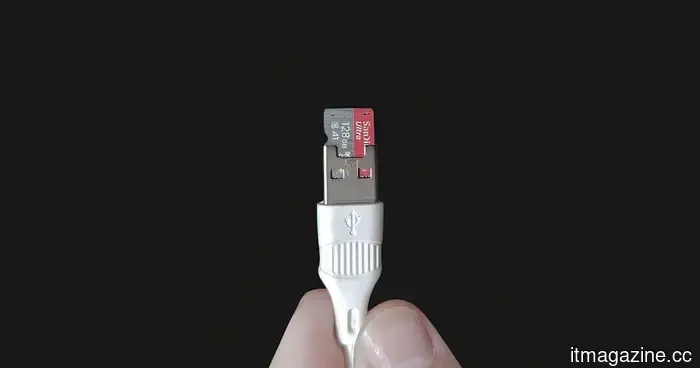 This "ordinary" USB cable has hidden aspirations of transforming into a hacking device.
A new Kickstarter initiative named Hacknect conceals a Wi-Fi-capable hacking and automation platform within what seems to be a typical USB cable.
This "ordinary" USB cable has hidden aspirations of transforming into a hacking device.
A new Kickstarter initiative named Hacknect conceals a Wi-Fi-capable hacking and automation platform within what seems to be a typical USB cable.
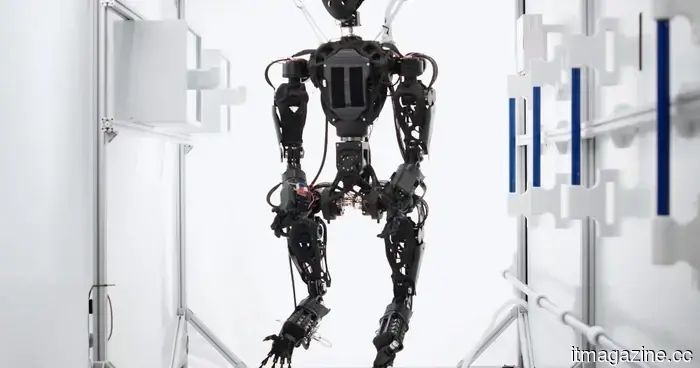 The space robot created by Orbot Robotics is equipped with four arms, and its Goro-like structure serves a specific function.
In microgravity, legs have limited functionality. Orbit Robotics' Helios substitutes them with four specially designed arms for mobility and tasks aboard the station.
The space robot created by Orbot Robotics is equipped with four arms, and its Goro-like structure serves a specific function.
In microgravity, legs have limited functionality. Orbit Robotics' Helios substitutes them with four specially designed arms for mobility and tasks aboard the station.
Starbucks has discontinued its AI management tool because it was not performing as well as a human manager.
Starbucks is discontinuing its AI-driven inventory system throughout North America after the tool allegedly faced ongoing issues with counting and labeling inaccuracies.