
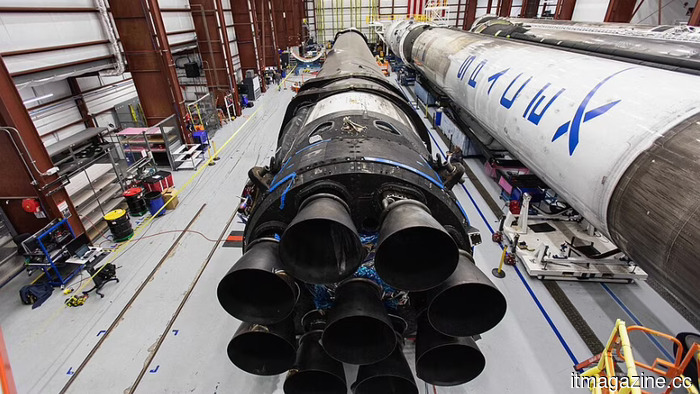
SpaceX launched Starship V3 three weeks prior to its IPO, but the booster exploded.
**TL;DR:** SpaceX's Starship V3 successfully deployed mock satellites but the Super Heavy booster was lost due to an explosion. The company's $75 billion IPO is just three weeks away.
On Friday evening, SpaceX conducted the 12th test flight of its Starship rocket from Starbase, Texas, showcasing the upgraded Version 3 vehicle. The flight managed to deploy 20 mock Starlink satellites and transmitted live video from space, but the Super Heavy booster was destroyed post-separation, failing to make a controlled descent. This test comes three weeks ahead of SpaceX's anticipated $75 billion IPO, which would be the largest in history.
The 90-minute launch window began at 6:30 p.m. ET after a previous day's scrub due to a hydraulic pin malfunction. Starship V3 launched from a new pad at Starbase, propelled by 33 Raptor engines generating 18 million pounds of thrust. At full stack height, it measures 408 feet, making it the largest rocket ever constructed or flown.
The ascent and stage separation of the flight went as planned, but issues arose shortly after the Super Heavy booster detached. During an engine relight intended for steering a controlled landing, failures led to substantial damage to the booster’s aft section, resulting in loss of control. The booster was supposed to descend into the Gulf of Mexico rather than land back at the launch tower.
The upper stage, known as Ship 39, continued on a suborbital path despite losing one of its six engines mid-flight. It successfully deployed the 20 mock Starlink satellites sequentially, as well as two modified satellites designed to scan the spacecraft's heat shield and send data during descent. After reaching Mach 7, Starship ignited two engines before splashing down vertically in the Indian Ocean, where it tipped and exploded upon water impact, which was anticipated for this test.
According to the IPO prospectus filed Wednesday, SpaceX has invested over $15 billion into the Starship program. The company states that Starship is “designed to deliver 100 metric tons to Earth’s orbit in a fully reusable format, enabling rapid turnaround times similar to commercial aviation.” Full reusability hinges on both the upper stage and booster returning intact. However, Friday's flight did not accomplish this, though it validated that the core mission of satellite deployment from a suborbital trajectory functions with the V3 hardware.
The prospectus also notes that Elon Musk owns around 42% of SpaceX's equity but controls about 79% of the voting power through a dual-class share system. After merging with Musk's AI startup, xAI, in February, the company was valued at $1.25 trillion. It now seeks a $1.75 trillion valuation for its public offering, with a 21-bank underwriting syndicate and a global roadshow slated for the week of June 8, targeting a listing date of June 12.
Before the launch, NASA Administrator Jared Isaacman visited Starbase and appeared on the company's livestream in a flight suit alongside SpaceX personnel. Isaacman, who previously commanded two private missions with SpaceX, maintains a close relationship with Musk. NASA plans to use a modified Starship to land astronauts on the moon through its Artemis program in 2028. While the booster failure does not directly impact the Artemis schedule, it highlights the necessity for further development of the V3 vehicle’s propulsion systems before crewed missions can be contemplated.
In an unexpected announcement during the pre-launch period, SpaceX disclosed that private explorer and cryptocurrency entrepreneur Chun Wang, who led the Fram2 polar orbit mission, will helm the first Starship flyby of Mars, which will also pass by the moon, although no timeline was provided.
Friday's test marked SpaceX's first Starship launch in seven months, following several explosions and setbacks in early 2025 that led to air travel disruptions from falling debris. The company had flown five Starship test missions in 2025 against a target of 25. The FAA has authorized SpaceX to increase its launch frequency at Starbase to up to 25 launches annually, with an additional February 2026 authorization permitting up to 44 Starship launches yearly from Pad LC-39A in Florida.
Starship plays a crucial role in SpaceX's Starlink business strategy. Last year, the company launched over 3,000 satellites using 122 Falcon 9 missions, but Starship is engineered to carry and deploy considerably more satellites per mission, facilitating the expansion needed to reach dense urban populations and support the anticipated growth, with 10 million subscribers and $20 billion in projected revenue for 2026. The upcoming IPO coincides with listings from OpenAI and Anthropic, collectively generating a demand for over $150 billion in institutional capital, which could transform public markets.
The booster failure will not impede the IPO process. SpaceX’s prospectus explicitly states that “Starship development involves substantial risks including launch failures
Other articles
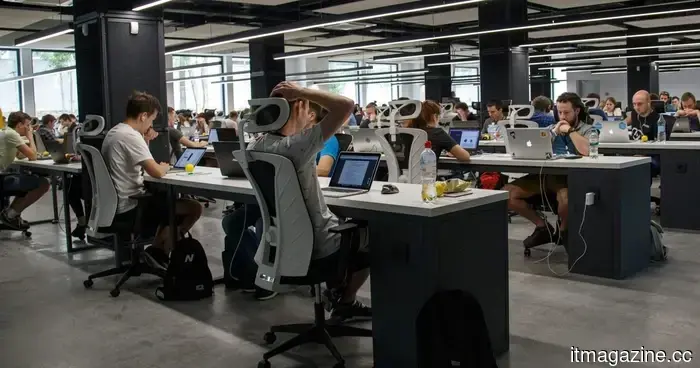 According to a report, Google, Meta, and Microsoft are collecting employee data using deceptive bossware tools.
The software that monitors your work hours might also be sending information to Big Tech. A recent study from Northeastern reveals that bossware is emerging as a growing privacy concern.
According to a report, Google, Meta, and Microsoft are collecting employee data using deceptive bossware tools.
The software that monitors your work hours might also be sending information to Big Tech. A recent study from Northeastern reveals that bossware is emerging as a growing privacy concern.
 Social media is eroding your happiness with each scroll.
The World Happiness Report revealed that increased time spent on social media correlates with a greater decline in well-being, with young individuals in Western countries experiencing the most significant effects.
Social media is eroding your happiness with each scroll.
The World Happiness Report revealed that increased time spent on social media correlates with a greater decline in well-being, with young individuals in Western countries experiencing the most significant effects.
SpaceX launched Starship V3 three weeks prior to its IPO, but the booster exploded.
The twelfth test flight launched dummy satellites, but the Super Heavy booster was destroyed following separation. SpaceX plans to secure $75 billion next month.