
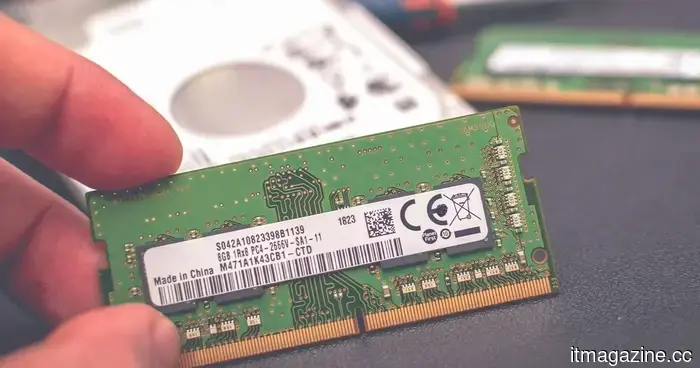
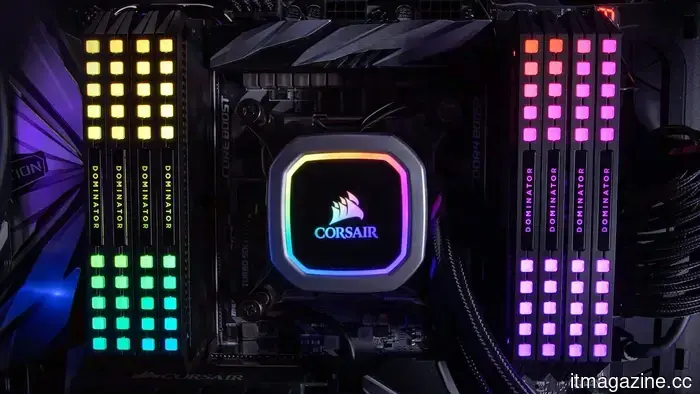
Corsair is introducing Chinese RAM into the mainstream market. However, it is unlikely to entirely resolve the crisis.
After months of prohibitively high RAM and SSD prices, the memory market may finally be feeling pressure from an unexpected source: China. Recent reports indicate that Chinese memory manufacturers are quickly increasing their production of DRAM and NAND chips, prompting major hardware brands to take notice. A notable instance is Corsair, which has allegedly tested DDR5 memory modules featuring chips from Chinese DRAM leader ChangXin Memory Technologies, commonly referred to as CXMT.
This development seems inevitable. Memory costs have remained frustratingly elevated across PCs, laptops, and storage devices for an extended period. Therefore, it was only a matter of time before Chinese suppliers began offering RAM at nearly half the prices of some global rivals. Market reports suggest that some CXMT DDR5 modules are being priced around $150, while comparable products from larger international suppliers often range between $300 and $400.
China's memory initiative is becoming increasingly significant.
CXMT is no longer a minor experimental player in the background. Reports indicate that the company has grown to capture nearly 8% of the global DRAM market while aggressively increasing DDR5 production. Concurrently, Chinese NAND manufacturer Yangtze Memory Technologies (YMTC) has emerged as a key player in flash storage, with estimates suggesting its global NAND market share is between 11% and 13%.
This scale is crucial, as memory pricing is highly influenced by supply. When inexpensive chips start entering the market in substantial quantities, global brands will gain leverage. Even if companies don't completely switch suppliers, the mere availability of lower-cost options can pressure established players to reduce their prices.
Cheaper RAM still needs to prove itself
However, this doesn't imply that Chinese memory will instantly replace Samsung, SK hynix, or Micron. Affordable RAM is one aspect, but achieving the same performance consistency, silicon quality, production maturity, and long-term reliability as the leading three is the real challenge.
Corsair's reported testing grants some credibility to CXMT. Yet, it is merely a beginning. One DDR5 kit does not equate to Chinese memory being on par with Samsung, SK hynix, and Micron. For PC manufacturers, module speed is just one component of the equation. Stability, firmware functionality, compatibility, warranty risk, and reliable supply all play equally important roles.
Scale may be the main issue
Even if CXMT can produce DDR5 that appears competitive on paper, the greater obstacle is scaling up production. The company still needs to demonstrate its ability to consistently manufacture sufficient high-quality silicon with high yields over an extended period in order to be a credible alternative.
A few lower-cost modules may annoy Samsung and SK hynix, but a dependable, high-volume supply chain is what will truly transform the market. If yields aren't sufficiently strong, low pricing may not lead to stable global availability. Additionally, without proven reliability, major PC brands may view Chinese memory primarily as a negotiation tool rather than a legitimate alternative.
The U.S.-China chip conflict could pose challenges
The ongoing U.S.-China chip conflict adds another layer of complexity. Washington has already targeted China's access to advanced chipmaking technologies, HBM, and other segments of the semiconductor supply chain. YMTC is included in the U.S. Entity List, and CXMT finds itself embroiled in the broader export-control battle.
Therefore, even if Chinese RAM emerges as a viable option, it might not remain unnoticed for long. Memory holds significant importance in the PC industry, and past actions have shown that U.S. officials are willing to target Chinese technology in trade disputes.
Don’t expect instant cheap RAM
In summary, this situation is unlikely to immediately “resolve” issues within the memory market. Performance consistency, reliability, certifications, firmware stability, and long-term supply agreements continue to hold immense importance for PC manufacturers and enterprise buyers. Established suppliers like Samsung, SK hynix, and Micron Technology still prevail in these relationships.
However, the pressure is mounting. If Chinese companies continue to ramp up production faster than demand grows, particularly outside of the AI server surge, consumers could eventually see more affordable RAM kits, SSDs, and laptops once again. Just not as quickly as many might hope.
Other articles
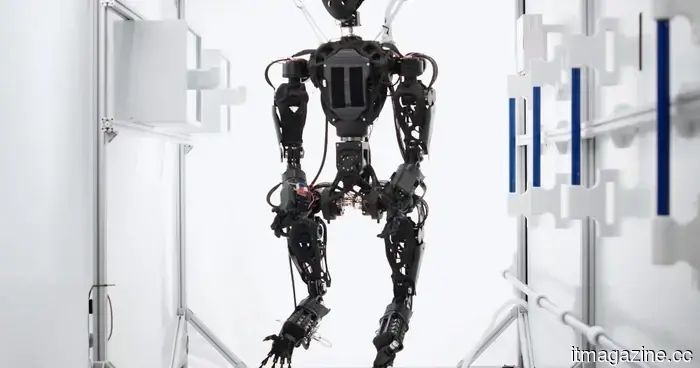 The space robot created by Orbot Robotics is equipped with four arms, and its Goro-like structure serves a specific function.
In microgravity, legs have limited functionality. Orbit Robotics' Helios substitutes them with four specially designed arms for mobility and tasks aboard the station.
The space robot created by Orbot Robotics is equipped with four arms, and its Goro-like structure serves a specific function.
In microgravity, legs have limited functionality. Orbit Robotics' Helios substitutes them with four specially designed arms for mobility and tasks aboard the station.
 HP released a crucial BIOS update via Windows Update, which ended up disabling its most high-end laptops.
Owners of ZBook Ultra and EliteBook X devices are experiencing issues with their devices being unbootable following the automatic installation of a critical BIOS patch. HP has stated that they are "investigating the matter."
HP released a crucial BIOS update via Windows Update, which ended up disabling its most high-end laptops.
Owners of ZBook Ultra and EliteBook X devices are experiencing issues with their devices being unbootable following the automatic installation of a critical BIOS patch. HP has stated that they are "investigating the matter."
 iOS 27 may significantly simplify the management of your AirPods.
Apple might be getting ready to tidy up the chaotic settings experience for AirPods, which has been needed for a while. For those who are weary of sifting through Bluetooth menus, these updates could seem quite impactful.
iOS 27 may significantly simplify the management of your AirPods.
Apple might be getting ready to tidy up the chaotic settings experience for AirPods, which has been needed for a while. For those who are weary of sifting through Bluetooth menus, these updates could seem quite impactful.
 McKinsey developed a complimentary AI tool to help candidates avoid spending $500 an hour on interview coaching services.
The consulting firm introduced an AI practice tool that allows for unlimited attempts at case studies. Additionally, it evaluates candidates on their collaboration with its AI assistant, Lilli.
McKinsey developed a complimentary AI tool to help candidates avoid spending $500 an hour on interview coaching services.
The consulting firm introduced an AI practice tool that allows for unlimited attempts at case studies. Additionally, it evaluates candidates on their collaboration with its AI assistant, Lilli.
 Good Lock is the reason I continue to return to the Galaxy S26.
After using Good Lock on my Galaxy S26, Samsung's software transitioned from feeling like a static interface to something that I could genuinely customize to match my personal preferences.
Good Lock is the reason I continue to return to the Galaxy S26.
After using Good Lock on my Galaxy S26, Samsung's software transitioned from feeling like a static interface to something that I could genuinely customize to match my personal preferences.
 This "ordinary" USB cable has hidden aspirations of transforming into a hacking device.
A new Kickstarter initiative named Hacknect conceals a Wi-Fi-capable hacking and automation platform within what seems to be a typical USB cable.
This "ordinary" USB cable has hidden aspirations of transforming into a hacking device.
A new Kickstarter initiative named Hacknect conceals a Wi-Fi-capable hacking and automation platform within what seems to be a typical USB cable.
Corsair is introducing Chinese RAM into the mainstream market. However, it is unlikely to entirely resolve the crisis.
Chinese manufacturers of memory are introducing more affordable RAM and storage chips into the market, catching the attention of leading PC brands. This change could significantly impact hardware pricing in the future, though it may come with challenges along the way.