
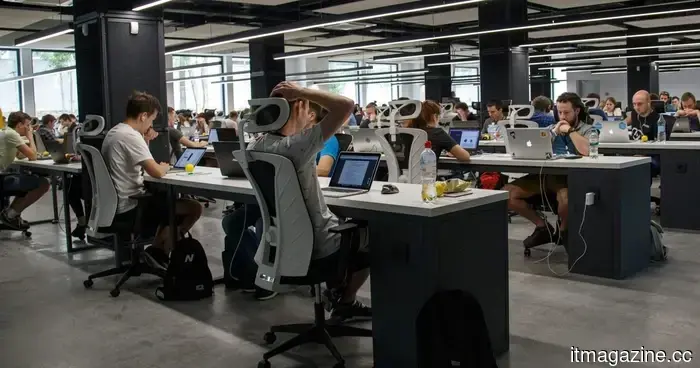
According to a report, Google, Meta, and Microsoft are collecting employee data using deceptive bossware tools.
The era of remote work has made it easier to rationalize the use of employee monitoring software. Initially developed to oversee individuals working from home, these tools are now becoming commonplace in corporate offices as well. A recent study by Northeastern University indicates that the data obtained from these monitoring tools is often shared with major third parties such as Google, Facebook, and Microsoft.
David Choffnes, a professor at Northeastern's Khoury College of Computer Sciences and one of the study's co-authors, highlighted that the research reveals a significant lack of privacy protection for employees in the workplace. He emphasized that the concern extends beyond employers merely collecting data; it also encompasses the sharing of this data outside the organization.
The researchers examined nine "bossware" platforms, including Apploye, Deputy, Desklong, Hubstaff, Monitask, Buddy Punch, Time Doctor 2, Vericlock, and When I Work. These applications enable employers to monitor activities through keystrokes, mouse clicks, location data, device information, and browsing history.
What were the researchers' findings?
The study discovered that all nine platforms disclosed personal information of employees, including names, email addresses, and details about their employers, to technology and advertising firms. Furthermore, employee activity data was transmitted to over 145 domains, which included major companies like Google, Facebook, LinkedIn, Yandex, and AppLovin.
Additionally, a third of these applications provided precise location tracking capabilities, even when they were operating in the background. Choffnes cautioned that this feature allows monitoring software to track workers beyond their immediate work environment.
Essentially, this implies that employee data may not remain confined to the employee, the employer, and the monitoring application, but could potentially infiltrate a broader network of third-party trackers, often without employees having significant control over its distribution or usage.
Worker data is becoming a resource for AI development
These revelations are particularly alarming given the ongoing trend of AI companies harvesting data on human behavior as training resources. Reports have indicated that Meta has encountered internal criticism over software that tracks employee computer activities for AI training purposes, especially after the company recently reduced its workforce by approximately 10%.
In India, there have also been reports of workers using cameras or filming their routine physical tasks for AI and robotics training. Although these scenarios differ from the data-sharing practices associated with bossware, they highlight a similar issue where technology firms collect data on human activities connected to work, homes, and everyday life.
The Northeastern report does not assert that this data is being utilized for AI training; it may simply be contributing to the same advertising and analytics systems that already monitor individuals online. Nonetheless, detailed tracking of employee activities is rapidly becoming standard. At this rate, how long will it be before employees are asked to help train the very systems designed to displace them?

Other articles
 Huawei has introduced a 122 TB SSD for AI infrastructure.
Huawei has released the OceanDisk 1800 storage device with a capacity of 122.88 TB. The company uses Die-on-Board technology to increase storage density in conditions of limited access to advanced 3D NAND.
Huawei has introduced a 122 TB SSD for AI infrastructure.
Huawei has released the OceanDisk 1800 storage device with a capacity of 122.88 TB. The company uses Die-on-Board technology to increase storage density in conditions of limited access to advanced 3D NAND.
 Huawei has introduced a 122 TB SSD for AI infrastructure.
Huawei has released the OceanDisk 1800 storage device with a capacity of 122.88 TB. The company uses Die-on-Board technology to increase storage density in conditions of limited access to advanced 3D NAND.
Huawei has introduced a 122 TB SSD for AI infrastructure.
Huawei has released the OceanDisk 1800 storage device with a capacity of 122.88 TB. The company uses Die-on-Board technology to increase storage density in conditions of limited access to advanced 3D NAND.
 Social media is eroding your happiness with each scroll.
The World Happiness Report revealed that increased time spent on social media correlates with a greater decline in well-being, with young individuals in Western countries experiencing the most significant effects.
Social media is eroding your happiness with each scroll.
The World Happiness Report revealed that increased time spent on social media correlates with a greater decline in well-being, with young individuals in Western countries experiencing the most significant effects.
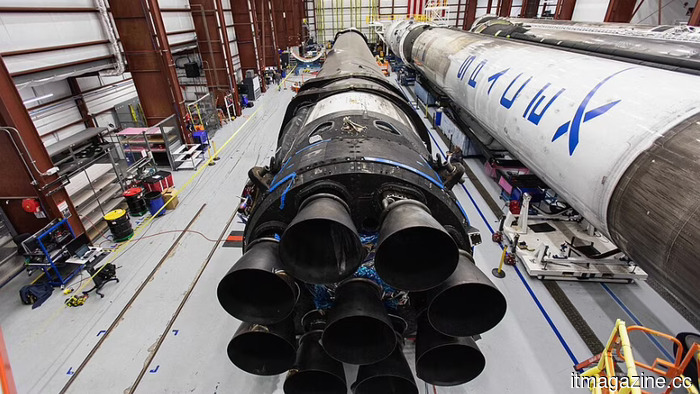 SpaceX launched Starship V3 three weeks prior to its IPO, but the booster exploded.
The twelfth test flight launched dummy satellites, but the Super Heavy booster was destroyed following separation. SpaceX plans to secure $75 billion next month.
SpaceX launched Starship V3 three weeks prior to its IPO, but the booster exploded.
The twelfth test flight launched dummy satellites, but the Super Heavy booster was destroyed following separation. SpaceX plans to secure $75 billion next month.
According to a report, Google, Meta, and Microsoft are collecting employee data using deceptive bossware tools.
The software that monitors your work hours might also be sending information to Big Tech. A recent study from Northeastern reveals that bossware is emerging as a growing privacy concern.