
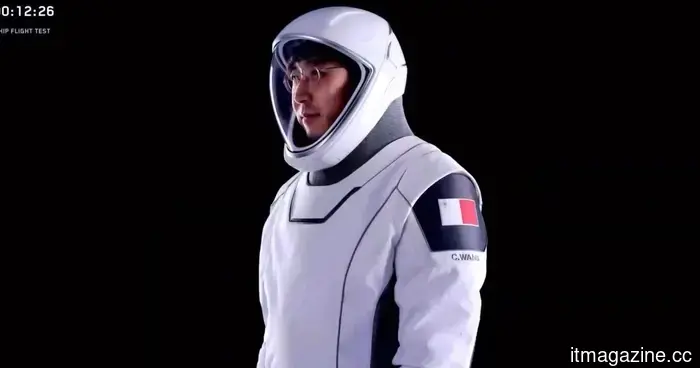
A billionaire from the cryptocurrency world will guide humanity to Mars aboard Musk's Starship.
Chun Wang might be among the first individuals to journey toward Mars.
Neil Armstrong and Buzz Aldrin became emblematic figures of the Moon landing era. In contrast, Elon Musk’s vision for Mars could gain a distinct public representative in Chun Wang, a billionaire from the cryptocurrency sector whose wealth originates from Bitcoin mining.
Wang is anticipated to head a future SpaceX Starship mission that aims to fly past Mars and return to Earth. However, SpaceX has yet to announce a launch date, and the mission hinges on Starship demonstrating its ability to safely transport humans beyond Earth’s orbit.
Private space travel has already moved past its phase focused on celebrities. In April 2025, Blue Origin launched Katy Perry, Gayle King, Lauren Sánchez, Aisha Bowe, Amanda Nguyễn, and Kerianne Flynn aboard its NS-31 New Shepard mission. This all-female suborbital flight lasted only a few minutes but garnered significant global attention.
Wang’s upcoming mission is significantly more ambitious than a brief trip to the brink of space. The flyby of Mars could reportedly take around two years, presenting a much greater challenge for both the spacecraft and the passenger. Should SpaceX succeed, Wang could be among the first humans to travel toward Mars, even without landing there.
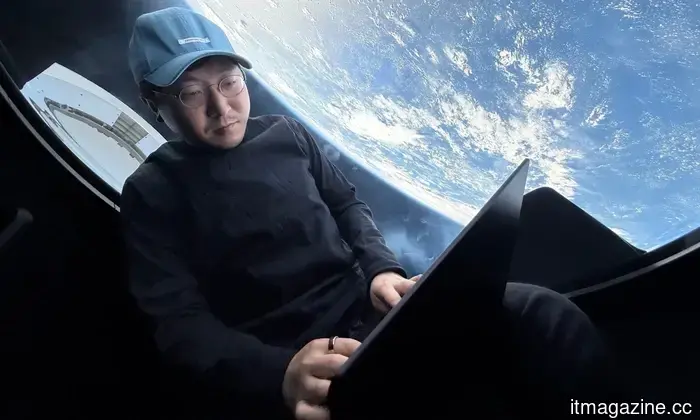
Wang is not unfamiliar with private space travel. He previously led SpaceX’s Fram2 mission, a Crew Dragon flight that transported four civilian astronauts over the polar regions of Earth in 2025. This mission, which lasted several days, provided Wang with genuine orbital flight experience ahead of his planned venture with Starship. While this does not lessen the ambition of the Mars flyby, it indicates that SpaceX is selecting someone with prior space experience.
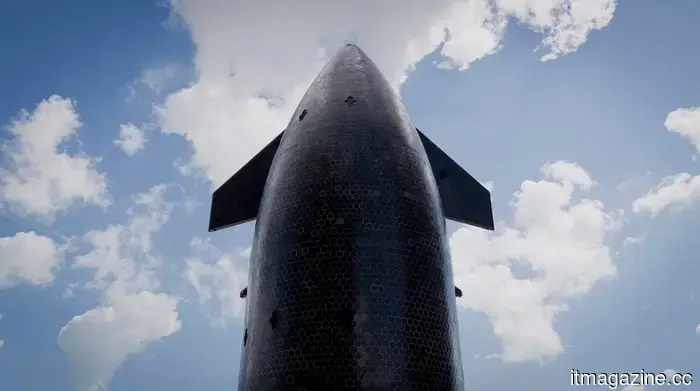
Elon Musk’s vision for Mars still requires a functioning spacecraft. Musk has long expressed SpaceX’s ambition to reach Mars, and Starship is the rocket designed for that purpose, though it is still undergoing testing.
SpaceX’s enhanced Starship V3 launched on May 22, 2026, following an earlier scrubbing due to an issue with the launch tower. The uncrewed test reportedly met several objectives, including stage separation and simulated Starlink satellite deployment, before concluding with a splashdown in the Indian Ocean and bursting into a large fireball. SpaceX stated that the fiery conclusion was intentional, as the company did not plan to recover or reuse the experimental vehicle.
Starship has yet to carry humans, meaning Wang’s Mars mission remains a distant prospect. At present, the plan is contingent on SpaceX demonstrating that the rocket can safely transport people far beyond Earth.
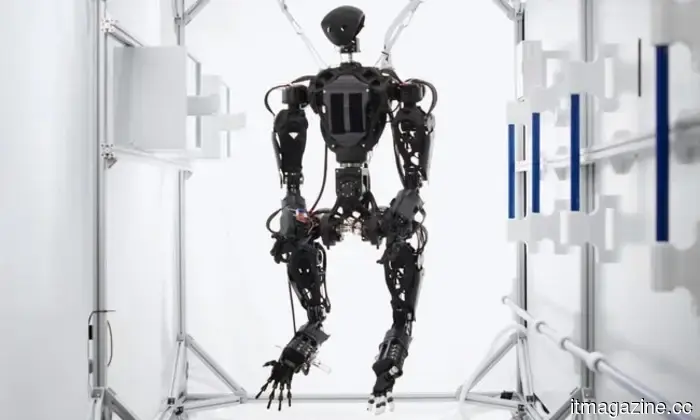
Orbot Robotics’ space robot features four arms, but its Goro-like design serves a specific purpose.
This four-armed robot could simplify routine tasks on the space station for astronauts. Helios is a new four-armed robot developed by Zurich-based Orbit Robotics, and its appearance is reminiscent of Goro from Mortal Kombat. However, unlike the character from Outworld, Helios is not intended for combat. It is created to assist astronauts on space stations with repetitive and time-consuming tasks necessary for sustaining life in space.
Orbit Robotics states that, in microgravity, legs are not particularly useful. Rather than walking or standing, Helios must navigate cramped areas of the station, stabilize itself, and manage cargo, tools, or equipment. Its four-arm configuration transforms extra limbs into both mobility aids and functioning hands.
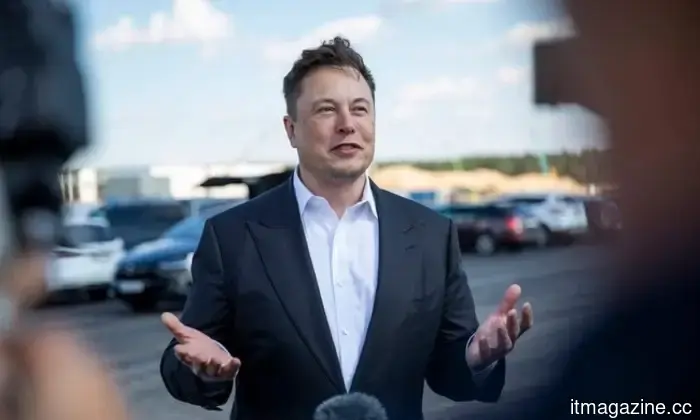
Elon Musk stands to receive a monumental payment if he successfully establishes a colony of one million humans on Mars.
SpaceX might offer Musk a historic payday if Mars transforms into a city. Executive compensation packages typically link to performance reviews, profits, share prices, or operational goals. However, SpaceX seems to have a different approach. According to a Bloomberg report and information from SpaceX's IPO filing, Musk's latest compensation plan includes a remarkable condition. The company must create a permanent human settlement on Mars with a minimum of one million residents. Yet, this is just one aspect of the extraordinary agreement.
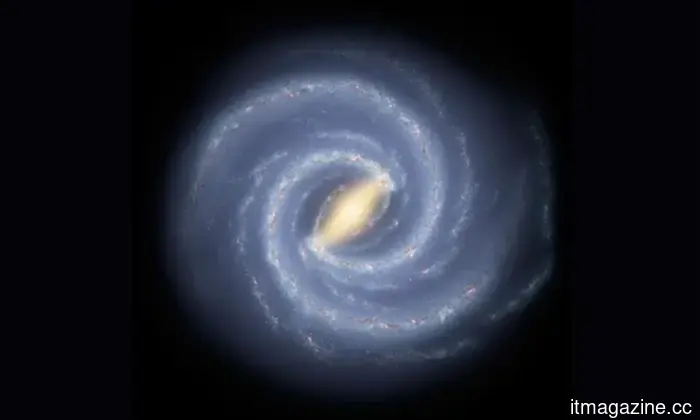
Scientists have discovered a concealed galaxy within the Milky Way, naming it Loki.
There may be a lost dwarf galaxy concealed within the Milky Way. A recent study published in the Monthly Notices of the Royal Astronomical Society indicates that the Milky Way may have absorbed an ancient dwarf galaxy billions of years ago, and its stellar remnants remain embedded within ours. Researchers have dubbed this hidden galaxy Loki, after the Norse trickster god, a fitting name considering it has remained undetected for an extensive period.

Other articles
 The Apple Watch is now 11 years old and is losing its edge. Competitors without screens are taking the lead in the upcoming phase.
Whoop, Oura, and Google's Fitbit Air are transforming wearables through AI coaching and passive tracking, while Apple's Health app seems to be in a state of limbo.
The Apple Watch is now 11 years old and is losing its edge. Competitors without screens are taking the lead in the upcoming phase.
Whoop, Oura, and Google's Fitbit Air are transforming wearables through AI coaching and passive tracking, while Apple's Health app seems to be in a state of limbo.
 This "ordinary" USB cable has hidden aspirations of transforming into a hacking device.
A new Kickstarter initiative named Hacknect conceals a Wi-Fi-capable hacking and automation platform within what seems to be a typical USB cable.
This "ordinary" USB cable has hidden aspirations of transforming into a hacking device.
A new Kickstarter initiative named Hacknect conceals a Wi-Fi-capable hacking and automation platform within what seems to be a typical USB cable.
 HP released a crucial BIOS update via Windows Update, which ended up disabling its most high-end laptops.
Owners of ZBook Ultra and EliteBook X devices are experiencing issues with their devices being unbootable following the automatic installation of a critical BIOS patch. HP has stated that they are "investigating the matter."
HP released a crucial BIOS update via Windows Update, which ended up disabling its most high-end laptops.
Owners of ZBook Ultra and EliteBook X devices are experiencing issues with their devices being unbootable following the automatic installation of a critical BIOS patch. HP has stated that they are "investigating the matter."
 India's SolarSquare is securing $60 million with a valuation of $500 million. The company has energized 50,000 households.
B Capital and Lightspeed are jointly leading the Series C round, which has resulted in the startup's valuation doubling within 18 months. India has become the third-largest solar producer globally.
India's SolarSquare is securing $60 million with a valuation of $500 million. The company has energized 50,000 households.
B Capital and Lightspeed are jointly leading the Series C round, which has resulted in the startup's valuation doubling within 18 months. India has become the third-largest solar producer globally.
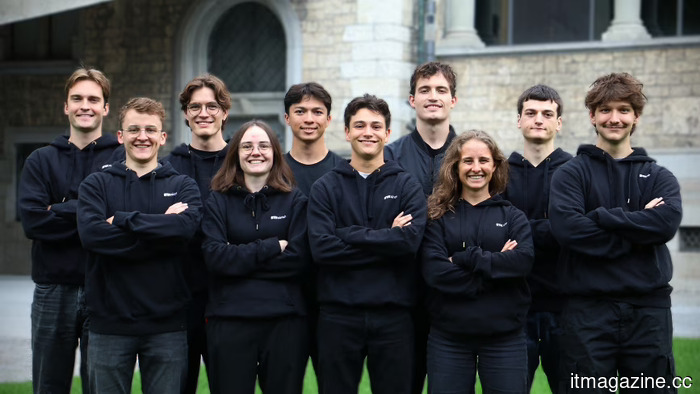 This startup in Zurich has developed a robot with four arms designed for space stations. Each hour it saves for astronauts is valued at $140,000.
Orbit Robotics' Helios employs tendon-driven arms to navigate through microgravity and manage cargo. Maintenance accounts for 35% of crew time in orbit.
This startup in Zurich has developed a robot with four arms designed for space stations. Each hour it saves for astronauts is valued at $140,000.
Orbit Robotics' Helios employs tendon-driven arms to navigate through microgravity and manage cargo. Maintenance accounts for 35% of crew time in orbit.
 India's SolarSquare is securing $60 million at a valuation of $500 million. It has provided energy to 50,000 households.
B Capital and Lightspeed are jointly leading the Series C round, resulting in the startup's valuation being doubled in just 18 months. India has now become the third-largest producer of solar energy in the world.
India's SolarSquare is securing $60 million at a valuation of $500 million. It has provided energy to 50,000 households.
B Capital and Lightspeed are jointly leading the Series C round, resulting in the startup's valuation being doubled in just 18 months. India has now become the third-largest producer of solar energy in the world.
A billionaire from the cryptocurrency world will guide humanity to Mars aboard Musk's Starship.
The inaugural human journey to Mars by SpaceX might be commanded by Chun Wang, a cryptocurrency billionaire who has already completed one private astronaut mission.