
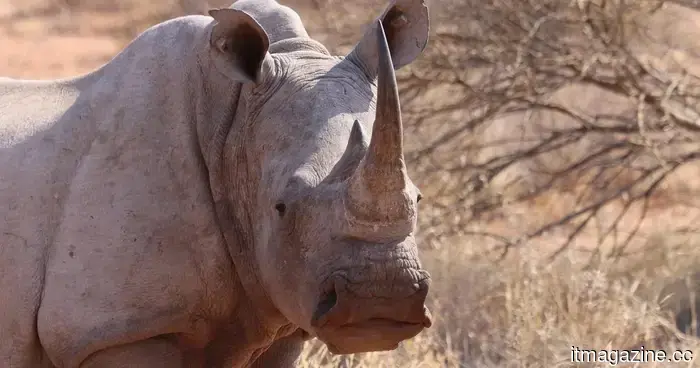
Wildlife tracking has received a significant enhancement, and it’s being delivered from space.
A new satellite system is transforming animals into an immediate alert system against poaching, potentially saving Africa's rhinos.
There is something extraordinary occurring in Namibia’s wildlife reserves. A satellite system known as Icarus is monitoring animals in distress, which could be the most effective anti-poaching tool ever developed by scientists.
To grasp the significance of this development, we must acknowledge the scale of the poaching crisis. In South Africa, over 10,000 rhinos have been poached in the past 15 years, and there appears to be no slowdown in sight. Rangers are outnumbered, reserves are expansive, and often, by the time a poacher is detected within the park, it is too late to intervene.
As reported by the BBC, scientists from the Max Planck Institute of Animal Behavior in Germany proposed an innovative solution. Rather than hiring additional rangers or installing more cameras, why not utilize the animals themselves as observers?
How does the technology function?
Animals display consistent reactions whenever a threat moves through their environment. To accurately record these panic responses, the team needed empirical data, which led to the simulation of poaching scenarios at Okambara, a private wildlife reserve in Namibia.
Hunters entered the bush, firing shots into the air while drones captured the distinct reactions of each species. The intent was not to harm the animals, but to document their behavior in response to the fear of an approaching poacher.
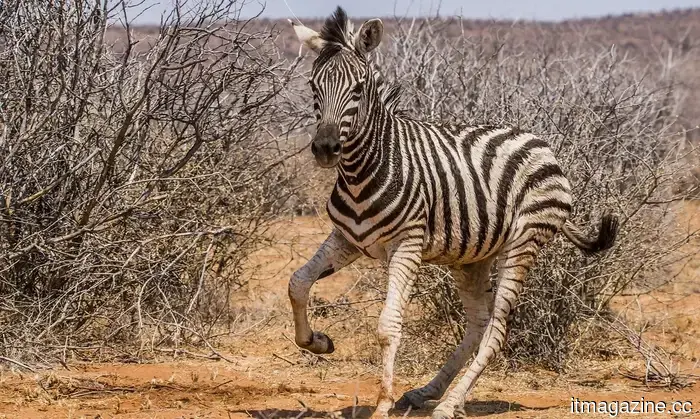
The objective is to analyze these panic behaviors to train an algorithm capable of sending immediate alerts to rangers. As Martin Wikelski, a leading movement ecologist at the Max Planck Institute, explains, even the most unlikely animals can contribute to this system. For instance, giraffes do not flee; they remain still, their heads directed toward the source of danger from a safe distance. “So we know where the threat is,” notes Wikelski.
This system is built around wildlife tracking tags that monitor GPS location, activity, heart rate, body temperature, and atmospheric pressure. The aim is to tag 100,000 animals globally by 2030, creating a network of early warnings.
Can it actually prevent poaching?
At Kruger National Park in South Africa, this system has already aided in rescuing 80 wild dogs from snares. However, the real-time detection of poachers is still evolving. In November, Icarus launched its first satellite, with plans for five more by 2027. Once fully operational, it will gather real-time data on animal movements from anywhere on Earth, complicating poachers' ability to operate covertly.
Starbucks abandons AI manager tool due to subpar performance compared to human workers.
The system reportedly struggled with inaccuracies, incorrect labeling, and execution problems at the store level.
For the past two years, technology firms have aggressively promoted the notion that AI is primed to replace large segments of repetitive human tasks. In contrast, Starbucks recently discovered that accurately identifying milk cartons in a coffee shop remains more complex than Silicon Valley had suggested. The company is officially discontinuing its AI-powered inventory counting system across North America just nine months after its launch, according to a Reuters report. The tool, intended to automate stock counts and reduce shortages within stores, has had issues with frequent miscounts and labeling mistakes, such as confusing similar milk variants or missing items entirely.
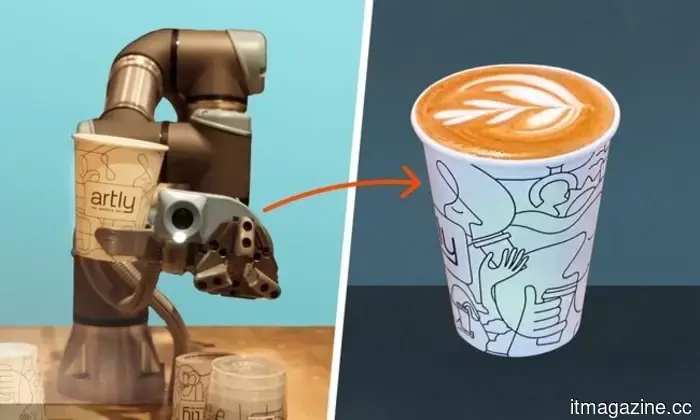
Some concepts remain theoretical until they materialize in everyday situations like your morning coffee. Artly is attempting to bridge that gap with its Barista Bot, a robotic barista system already serving beverages at locations including Muji in Portland, Oregon. The company aims to translate the skills, repetition, and instinct traditionally required by human baristas into a system that can consistently deliver the same quality on a larger scale.
What distinguishes the Barista Bot from standard automation is that Artly is not merely creating a coffee vending machine. Their objective is to emulate the techniques, standards, and workflow of a world-class barista closely enough so that the experience feels intentional, rather than automated. According to Dan Gaul, founder of Digital Trends, who visited the Portland site to sample the coffee, the beverage was remarkably good.
Magic Cue, one of the smartest features on the Pixel phones, is expanding to more applications.
Google's most underutilized feature on the Pixel 10 is finally getting the third-party integration and redesign it needs to become the proactive AI assistant it was always meant to be.
Magic Cue was, in my opinion, one of the most exciting aspects of the Pixel 10 launch. However, after the initial demonstration, the feature saw little practical use in daily interactions. Google appears to have taken notice. At I/O 2026, the company subtly announced plans to expand the feature and possibly redesign it. While it was not the main announcement, it could rekindle excitement among Pixel 10 users.




Другие статьи
 Microsoft will allow users to turn off the floating Copilot button in the Office application.
In the final week of May 2026, Microsoft is releasing an Office update that enables users to relocate the floating Copilot button from their documents back to the ribbon.
Microsoft will allow users to turn off the floating Copilot button in the Office application.
In the final week of May 2026, Microsoft is releasing an Office update that enables users to relocate the floating Copilot button from their documents back to the ribbon.
 Leaks related to the iPhone 18 series cases suggest a recognizable design, yet with an increasing thickness.
Leaked cases for the iPhone 18 Pro reveal a slightly bulkier design, indicating that cases for the iPhone 17 Pro will not be compatible. Here's what we currently know.
Leaks related to the iPhone 18 series cases suggest a recognizable design, yet with an increasing thickness.
Leaked cases for the iPhone 18 Pro reveal a slightly bulkier design, indicating that cases for the iPhone 17 Pro will not be compatible. Here's what we currently know.
 The LiDAR sensor on your iPhone may soon enable you to see around corners.
Researchers at MIT have shown that consumer-level LiDAR sensors can identify and monitor objects that are situated around corners. The equipment is priced at less than $50, and the software is already accessible to the public.
The LiDAR sensor on your iPhone may soon enable you to see around corners.
Researchers at MIT have shown that consumer-level LiDAR sensors can identify and monitor objects that are situated around corners. The equipment is priced at less than $50, and the software is already accessible to the public.
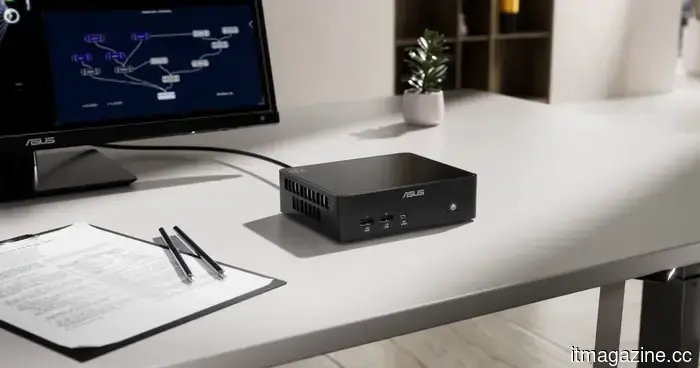 Mini PCs are the most thrilling mundane computers available for purchase.
Mini PCs may lack glamour, but that’s precisely what makes them appealing in a market crowded with pricey laptops, over-engineered towers, and computers that make excessive attempts to impress.
Mini PCs are the most thrilling mundane computers available for purchase.
Mini PCs may lack glamour, but that’s precisely what makes them appealing in a market crowded with pricey laptops, over-engineered towers, and computers that make excessive attempts to impress.
 Citroen is reintroducing the legendary 2CV as an electric vehicle with a price tag of less than $18,000.
Citroën is bringing back the cherished 2CV as a completely electric vehicle manufactured in Europe, with a price tag under €15,000, intending to restore the perception of affordability in EVs.
Citroen is reintroducing the legendary 2CV as an electric vehicle with a price tag of less than $18,000.
Citroën is bringing back the cherished 2CV as a completely electric vehicle manufactured in Europe, with a price tag under €15,000, intending to restore the perception of affordability in EVs.
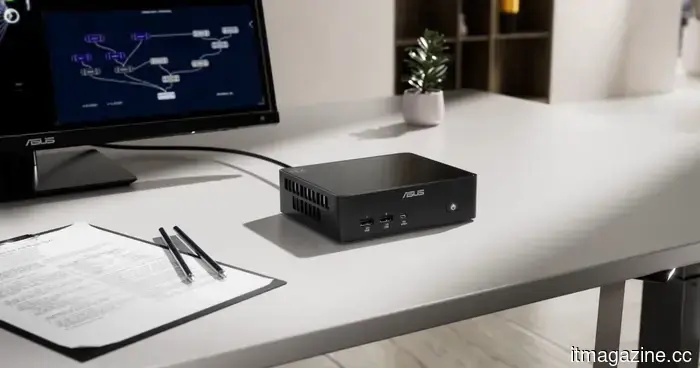 Mini PCs are the most intriguingly dull computers available for purchase.
Mini PCs may not be glamorous, but that’s exactly what makes them feel refreshing in a market saturated with pricey laptops, overly robust towers, and computers that strive too hard for attention.
Mini PCs are the most intriguingly dull computers available for purchase.
Mini PCs may not be glamorous, but that’s exactly what makes them feel refreshing in a market saturated with pricey laptops, overly robust towers, and computers that strive too hard for attention.
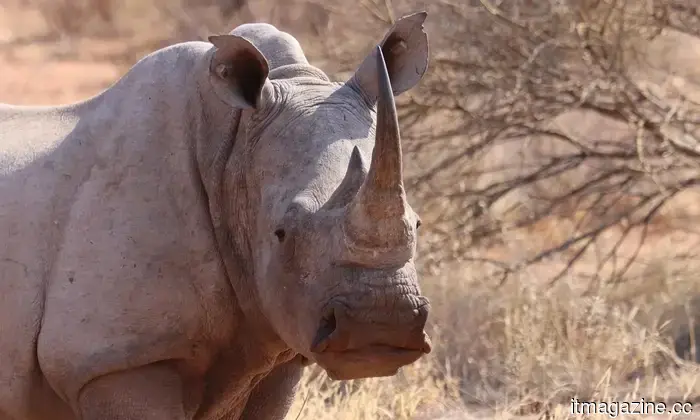
Wildlife tracking has received a significant enhancement, and it’s being delivered from space.
Over the past 15 years, over 10,000 rhinos have been poached in South Africa. A new satellite system designed to monitor animal distress could potentially provide rangers with a significant advantage.