
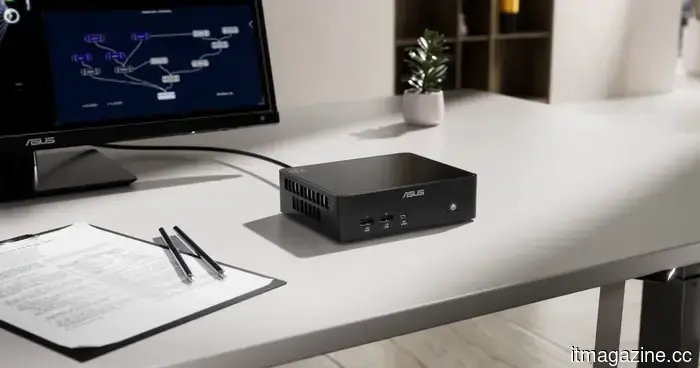
Mini PCs are the most thrilling mundane computers available for purchase.
I've been contemplating the purchase of a new device, which often ends up derailing well-intentioned plans. I prefer not to spend significant amounts on a laptop, mainly because I realize that much of it will end up sitting on a desk pretending to be portable. Additionally, I don’t want to construct my own desktop, as that quickly evolves into a hobby. Before I know it, I'm comparing cases, power supplies, cooling systems, GPUs, and a myriad of other components I only wanted to think about briefly.
This led me to consider mini PCs, perhaps the least dramatic option in personal computing. They are compact units that fit neatly beneath a monitor and stay unobtrusive. No one sees one and thinks, wow, cutting-edge technology has truly arrived in a matte black box.
A mundane box starts to make sense
Labeling them as boring seems somewhat unjust, as their simplicity serves a practical purpose. A mini PC eliminates the built-in display, battery, keyboard, webcam, hinge, and sleek metal casing that contribute to the high cost of laptops. It also sidesteps the full-tower dilemma, where each purchase subtly invites additional thoughts about airflow.
Instead, it presumes you already have, or can select, the surrounding peripherals. A monitor. A keyboard. A mouse. Perhaps some speakers. In return, it alleviates much of the drama that often inflates the perception of a straightforward tech purchase.
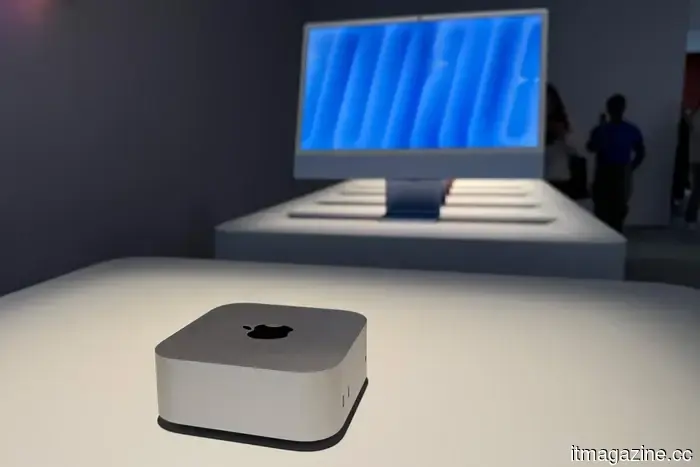
The Mac mini has played a significant role in normalizing this concept. The M4 model comes with 16GB of memory, which makes the idea of a tiny desktop appear less like an unconventional choice and more like a reasonable default. The Windows market is more chaotic, with Beelink, Geekom, Minisforum, Asus NUC-style devices, and other compact PCs transforming this category into something that is part practical, part dubious Amazon listing.
The compromise is inherently appealing
The downside is clear: mini PCs are not miraculous. Some lack power. Others can be noisy. Some are marketed with gaming claims that merit skepticism and possibly deeper investigation. Integrated graphics can be handy, but a small box doesn’t magically turn into a gaming powerhouse just because the product page features neon lights.
Valve's forthcoming Steam Machine makes the distinction even less clear. Valve describes it as PC gaming contained within a roughly 6-inch cube, designed for a desk or under a TV—essentially the mini PC idea dressed in console attire. It’s more than just another compact desktop, but it does point in the same direction: fewer components to obsess over, less DIY setup fuss, and a system that attempts to make PC gaming feel like less of a chore.
That limitation is advantageous because it keeps expectations modest. For tasks like browsing, office work, media consumption, light editing, and casual gaming, there exists a significant gap between what many people require and the products they are often encouraged to desire. Mini PCs thrive in that space. They become more appealing as the solution you turn to when you’re tired of pretending every purchase needs to be ambitious.
Just enough computer feels revitalizing
This is why mini PCs can feel refreshingly different. The process of buying computers has become unnecessarily complicated and extravagant. Premium laptops boast sophistication, gaming desktops peddle power fantasies, and creator machines imply that every spreadsheet could covertly turn into a cinematic experience.
Mini PCs are more pragmatic. They prompt you to consider what you genuinely need from a machine, once you strip away the lifestyle branding. That question resonates especially when a recent Tom’s Hardware survey revealed that 60% of PC gamers had no intention of building a new PC in the next two years, with price pressures and component shortages dampening enthusiasm.
A mini PC won’t evoke gasps. It likely won’t become the focal point of a desk setup video. But as a modest little desktop that handles everyday tasks without transforming the purchase into a statement of identity, it surprisingly begins to appear quite exciting. Perhaps “just enough computer” is the upgrade I’m really after.

Other articles
 The Sonos app unexpectedly disappeared from Apple’s App Store, and the reason behind it was unclear to anyone.
The Sonos app unexpectedly disappeared from Apple’s App Store for a few hours, leaving users bewildered and unable to access updates. Although the issue seems to have been resolved, it highlights Sonos' ongoing struggles with its software reputation.
The Sonos app unexpectedly disappeared from Apple’s App Store, and the reason behind it was unclear to anyone.
The Sonos app unexpectedly disappeared from Apple’s App Store for a few hours, leaving users bewildered and unable to access updates. Although the issue seems to have been resolved, it highlights Sonos' ongoing struggles with its software reputation.
 Citroen is reintroducing the legendary 2CV as an electric vehicle with a price tag of less than $18,000.
Citroën is bringing back the cherished 2CV as a completely electric vehicle manufactured in Europe, with a price tag under €15,000, intending to restore the perception of affordability in EVs.
Citroen is reintroducing the legendary 2CV as an electric vehicle with a price tag of less than $18,000.
Citroën is bringing back the cherished 2CV as a completely electric vehicle manufactured in Europe, with a price tag under €15,000, intending to restore the perception of affordability in EVs.
 Microsoft will allow users to turn off the floating Copilot button in the Office application.
In the final week of May 2026, Microsoft will be releasing an Office update that allows users to relocate the floating Copilot button from their documents back to the ribbon.
Microsoft will allow users to turn off the floating Copilot button in the Office application.
In the final week of May 2026, Microsoft will be releasing an Office update that allows users to relocate the floating Copilot button from their documents back to the ribbon.
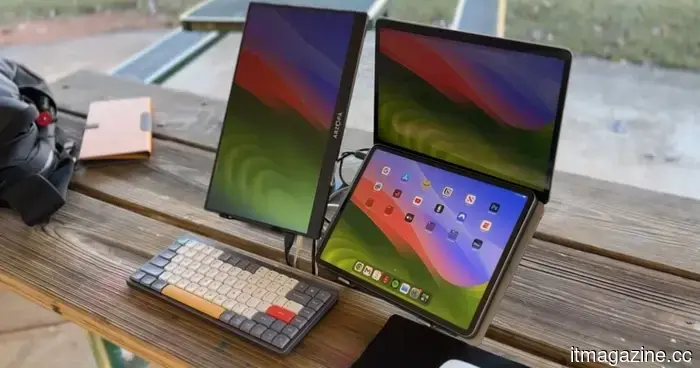 Why I have mixed feelings about portable monitors, despite my strong desire to have one.
I’d like to poke fun at portable monitors, but the frustrating reality is that they actually have their merits. That might be the most unfortunate aspect of them.
Why I have mixed feelings about portable monitors, despite my strong desire to have one.
I’d like to poke fun at portable monitors, but the frustrating reality is that they actually have their merits. That might be the most unfortunate aspect of them.
 Leaks related to the iPhone 18 series cases suggest a recognizable design, yet with an increasing thickness.
Leaked cases for the iPhone 18 Pro reveal a slightly bulkier design, indicating that cases for the iPhone 17 Pro will not be compatible. Here's what we currently know.
Leaks related to the iPhone 18 series cases suggest a recognizable design, yet with an increasing thickness.
Leaked cases for the iPhone 18 Pro reveal a slightly bulkier design, indicating that cases for the iPhone 17 Pro will not be compatible. Here's what we currently know.
 Valorant's anti-cheat has rendered certain pricey cheat hardware ineffective.
Riot has provided details on how the latest Vanguard update addresses DMA-based cheating hardware by strengthening memory protections at the hardware level. While this enforcement may deter sophisticated cheaters, it has also sparked concerns regarding potential overreach in anti-cheat measures.
Valorant's anti-cheat has rendered certain pricey cheat hardware ineffective.
Riot has provided details on how the latest Vanguard update addresses DMA-based cheating hardware by strengthening memory protections at the hardware level. While this enforcement may deter sophisticated cheaters, it has also sparked concerns regarding potential overreach in anti-cheat measures.
Mini PCs are the most thrilling mundane computers available for purchase.
Mini PCs may lack glamour, but that’s precisely what makes them appealing in a market crowded with pricey laptops, over-engineered towers, and computers that make excessive attempts to impress.