
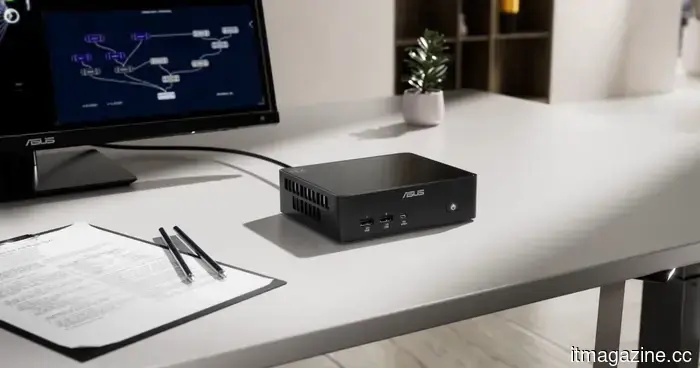
Mini PCs are the most intriguingly dull computers available for purchase.
I’ve been considering purchasing a new device, which is typically where sensible plans falter. I’m hesitant to spend a large amount on a laptop, partly because I know it would mostly remain on a desk, masquerading as portable. I’m also not keen on building my own desktop; that quickly becomes a hobby. Before I know it, I’m caught up in comparing cases, power supplies, cooling systems, GPUs, and other components I only wanted to ponder for a brief period.
This led me to explore mini PCs, likely the least flashy option in personal computing. They are compact devices that sit beneath a monitor and stay out of the way. No one glances at one and thinks, wow, the future has arrived in a matte black finish.
A simple box starts to seem logical
Describing them as boring feels somewhat unjust, as their simplicity serves a purpose. A mini PC omits the built-in screen, battery, keyboard, webcam, hinge, and sleek metal casing that contribute to a laptop's price. It also sidesteps the full-tower complexity, where every addition subtly invites another consideration about airflow.
Instead, it assumes you already have, or can select, the accompanying peripherals. A monitor, keyboard, mouse, and perhaps some speakers. In return, it simplifies the often overwhelming experience of a basic tech purchase.
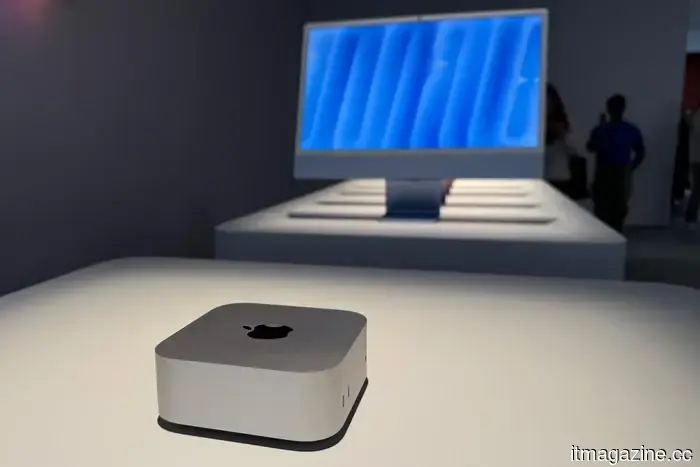
The Mac mini has made this concept feel more standard once again. The M4 model comes with 16GB of memory, making the compact desktop idea seem less like a niche option and more like a rational choice. The Windows market is more complicated, with Beelink, Geekom, Minisforum, Asus NUC-style devices, and other compact PCs transforming this category into something that is both practical and somewhat questionable on Amazon.
The trade-off is the main appeal
The drawback, of course, is that mini PCs aren’t a cure-all. Some are underwhelming in power. Others are loud. Some come with gaming claims that warrant skepticism and possibly a bit of research. Integrated graphics can be helpful, but a small box doesn’t magically become a gaming powerhouse just because the product page features neon lights.
Valve’s upcoming Steam Machine complicates this distinction even further. Valve markets it as PC gaming packed into approximately a 6-inch cube, designed for a desk or under a TV, which essentially repackages the mini PC argument in a console disguise. It’s not merely another tiny desktop, but it shares the same philosophy: fewer components to obsess over, less DIY complexity, and a unit that seeks to make PC gaming feel less like a weekend task.
That limitation is beneficial as it maintains a modest promise. For web browsing, office tasks, media consumption, light editing, and casual gaming, there’s a significant difference between what many people require and what they often feel pressured to desire. Mini PCs occupy that space. They’re more appealing as the device you consider when you’re weary of pretending every purchase needs to be lofty.
Just the right amount of computer feels invigorating
This is why mini PCs come across as refreshingly straightforward. The process of buying a computer has become inflated in ways that are easily overlooked. Premium laptops promise sophistication. Gaming desktops sell aspirational power. Creator machines imply every spreadsheet might secretly transform into a short film.
Mini PCs are less glamorous. They prompt you to reflect on what you genuinely need from a machine once the lifestyle branding is removed. This question feels especially relevant given a recent survey from Tom’s Hardware revealing that 60% of PC gamers had no intention of building a new PC in the next two years, with price pressures and parts shortages dampening interest.
A mini PC may not elicit gasps. It likely won’t become the star of a desk setup video. Yet, as a subtle desktop that performs ordinary tasks without turning the purchase into a statement of identity, it begins to seem unexpectedly appealing. Perhaps “just enough computer” is the upgrade I genuinely seek.
Other articles
 Citroen is reintroducing the legendary 2CV as an electric vehicle with a price tag of less than $18,000.
Citroën is bringing back the cherished 2CV as a completely electric vehicle manufactured in Europe, with a price tag under €15,000, intending to restore the perception of affordability in EVs.
Citroen is reintroducing the legendary 2CV as an electric vehicle with a price tag of less than $18,000.
Citroën is bringing back the cherished 2CV as a completely electric vehicle manufactured in Europe, with a price tag under €15,000, intending to restore the perception of affordability in EVs.
 Valorant's anti-cheat has rendered certain pricey cheat hardware ineffective.
Riot has provided details on how the latest Vanguard update addresses DMA-based cheating hardware by strengthening memory protections at the hardware level. While this enforcement may deter sophisticated cheaters, it has also sparked concerns regarding potential overreach in anti-cheat measures.
Valorant's anti-cheat has rendered certain pricey cheat hardware ineffective.
Riot has provided details on how the latest Vanguard update addresses DMA-based cheating hardware by strengthening memory protections at the hardware level. While this enforcement may deter sophisticated cheaters, it has also sparked concerns regarding potential overreach in anti-cheat measures.
 Wildlife tracking has received a significant enhancement, and it originates from space.
Over the past 15 years, over 10,000 rhinos have been illegally hunted in South Africa. A newly developed satellite system that monitors animal distress could potentially provide rangers with an advantage.
Wildlife tracking has received a significant enhancement, and it originates from space.
Over the past 15 years, over 10,000 rhinos have been illegally hunted in South Africa. A newly developed satellite system that monitors animal distress could potentially provide rangers with an advantage.
 The Sonos app unexpectedly disappeared from Apple’s App Store, and the reason behind it was unclear to anyone.
The Sonos app unexpectedly disappeared from Apple’s App Store for a few hours, leaving users bewildered and unable to access updates. Although the issue seems to have been resolved, it highlights Sonos' ongoing struggles with its software reputation.
The Sonos app unexpectedly disappeared from Apple’s App Store, and the reason behind it was unclear to anyone.
The Sonos app unexpectedly disappeared from Apple’s App Store for a few hours, leaving users bewildered and unable to access updates. Although the issue seems to have been resolved, it highlights Sonos' ongoing struggles with its software reputation.
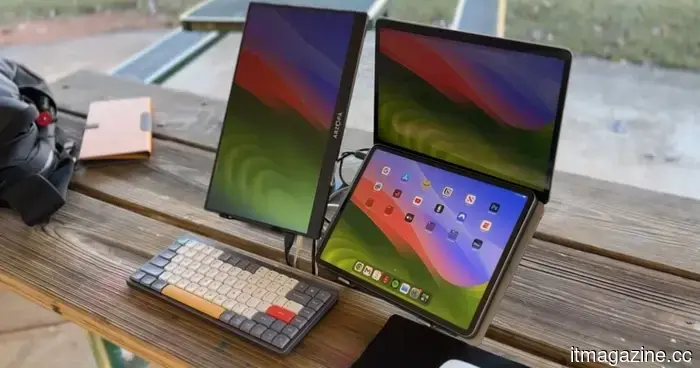 Why I have mixed feelings about portable monitors, despite my strong desire to have one.
I’d like to poke fun at portable monitors, but the frustrating reality is that they actually have their merits. That might be the most unfortunate aspect of them.
Why I have mixed feelings about portable monitors, despite my strong desire to have one.
I’d like to poke fun at portable monitors, but the frustrating reality is that they actually have their merits. That might be the most unfortunate aspect of them.
 The LiDAR sensor on your iPhone may soon enable you to see around corners.
Researchers at MIT have shown that consumer-level LiDAR sensors can identify and monitor objects that are situated around corners. The equipment is priced at less than $50, and the software is already accessible to the public.
The LiDAR sensor on your iPhone may soon enable you to see around corners.
Researchers at MIT have shown that consumer-level LiDAR sensors can identify and monitor objects that are situated around corners. The equipment is priced at less than $50, and the software is already accessible to the public.
Mini PCs are the most intriguingly dull computers available for purchase.
Mini PCs may not be glamorous, but that’s exactly what makes them feel refreshing in a market saturated with pricey laptops, overly robust towers, and computers that strive too hard for attention.