
Workday's CTO exchanged his C-suite position for a technical staff role at Anthropic.
In summary: Peter Bailis, who took on the role of chief technology officer at Workday in May 2025, departed from the company last month to join Anthropic as a member of the technical staff, focusing on reinforcement learning engineering. This transition moves him from a C-suite position to one that allows for closer engagement with cutting-edge technology, placing Bailis at a firm that is now actively developing HR software similar to Workday’s offerings.
An Anthropic spokesperson confirmed the hire, which was also covered by Business Insider. Bailis’s profile has been taken down from Workday’s leadership pages, and his LinkedIn account reflects this change. Before his tenure at Workday, Bailis was vice president of engineering at Google Cloud, where he worked on AI initiatives related to data, including Conversational Analytics, NL2SQL, and retrieval-augmented generation for structured data. He previously founded and managed Sisu Data, a decision intelligence firm, and served as an assistant professor of computer science at Stanford University, where he co-led the DAWN project focused on data-intensive applications. His expertise in data systems and recent experience with enterprise AI at Google Cloud present an atypical background for a reinforcement learning role, indicating Anthropic’s goal of connecting model training with practical product development.
From executive to contributor
Bailis has taken on the title of member of technical staff (MTS), which is a standard designation for engineers at both Anthropic and OpenAI that applies to all levels of seniority. OpenAI president Greg Brockman has publicly discussed this structure, highlighting the intention to avoid categorizing individuals strictly as researchers or engineers, instead viewing the MTS title as indicative of a flatter technical hierarchy rather than a demotion. This title encompasses a broad range of seniority and salary levels: MTS base salaries at Anthropic range from about $300,000 to $405,000, while at OpenAI they span from approximately $210,000 to $530,000, with equity grants pushing total compensation into the seven figures for more senior roles.
For Bailis, the trade-off is clear. A CTO position at a company like Workday, which has around $8 billion in annual revenue and 18,000 employees, carries a level of institutional authority that isn't found in an individual contributor role at a leading AI lab. However, it does provide direct accessibility to the models being developed, the training decisions being made, and the research agenda being crafted, without the organizational management layers that separate a CTO from the actual work. Anthropic, now claiming a revenue run rate exceeding $30 billion with over 1,000 enterprise customers each spending more than $1 million yearly, is no longer just a research lab with revenue; for a technically-driven executive, the magnitude of the engineering challenges it faces is enticing.
What Bailis brings to Anthropic
The spokesperson from Anthropic confirmed Bailis’s involvement in reinforcement learning engineering. This is a comprehensive role at a company where reinforcement learning from human feedback is essential for model alignment, and where RL training methods are applied to agent behavior and tool utilization. In addition to general engineering capabilities, Bailis brings extensive knowledge of the enterprise software landscape as Anthropic transitions into a product-focused company, rather than solely serving as an API provider.
According to The Information, Bailis’s joining coincides with Anthropic’s efforts to develop HR applications. The company has already introduced Claude plugins for HR functions such as generating job descriptions, onboarding materials, and offer letters. Bailis has spent recent years in the enterprise HR and finance software domain— first at Google Cloud, where he developed AI products based on structured enterprise data, and then as CTO of Workday, where he directed the company’s agentic AI strategy. His domain knowledge is now being redirected towards Anthropic’s enterprise product roadmap from within.
The competitive twist is noteworthy. Workday’s CEO, Carl Eschenbach, publicly stated in February 2026 that Anthropic, Google, and OpenAI all utilize Workday’s software internally. The company that previously procured licenses from Workday has now recruited its CTO to develop competing products for the same enterprise HR budgets.
Anthropic's enterprise initiative
Bailis’s hire aligns with how vigorously Anthropic has been establishing enterprise distribution infrastructure over recent months. In early March, Anthropic launched a marketplace for Claude-powered enterprise software, enabling companies with committed API spend to purchase third-party applications built on Claude, with Anthropic forgoing the typical revenue share taken by cloud hyperscalers. Launch partners included Snowflake, legal AI company Harvey, and developer platform Replit.
Shortly thereafter, Anthropic pledged $100 million to a new Claude Partner Network, with Accenture, Deloitte, Cognizant, and Infosys taking leading roles, formalizing consulting relationships intended to expedite Claude implementations within major enterprises. The company anticipates expanding that investment in the coming years and is increasing its partner-facing workforce fivefold. Additionally, Anthropic has
Other articles
 According to Jassy, Amazon's chip division could have a valuation of $50 billion, and he suggests that there may be plans to sell them to external customers.
In his 2026 shareholder letter, Andy Jassy disclosed that Amazon's Graviton, Trainium, and Nitro chips bring in over $20 billion annually and have the potential to be offered directly to third-party clients.
According to Jassy, Amazon's chip division could have a valuation of $50 billion, and he suggests that there may be plans to sell them to external customers.
In his 2026 shareholder letter, Andy Jassy disclosed that Amazon's Graviton, Trainium, and Nitro chips bring in over $20 billion annually and have the potential to be offered directly to third-party clients.
 Demis Hassabis stated that Google DeepMind needed to revert to its startup origins following the Brain merger.
Hassabis states that after the Brain merger, Google DeepMind needed to revert to its startup origins and adopt a more resourceful approach, managing Isomorphic Labs as his side project from 10 PM.
Demis Hassabis stated that Google DeepMind needed to revert to its startup origins following the Brain merger.
Hassabis states that after the Brain merger, Google DeepMind needed to revert to its startup origins and adopt a more resourceful approach, managing Isomorphic Labs as his side project from 10 PM.
 Workday's CTO swapped his executive position for a technical staff role at Anthropic.
Peter Bailis, who has served as Workday's CTO since May 2025, is now part of Anthropic's technical team, focusing on reinforcement learning as the company develops HR applications.
Workday's CTO swapped his executive position for a technical staff role at Anthropic.
Peter Bailis, who has served as Workday's CTO since May 2025, is now part of Anthropic's technical team, focusing on reinforcement learning as the company develops HR applications.
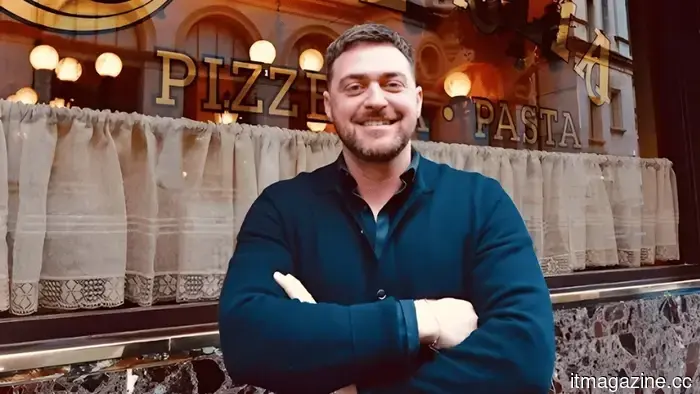 How AI is revolutionizing hospitality operations while maintaining the human experience
Arran Campolucci-Bordi discusses how AI-powered systems are transforming hospitality operations, enhancing efficiency while maintaining human interaction at the center.
How AI is revolutionizing hospitality operations while maintaining the human experience
Arran Campolucci-Bordi discusses how AI-powered systems are transforming hospitality operations, enhancing efficiency while maintaining human interaction at the center.
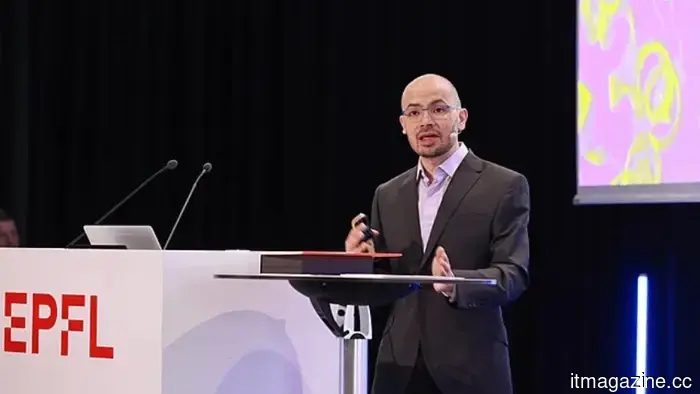 Demis Hassabis states that Google DeepMind needed to revert to its startup origins following the merger with Brain.
Hassabis mentions that after the Brain merger, Google DeepMind needed to reconnect with its startup origins and adopt a more resourceful approach, managing Isomorphic Labs as a secondary role from 10 PM.
Demis Hassabis states that Google DeepMind needed to revert to its startup origins following the merger with Brain.
Hassabis mentions that after the Brain merger, Google DeepMind needed to reconnect with its startup origins and adopt a more resourceful approach, managing Isomorphic Labs as a secondary role from 10 PM.
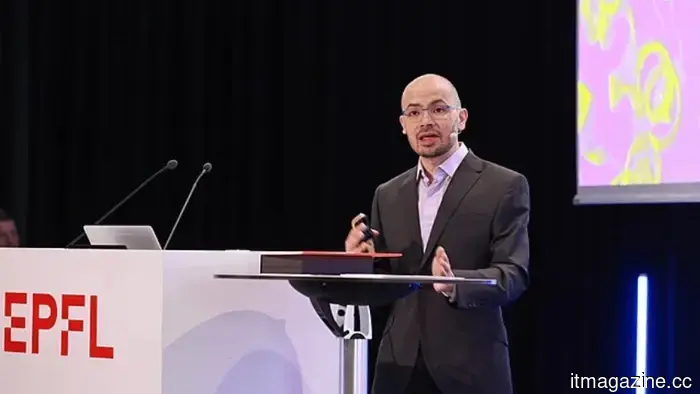 Demis Hassabis mentioned that Google DeepMind needed to revisit its startup origins following the Brain merger.
Hassabis mentions that Google DeepMind needed to revisit its startup origins and adopt a more resourceful approach following the Brain merger, managing Isomorphic Labs as his side job starting at 10 PM.
Demis Hassabis mentioned that Google DeepMind needed to revisit its startup origins following the Brain merger.
Hassabis mentions that Google DeepMind needed to revisit its startup origins and adopt a more resourceful approach following the Brain merger, managing Isomorphic Labs as his side job starting at 10 PM.
Workday's CTO exchanged his C-suite position for a technical staff role at Anthropic.
Peter Bailis, who has been Workday's CTO since May 2025, has become a member of the technical staff at Anthropic to focus on reinforcement learning, as the company develops HR applications.