

Microsoft competes with Google and OpenAI by developing its own AI models.
Microsoft's artificial intelligence division has recently made its first production AI models public, with their pricing sending a strong signal to competitors.
Microsoft has introduced its own AI models, aimed at challenging OpenAI and Google, showcasing three proprietary offerings: MAI-Transcribe-1, MAI-Voice-1, and MAI-Image-2. These models can be accessed through the Microsoft Foundry platform and MAI Playground.
We are expanding our MAI model family to all developers in Foundry, which includes…
- MAI-Transcribe-1, the most precise transcription model globally across 25 languages
- MAI-Voice-1, featuring natural and expressive speech generation
- MAI-Image-2, our most advanced image model to date
What functionalities do Microsoft’s AI models offer?
The three models address various applications: listening, speaking, and seeing. For example, MAI-Transcribe-1 can transcribe speech to text in 25 languages and operates 2.5 times faster than Microsoft’s Azure Fast service. It is noteworthy that this audio model was developed by a team of just 10 individuals.
MAI-Voice-1 can generate 60 seconds of natural-sounding audio in a mere second and allows for the creation of custom voices from short audio clips. MAI-Image-2 has already ranked among the top three on the Arena.ai image generation leaderboard, with rollouts currently taking place in Bing and PowerPoint.
However, this progress hasn’t come quickly. Until October 2025, Microsoft was legally prevented from developing its own frontier AI due to a contract with OpenAI. The agreement, signed in 2019, allowed Microsoft to use OpenAI’s models in exchange for providing OpenAI with cloud infrastructure support.
Is Microsoft preparing to sever ties with OpenAI?
Despite this, the agreement also restricted Microsoft from creating its AI models. Once that restriction was lifted, Microsoft released its own models, which were used behind the scenes in Copilot and Teams. These models are now available for developers on Foundry.
Not yet. Mustafa Suleyman, CEO of Microsoft AI, has reaffirmed the company’s dedication to its partnership with OpenAI, even as these new models reflect a strategy that runs parallel to that partnership. The pricing for these models is also competitive, as all three are offered at lower rates than similar solutions from Amazon and Google.
If these models perform effectively, the MAI family could discreetly become the foundational support for Microsoft’s entire AI product lineup.
For over five years, Shikhar has been simplifying advancements in consumer technology and sharing them…
Microsoft has invested heavily in Copilot for years, but they now suggest not to depend on it.
This disclaimer seems somewhat convenient.
In recent years, Microsoft has fully embraced Copilot, which is ubiquitous across Windows, Edge, Office, and even integrated into essential workflows where it is impossible to overlook. The message has been clear: this is the future of productivity, your AI assistant for accomplishing real tasks. Yet now, Microsoft is suddenly indicating… don’t take it too seriously.
Windows 11 will soon provide haptic feedback for a variety of tasks.
Your PC may soon offer more than just visual responses.
Windows PCs are set to become more tactile. Microsoft is currently testing a new form of interaction in Windows 11, which allows users not only to see what is happening on screen but to feel it as well. This update, rolling out in the latest Insider build, introduces haptic feedback for several everyday actions. It’s subtle, optional, and if implemented effectively, could enhance the responsiveness of Windows.
Claude AI can now access emails, files, and even perform tasks on your PC.
With Microsoft 365 integration now available to all users, Claude is purposefully embedding itself into your daily work routine.
Anthropic has been gradually adding new features to Claude, recently announcing two capabilities that further integrate the AI assistant into your workflow and across various devices.



Other articles
 Microsoft challenges Google and OpenAI with its own artificial intelligence models.
With the introduction of Microsoft's MAI model trio, capable of transcribing boardroom discussions and cloning voices in mere seconds, the competitive pressure on rivals is considerable, especially given its pricing.
Microsoft challenges Google and OpenAI with its own artificial intelligence models.
With the introduction of Microsoft's MAI model trio, capable of transcribing boardroom discussions and cloning voices in mere seconds, the competitive pressure on rivals is considerable, especially given its pricing.
 Microsoft challenges Google and OpenAI by developing its own AI models.
From recording discussions in the boardroom to replicating voices in mere moments, Microsoft's trio of MAI models has arrived, and their pricing is set to create pressure on competitors.
Microsoft challenges Google and OpenAI by developing its own AI models.
From recording discussions in the boardroom to replicating voices in mere moments, Microsoft's trio of MAI models has arrived, and their pricing is set to create pressure on competitors.
 Microsoft challenges Google and OpenAI by developing its own AI models.
From capturing discussions in the boardroom to replicating voices in an instant, Microsoft's trio of MAI models has arrived, and it's priced to put pressure on competitors.
Microsoft challenges Google and OpenAI by developing its own AI models.
From capturing discussions in the boardroom to replicating voices in an instant, Microsoft's trio of MAI models has arrived, and it's priced to put pressure on competitors.
 LinkedIn discreetly analyzes over 6,000 browser extensions and identifies your device's unique fingerprint.
LinkedIn operates a concealed JavaScript script known as Spectroscopy, which discreetly examines more than 6,000 Chrome extensions and gathers 48 pieces of device data, none of which are mentioned in its privacy policy.
LinkedIn discreetly analyzes over 6,000 browser extensions and identifies your device's unique fingerprint.
LinkedIn operates a concealed JavaScript script known as Spectroscopy, which discreetly examines more than 6,000 Chrome extensions and gathers 48 pieces of device data, none of which are mentioned in its privacy policy.
 Microsoft's terms of service refer to Copilot as 'for entertainment purposes only' in light of a decline in adoption.
Microsoft's Copilot Terms of Use describe it as "for entertainment purposes only," even though the company charges as much as $30 per user each month and has invested $80 billion in AI. Additionally, just 3.3% of users are currently paying for the service.
Microsoft's terms of service refer to Copilot as 'for entertainment purposes only' in light of a decline in adoption.
Microsoft's Copilot Terms of Use describe it as "for entertainment purposes only," even though the company charges as much as $30 per user each month and has invested $80 billion in AI. Additionally, just 3.3% of users are currently paying for the service.
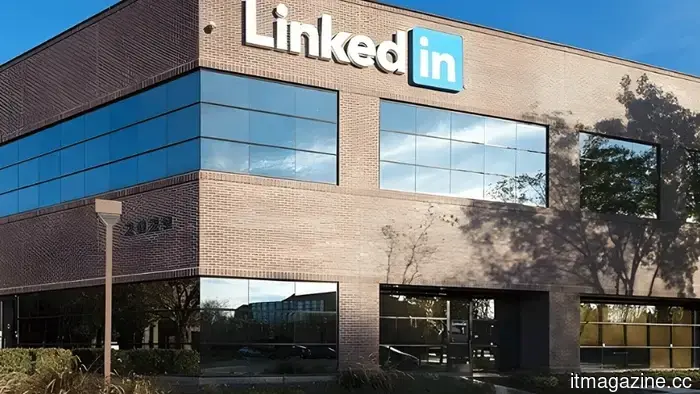 LinkedIn discreetly analyzes over 6,000 browser extensions and collects device fingerprints.
LinkedIn executes a concealed JavaScript script named Spectroscopy that discreetly examines more than 6,000 Chrome extensions and gathers 48 pieces of device information, none of which are mentioned in its privacy policy.
LinkedIn discreetly analyzes over 6,000 browser extensions and collects device fingerprints.
LinkedIn executes a concealed JavaScript script named Spectroscopy that discreetly examines more than 6,000 Chrome extensions and gathers 48 pieces of device information, none of which are mentioned in its privacy policy.
Microsoft competes with Google and OpenAI by developing its own AI models.
From converting boardroom discussions to replicating voices in just seconds, Microsoft's MAI model trio has arrived, and its pricing is sure to put pressure on competitors.