
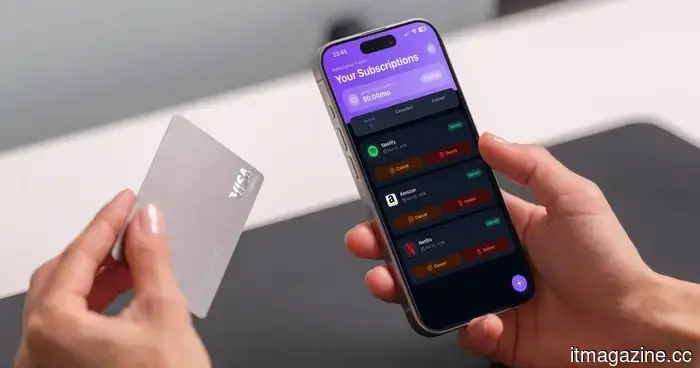
The UK government is addressing the issues surrounding subscription services, and it’s time for the US to follow suit.
No more covert free trials, hidden automatic renewals, or long phone waits just to cancel a service you never wanted.
If you've ever registered for a free trial and then forgot to cancel, only to see your money discreetly disappear from your account, you understand the frustration of unwanted subscriptions. The UK government is now addressing the subscription trap with new regulations.
These rules, announced on April 2, will simplify the cancellation of subscriptions, help you avoid sneaky free trials, and prevent being transitioned into costly long-term contracts without notice.
The government estimates that these changes will save UK consumers approximately £400 million annually.
How severe is the subscription issue currently?
It's quite severe. There are 155 million active subscriptions in the UK, with nearly 10 million thought to be unwanted. A report from the UK government states that over 3.5 million individuals are being silently shifted from free or discounted trials into paid contracts, while another 1.3 million are caught off-guard by unexpected auto-renewals.
On average, each unwanted subscription costs around £14 monthly, which totals nearly £170 a year for every individual. That’s a significant amount of money disappearing from someone’s account for something they don't even utilize.
What do the new regulations change?
Once these rules take effect in Spring 2027, companies will be required to provide transparent information before you sign up for any subscription. They must also give you a reminder before a free trial concludes or prior to the automatic renewal of a 12-month contract.
Cancelling subscriptions will also be more straightforward. If you enrolled online, you will have the ability to cancel online as well, without needing to contact customer service. There will be a new 14-day cooling-off period after a free trial ends or when a long-term contract auto-renews. These rules are part of the Digital Markets, Competition and Consumers Act 2024 (DMCCA) and are applicable to businesses offering subscription services in the UK.
If you're currently subscribed to a service you no longer desire, you'll need to wait until 2027 for these protections to be implemented. In the meantime, we suggest using a subscription tracking app to monitor any unwanted subscriptions and cancel those you no longer utilize.
Rachit is an experienced technology journalist with over seven years of expertise in covering the consumer technology sector.
The best Google Pixel deals of 2026: significant savings on Google’s AI phones
Google's Pixel 10 series has been available for a while, and if you've been contemplating switching to the top Android experience, ongoing discounts on Amazon make this the ideal moment to purchase. We're seeing discounts of up to 26% on the entire Pixel line, including phones and accessories.
Why purchase a Pixel now?
Google has always designed the Pixel line with one principle in mind: the smartest possible Android experience. The Pixel 10 series significantly enhances this philosophy through advanced Gemini AI integration, which is Google's most powerful AI assistant so far. It manages a range of tasks from real-time call screening and live translation to on-device photo editing and natural-language search, and it does so more efficiently than any other Android phone available.
Considering Google's reputation for outstanding cameras, user-friendly software, and the longest operating system update guarantees among Android manufacturers, the Pixel 10 series presents a strong argument for itself even at full price. At these discounted rates, it's a difficult proposition to dismiss.
Quick comparison
Artemis II crew videos showcase astronauts having fun with an iPhone in space
NASA’s Artemis II mission is a significant milestone in space exploration, but the sight of floating iPhones adds a modern twist.
The Artemis II mission marks the first crewed lunar journey in over 50 years. The astronauts are seen playfully tossing iPhones in zero gravity within the Orion capsule, lending the historic mission a surprisingly contemporary atmosphere. This unique contrast is what makes the footage stand out.
Before your iPhone fit in your pocket, it resembled something you’d see on a workbench.
Apple’s archive reveals bulky prototypes that contributed to the development of its most significant products.
The early iPhone prototype, showcased in Apple’s 50th anniversary archive, bore little resemblance to the sleek devices we know today. Instead of resembling an actual phone, this prototype was more like an extensive circuit board, intended to assess whether touch input and core components could work harmoniously. Apple prioritized functional system integration first, knowing they could refine the design later.



Other articles
 AI governed by humans: How Fortis Solutions is fostering trust in intelligent infrastructure.
Fortis Solutions discusses how human governance, data integrity, and secure infrastructure are influencing the future of decision-making driven by AI.
AI governed by humans: How Fortis Solutions is fostering trust in intelligent infrastructure.
Fortis Solutions discusses how human governance, data integrity, and secure infrastructure are influencing the future of decision-making driven by AI.
 Omniscient secures $4.1 million to consolidate 150 disjointed intelligence tools.
A former McKinsey pair has secured $4.1 million for Omniscient, an AI platform that tracks over 100,000 sources and provides real-time insights on corporate reputation.
Omniscient secures $4.1 million to consolidate 150 disjointed intelligence tools.
A former McKinsey pair has secured $4.1 million for Omniscient, an AI platform that tracks over 100,000 sources and provides real-time insights on corporate reputation.
 Omniscient secures $4.1 million to consolidate 150 separate intelligence tools.
Former McKinsey partners have secured $4.1 million for Omniscient, an AI platform that tracks over 100,000 sources to provide real-time insights into corporate reputation.
Omniscient secures $4.1 million to consolidate 150 separate intelligence tools.
Former McKinsey partners have secured $4.1 million for Omniscient, an AI platform that tracks over 100,000 sources to provide real-time insights into corporate reputation.
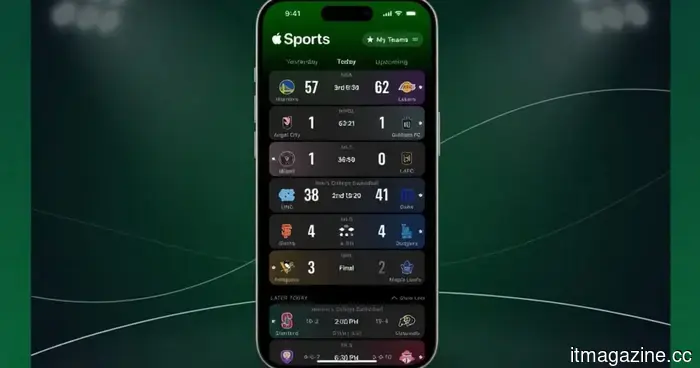 Follow your World Cup teams directly on your iPhone with this Apple Sports update.
Apple Sports introduces World Cup support, allowing you to monitor teams, scores, and matches in real time with updates on your lock screen. Here’s how this new feature alters your experience of the 2026 tournament.
Follow your World Cup teams directly on your iPhone with this Apple Sports update.
Apple Sports introduces World Cup support, allowing you to monitor teams, scores, and matches in real time with updates on your lock screen. Here’s how this new feature alters your experience of the 2026 tournament.
 Insights We Can Gain from Avocado: Meta's Unreleased AI Model
In the competitive arena of AI agents, where companies are securing investment agreements daily to develop and enhance their AI infrastructure and software, the firms that appear to be at the forefront are OpenAI, Anthropic, Microsoft, and N.
Insights We Can Gain from Avocado: Meta's Unreleased AI Model
In the competitive arena of AI agents, where companies are securing investment agreements daily to develop and enhance their AI infrastructure and software, the firms that appear to be at the forefront are OpenAI, Anthropic, Microsoft, and N.
 Quanscient and Haiqu conducted a nonlinear quantum fluid simulation consisting of 15 steps.
Quanscient and Haiqu performed what they characterize as the most physically intricate quantum CFD simulation to date using actual IBM quantum hardware.
Quanscient and Haiqu conducted a nonlinear quantum fluid simulation consisting of 15 steps.
Quanscient and Haiqu performed what they characterize as the most physically intricate quantum CFD simulation to date using actual IBM quantum hardware.
The UK government is addressing the issues surrounding subscription services, and it’s time for the US to follow suit.
The UK government is taking action against subscription traps by introducing new regulations that simplify cancellations, clarify trial terms, and have the potential to save consumers as much as £170 annually.