
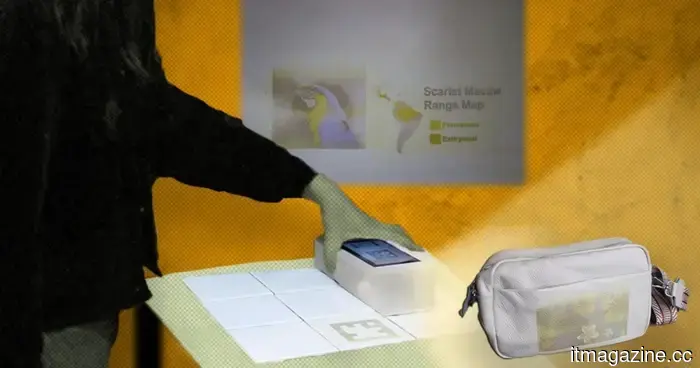
MIT's portable projector transforms any surface into a design canvas using invisible ink.
MIT’s ChromoLCD enables the redesign of everyday objects with light
What if changing your clothes, furniture, or even your walls were as simple as switching the wallpaper on your phone?
Researchers at MIT have created a system called ChromoLCD that does just that. This portable device can “print” high-resolution designs onto common objects using light and a unique invisible ink.
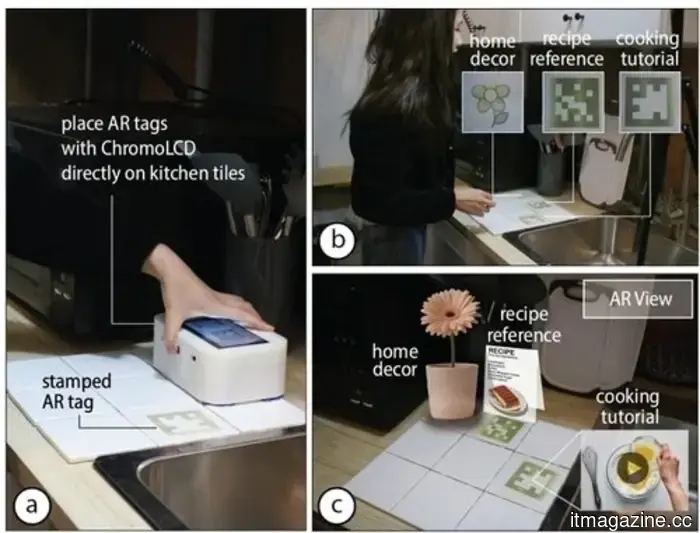
Developed at MIT’s Computer Science and Artificial Intelligence Laboratory (CSAIL), the device operates like a basic stamp. You upload an image, place the device on a surface, and it applies the design without requiring complicated setup or modeling.
How ChromoLCD leverages light for redesigning real-world items
ChromoLCD combines LCD technology with LED lighting. It first maps an image in black and white, then utilizes ultraviolet light to activate photochromic dye on the surface. Following that, it layers red, green, and blue light to add color and detail.
This method allows the device to generate high-resolution images on materials such as fabric, furniture, and even whiteboards. Because the components are relatively inexpensive, researchers believe hobbyists might be able to replicate the device.
The team includes MIT researchers Yunyi Zhu, Qingyuan Li, and Stefanie Mueller, who are investigating the potential applications of this technology.
Why this innovation could transform personalization
The primary benefit of ChromoLCD is its flexibility. Instead of being tied to a single design, you can change visuals whenever you wish. This could revolutionize industries like fashion and home decor, where customization often requires significant time, effort, and expense.
Researchers are already exploring ways to adapt the system for larger surfaces like walls, potentially using a roller-based approach. They are also considering how robots could use it for visual communication or graphic display.
MIT’s work on ChromoLCD builds on earlier initiatives such as PortaChrome and PhotoChromeleon, all aimed at making physical objects more editable. Currently, users still need to upload an image or create a design manually, but that may change in the near future.
With advancements in artificial intelligence, researchers envision a future where you can simply describe your desired design, and AI would instantly generate a print-ready image.
Manisha enjoys covering technology intertwined with daily life, from smartphones and apps to gaming and streaming…
Amazon introduces an adorable humanoid robot to its lineup
Sprout combines AI intelligence with an inviting appearance.
Amazon has purchased New York City-based Fauna Robotics just months after revealing Sprout, a charming humanoid robot. Specific details about the acquisition remain undisclosed, but Fauna CEO Rob Cochran expressed his “incredible excitement” about the news in a LinkedIn post on Tuesday.
RAI’s remarkable Roadrunner robot surpasses humanoid capabilities
The robot's agility is sure to impress.
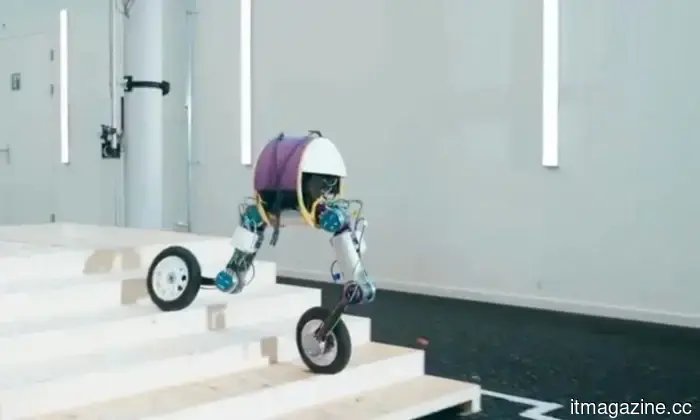
When the Robotics and AI (RAI) Institute shares technological advancements, it’s essential to pay attention. Founded by Marc Raibert, also behind robotics leader Boston Dynamics, the company has just unveiled Roadrunner, a 15 kg (33 lb) bipedal-wheeled robot prototype. Its fascinating design offers impressive versatility, thanks to its symmetric, knee-jointed legs that enable efficient movement and obstacle avoidance.
Scientists achieve underground wireless communication, even through solid bedrock
Korean researchers have successfully established underground wireless communication, a breakthrough that could be lifesaving in critical situations.
For years, being underground meant losing signal and your connection to the outside world. Researchers at the Electronics and Telecommunications Research Institute (ETRI) in Korea have revolutionized this concept with a breakthrough that seems straightforward but is truly extraordinary. This technology facilitates wireless voice communication up to 100 meters underground, a world-first that holds significant implications.



Otros artículos
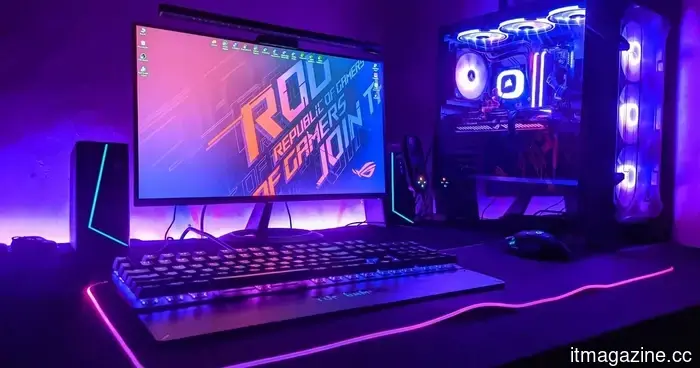 Tu billetera no está lista para los nuevos precios de ASUS.
ASUS planea aumentar los precios de las PC hasta en un 30% debido al aumento de los costos de los componentes, lo que podría afectar a los consumidores y hacer que las futuras actualizaciones sean más caras.
Tu billetera no está lista para los nuevos precios de ASUS.
ASUS planea aumentar los precios de las PC hasta en un 30% debido al aumento de los costos de los componentes, lo que podría afectar a los consumidores y hacer que las futuras actualizaciones sean más caras.
 ¿Nintendo podría cobrar menos por los juegos digitales de Switch?
Nintendo fijará precios más bajos para los juegos digitales de Switch 2 en comparación con las copias físicas, a partir de mayo de 2026, reflejando menores costos de distribución.
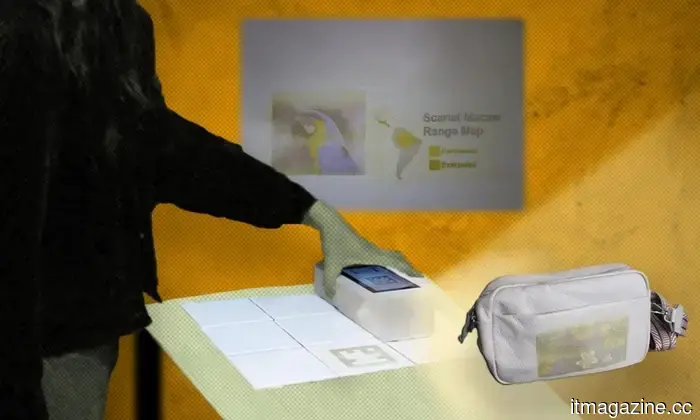
El proyector portátil del MIT convierte cualquier superficie en un lienzo de diseño con tinta invisible.
Los investigadores del MIT han creado ChromoLCD, un dispositivo portátil que puede proyectar diseños de alta resolución sobre objetos cotidianos, convirtiendo superficies como ropa y muebles en lienzos personalizables y reprogramables.
¿Nintendo podría cobrar menos por los juegos digitales de Switch?
Nintendo fijará precios más bajos para los juegos digitales de Switch 2 en comparación con las copias físicas, a partir de mayo de 2026, reflejando menores costos de distribución.
El proyector portátil del MIT convierte cualquier superficie en un lienzo de diseño con tinta invisible.
Los investigadores del MIT han creado ChromoLCD, un dispositivo portátil que puede proyectar diseños de alta resolución sobre objetos cotidianos, convirtiendo superficies como ropa y muebles en lienzos personalizables y reprogramables.
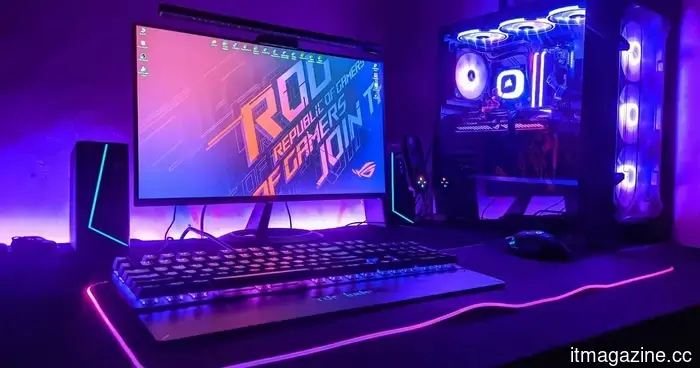 Tu billetera no está lista para los nuevos precios de ASUS.
ASUS planea aumentar los precios de las PC hasta en un 30% debido al aumento de los costos de los componentes, lo que podría afectar a los consumidores y hacer que las futuras actualizaciones sean más caras.
Tu billetera no está lista para los nuevos precios de ASUS.
ASUS planea aumentar los precios de las PC hasta en un 30% debido al aumento de los costos de los componentes, lo que podría afectar a los consumidores y hacer que las futuras actualizaciones sean más caras.
MIT's portable projector transforms any surface into a design canvas using invisible ink.
Researchers at MIT have developed ChromoLCD, a portable gadget capable of projecting high-resolution designs onto everyday items, transforming surfaces such as clothing and furniture into customizable, reprogrammable canvases.