

AI enhances whatever input it receives, including confusion.
Most organizations are not failing in AI due to technology issues. Instead, they struggle because they lack clarity about which data is truly important, and this confusion is spreading at an unprecedented pace. As investments continue to rise, there is an expectation that greater intelligence will naturally ensue. However, numerous teams are feeling overwhelmed. The problem lies in their inability to differentiate between significant information and trivial details in a manner that fosters confident decision-making.
The wider context makes this struggle hard to overlook. According to the State of Enterprise AI 2026, global expenditures are expected to hit $2.52 trillion, yet only 14% of CFOs report seeing measurable benefits. Simultaneously, 42% of companies abandoned most of their AI pilot projects in 2025. These trends highlight a fundamental disconnect between aspirations and execution. As boards demand accountability and leaders seek tangible value, many organizations face a challenging reality: they have invested in capabilities without ensuring clarity first.
The common explanation is that the data lacks cleanliness. While there is truth to this, it overlooks a more profound issue. Clean data has limited use if it isn't relevant, interconnected, or usable for real decision-making. Over the years, organizations have layered dashboards, reports, and monitoring systems that create an illusion of transparency while leaving vital questions unanswered. Teams often struggle to clarify why a metric changes, how it relates to outcomes, or what actions should follow. This disconnect between information and understanding is where progress halts.
Part of the challenge is scale. The amount of data has increased more rapidly than the systems designed to analyze it. Teams track what they can, frequently without understanding its significance, resulting in a landscape cluttered with metrics vying for attention. Definitions differ across units, events are logged inconsistently, and reporting often depends on manual inputs, which further distorts the situation. In this context, crafting a unified, coherent narrative becomes arduous. Individuals work with fragments of data, and these fragments seldom align.
This fragmentation becomes more impactful as AI is integrated into workflows. Systems trained on inconsistent data do not alleviate ambiguity; instead, they propagate it. A report reveals that 61% of data leaders believe improved data quality is facilitating the advancement of AI initiatives, yet 50% still cite data quality and retrieval as significant hurdles. Additionally, a troubling trend regarding trust is emerging. While 65% of leaders think employees trust the data utilized for AI, 75% recognize significant gaps in data literacy. This combination creates a scenario where decisions can be made confidently, but not necessarily with a full understanding.
There is a belief in certain circles that improved tools will eventually bridge this gap. However, we have seen the opposite occur. Organizations face challenges because their operational systems were never designed to yield reliable signals. When processes are inconsistent, ownership is ambiguous, and metrics are vaguely defined, the data generated by these systems mirrors that confusion. Signals intended to guide decisions and automation often reflect fragmented experiences rather than coherent narratives. The result is hesitation and misalignment.
These effects manifest in subtle yet persistent ways. Teams tend to spend more time reconciling figures than acting on them. Leaders request additional reports to offset uncertainty, which adds layers without addressing the core problem. Priorities shift based on incomplete views of performance, making interdepartmental coordination increasingly difficult. Over time, this erodes trust—not only in the data but in the systems that produce it. The organization may be in motion, but without a collective understanding of its direction.
A helpful analogy is navigation. Having an array of instruments in a cockpit does not guarantee a successful flight if those instruments are not calibrated to the same reality. Pilots depend on a select few trusted signals that are consistently defined and easily understood. In many organizations, the opposite is true. There is a plethora of instruments, but little consensus on which signals are crucial or how they should be interpreted. Consequently, adjustments occur continuously without making substantial progress.
The urgency of this issue is underscored by broader research. A report indicates that enhancing data governance has become a top priority for over 40% of leaders, even surpassing some AI-focused initiatives. The rationale is simple: AI and automation magnify the state of the data they depend on. When that state is poor, the impact can escalate quickly, affecting both operational efficiency and strategic results. This touches on how organizations define, manage, and utilize information in practice.
Addressing these issues calls for a shift in focus. The aim is not just to create more sophisticated dashboards but to clarify the decisions that need to be made and the information necessary to support them. This process starts with defining accountability so that data is linked to ownership. It involves standardizing procedures to ensure events are recorded consistently across teams. It requires creating metrics that accurately reflect how work is performed, not just how it is documented. Lastly, it relies on building a data layer that integrates these elements into a cohesive, usable view.
Equally significant is the human aspect and understanding how individuals work in

Other articles
 Botslab Smart Dashcams: Enhance Your Road Safety This Spring with Greater Awareness and Reduced Uncertainty
As road unpredictability increases, modern driving requires heightened awareness from drivers. During the March Spring Sales, Botslab is offering AI-powered hands-free dashcams at more accessible prices for those looking to upgrade their vehicle technology. This initiative aims to enhance the safety of drivers and passengers through smart alerts and provide evidence to help mitigate on-road disputes.
Botslab Smart Dashcams: Enhance Your Road Safety This Spring with Greater Awareness and Reduced Uncertainty
As road unpredictability increases, modern driving requires heightened awareness from drivers. During the March Spring Sales, Botslab is offering AI-powered hands-free dashcams at more accessible prices for those looking to upgrade their vehicle technology. This initiative aims to enhance the safety of drivers and passengers through smart alerts and provide evidence to help mitigate on-road disputes.
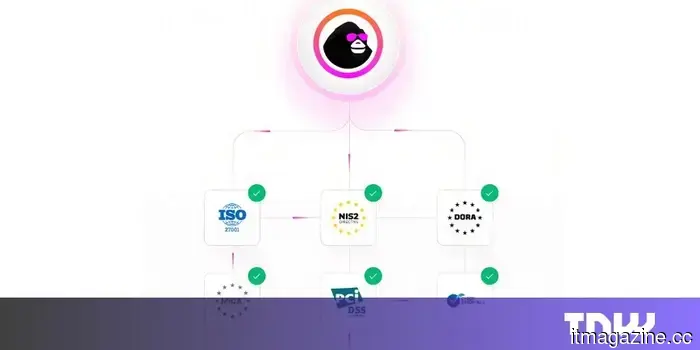 Automate compliance with ISO 27001, SOC 2, and DORA starting at €2,999 per year.
Copla combines compliance automation with specialized CISO assistance across six frameworks. Schedule a free demo to discover your organization's status.
Automate compliance with ISO 27001, SOC 2, and DORA starting at €2,999 per year.
Copla combines compliance automation with specialized CISO assistance across six frameworks. Schedule a free demo to discover your organization's status.
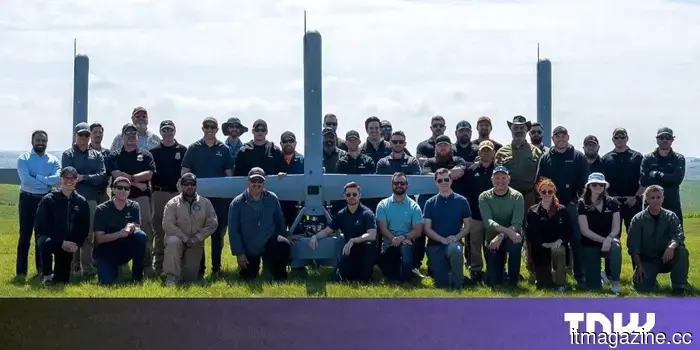 Shield AI secures $2 billion at a valuation of $12.7 billion for its autonomous combat pilot, Hivemind.
Shield AI secured $2 billion in funding, spearheaded by Advent International, to expand Hivemind, its autonomous pilot with proven combat capabilities, and to purchase the simulation company Aechelon Technology.
Shield AI secures $2 billion at a valuation of $12.7 billion for its autonomous combat pilot, Hivemind.
Shield AI secured $2 billion in funding, spearheaded by Advent International, to expand Hivemind, its autonomous pilot with proven combat capabilities, and to purchase the simulation company Aechelon Technology.
 Xero and Anthropic collaborate to integrate small business financial management into Claude.
Xero's multi-year agreement with Anthropic integrates Claude into its accounting system and provides live financial data to Claude.ai for 4.6 million subscribers.
Xero and Anthropic collaborate to integrate small business financial management into Claude.
Xero's multi-year agreement with Anthropic integrates Claude into its accounting system and provides live financial data to Claude.ai for 4.6 million subscribers.
 Your VR headset will soon allow you to experience scents in the virtual world.
Scientists have created a wearable gadget that can combine as many as eight fragrances simultaneously in real time to correspond with visual elements in virtual reality, enhancing the immersion of virtual settings like never before.
Your VR headset will soon allow you to experience scents in the virtual world.
Scientists have created a wearable gadget that can combine as many as eight fragrances simultaneously in real time to correspond with visual elements in virtual reality, enhancing the immersion of virtual settings like never before.
 A breakthrough in next-generation AI promises chatbots that can understand the context of their surroundings more effectively.
This innovative AI method enables chatbots to concentrate on emotionally significant words and associate them with the correct context, improving their comprehension of subtle messages and enhancing their responses.
A breakthrough in next-generation AI promises chatbots that can understand the context of their surroundings more effectively.
This innovative AI method enables chatbots to concentrate on emotionally significant words and associate them with the correct context, improving their comprehension of subtle messages and enhancing their responses.
AI enhances whatever input it receives, including confusion.
AI is not failing because of the technology itself, but because organizations struggle to distinguish meaningful insights from irrelevant information, resulting in unclear data, weak decision-making, and an elusive return on investment.