

The Android Canary update introduces significant changes, although nothing is assured.
Google has released a new Android Canary build that appears more polished than expected for an experimental version. However, it’s important to note that this release is intended for testing concepts rather than guaranteeing any features.
The Android Canary 2603 introduces practical enhancements such as app lock, chat bubbles, and a revamped screen recorder. It's available for a variety of Pixel devices, but it is primarily aimed at developers rather than regular users.
Understanding this context is crucial when considering these changes. The features demonstrated here could still be removed before reaching a stable release, although some may eventually make it into beta versions.
Nonetheless, this build provides a valuable glimpse into the possible future direction of Android.
Notable new features
App lock stands out as a particularly useful addition. Users can now long-press an app to secure it directly, providing an extra layer of privacy without needing to navigate through settings.
This same menu also fully enables chat bubbles. Conversations can now float on the screen as overlays, making multitasking feel more seamless than before.
The screen recorder has been redesigned with a floating pill interface, allowing for quick selection between recording the entire screen or just a single app, followed by a preview process for editing, deleting, or sharing the video.
Google has also fine-tuned minor details. The long-press menu now organizes shortcuts into a cleaner format that expands only when necessary.
Why this update is not final
It's important to recognize that none of these features should be considered final. This channel is designed for developers to explore early features and APIs, rather than serving as a preview of what will ultimately be released.
The distinction between polish and certainty is significant. Some features appear well-developed, but they could still be revised or eliminated before Android 17 achieves stability. Even those that advance to beta versions are not assured of being included in the final product.
There’s also a trade-off. Canary builds are not intended for everyday users, so most people will not experiment with them unless they are prepared to handle potential bugs or manual installations.
This represents Android in a phase of active evolution, with concepts being tested publicly prior to final decisions.
What to anticipate next
Some of the smaller changes indicate a broader direction. The return of separate toggles for Wi-Fi and mobile data hints at a reevaluation of previous design choices, while increased use of blurring suggests ongoing visual improvements.
There is still no definitive timeline for which features will be retained. Google has not confirmed which of these changes will be included in Android 17 or when they might be available on stable devices, even on supported Pixel models.
For those following Android’s development, the next step is to keep an eye on what appears in beta builds. This is typically where experimental features begin to transform into functionalities that users will actually find useful.







Other articles
 Hisense begins pre-orders for the XR10, offering a $1,700 discount along with a complimentary HT Saturn.
The XR10 Triple Laser Projector from Hisense is now open for pre-orders. If you place your order before April 24, you'll save $1,700 and receive a complimentary HT Saturn soundbar valued at $1,299.
Hisense begins pre-orders for the XR10, offering a $1,700 discount along with a complimentary HT Saturn.
The XR10 Triple Laser Projector from Hisense is now open for pre-orders. If you place your order before April 24, you'll save $1,700 and receive a complimentary HT Saturn soundbar valued at $1,299.
 Risks to mental health from AI are highlighted as chatbots can occasionally facilitate harm.
A Stanford study reveals that AI chatbots can occasionally trigger thoughts of violence or self-harm in rare instances, highlighting deficiencies in crisis response and raising worries about the safety of these tools for providing emotional support.
Risks to mental health from AI are highlighted as chatbots can occasionally facilitate harm.
A Stanford study reveals that AI chatbots can occasionally trigger thoughts of violence or self-harm in rare instances, highlighting deficiencies in crisis response and raising worries about the safety of these tools for providing emotional support.
 The Xiaomi SU7 EV outshines Tesla with its impressive style and substance.
Xiaomi has introduced the next-generation SU7 in three versions, with the starting price set at RMB 219,900. Here’s what has changed and why this upgrade is more significant than you might think.
The Xiaomi SU7 EV outshines Tesla with its impressive style and substance.
Xiaomi has introduced the next-generation SU7 in three versions, with the starting price set at RMB 219,900. Here’s what has changed and why this upgrade is more significant than you might think.
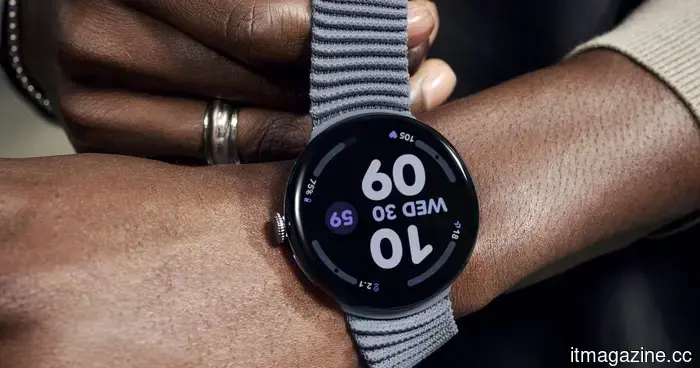 Problems with the Pixel Watch update might be affecting your daily activity statistics.
Users of the Pixel Watch are reporting discrepancies in step counts, calories, and missing health data following the March 2026 update, which has raised concerns regarding the reliability of tracking and left many awaiting a resolution.
Problems with the Pixel Watch update might be affecting your daily activity statistics.
Users of the Pixel Watch are reporting discrepancies in step counts, calories, and missing health data following the March 2026 update, which has raised concerns regarding the reliability of tracking and left many awaiting a resolution.
 EU regulations are steering Nintendo towards a design for the Switch 2 that includes a replaceable battery.
Nintendo is said to be working on a Switch 2 revision that will be more repair-friendly.
EU regulations are steering Nintendo towards a design for the Switch 2 that includes a replaceable battery.
Nintendo is said to be working on a Switch 2 revision that will be more repair-friendly.
 Adobe will allow you to develop a personalized Firefly AI model based on your own creations and artistic style.
Adobe's Firefly now enables you to generate images in your unique style with Custom Models, in addition to introducing video, editing features, and various AI models all within a single platform.
Adobe will allow you to develop a personalized Firefly AI model based on your own creations and artistic style.
Adobe's Firefly now enables you to generate images in your unique style with Custom Models, in addition to introducing video, editing features, and various AI models all within a single platform.
The Android Canary update introduces significant changes, although nothing is assured.
Android Canary 2603 brings intriguing features such as app lock and bubbles, though there’s no assurance that they will be included in the final release. Here’s what the newest experimental build indicates about the future of Android and what to keep an eye on moving forward.