
Europe Inc: Brussels indicates an renewed effort to enhance competitiveness.
In a Davos characterized by discussions on tariffs, subsidies, and geopolitical risks, Europe took the opportunity to examine its economic boundaries. At the World Economic Forum, Ursula von der Leyen presented one of the clearest indications that the European Union is preparing for a fundamental change in its approach to business, competitiveness, and economic strength.
The term that resonated, "Europe Inc", is not a regulation or a new initiative from Brussels ready to be implemented. Instead, it serves as a political framework for a transformation that the European Commission seeks to accelerate.
"Europe Inc" actually refers to a concept long debated in EU policy discussions, now gaining prominence: the proposed 28th regime. This would be an optional, EU-wide corporate structure that could operate alongside national systems, enabling companies to function throughout the bloc under a unified legal framework.
The issue it aims to address is significant and well-documented. Theoretically, Europe has a single market, but in reality, companies encounter 27 distinct company laws, registration processes, capital requirements, and administrative timelines. Startups often establish in one country only to struggle with expansion afterward. Scaleups encounter legal obstacles, prompting many to exit.
The EU's proposed solution is simplification through centralization. With the 28th regime, entrepreneurs could digitize their company setup, utilizing that structure across the EU. This would mean one registration, one legal form, and one set of rules. The ambition expressed at Davos extends further: achieving company formation within 48 hours, entirely online.
That timeframe is significant and highlights the risk of political aspirations being misconstrued as immediate reality. The 48-hour setup is not yet in effect; it is a goal linked to a proposal that still requires formal drafting, negotiation, and approval from both the European Parliament and member states. Current EU law does not permit this. What exists is intent, but not execution.
Von der Leyen clearly articulated the rationale behind this initiative at this moment. Global conditions have become more tough, with trade increasingly weaponized. Industrial policies have resurged, unabashedly, in the US and China.
Supply chain disruptions and energy crises have revealed Europe’s vulnerabilities. In this context, regulatory fragmentation shifts from a technical challenge to a strategic concern.
"Europe Inc" signifies Brussels' acknowledgment that rules alone do not confer power; scale does. Additionally, there is a political adjustment in progress. Traditionally, the EU has seen itself first as a regulator and second as a market influencer.
The message emanating from Davos indicates a shift in focus: competitiveness, capital mobilization, and strategic autonomy are becoming central to EU policymaking.
Nevertheless, restrictions persist. The proposed 28th regime would be optional and would not instantly harmonize taxation. Employment law, insolvency regulations, and social policies remain primarily national responsibilities. "Europe Inc" would coexist with national systems rather than supplant them.
This coexistence presents both advantages and challenges. Optional frameworks may attract rapidly growing companies but could also exacerbate the divide between fast and slow-moving economies if not designed thoughtfully. This tension remains unresolved.
What Davos unveiled was not a complete vision of "Europe Inc" but a Commission willing to openly acknowledge that Europe’s current economic model is too sluggish for the global environment in which it operates. Whether "Europe Inc" evolves into a significant instrument or another unfulfilled promise will hinge less on rhetoric and more on legislation, compromise, and political will across 27 capitals.
For now, "Europe Inc" serves best as a cautionary message. Europe aims to compete as a unified bloc, rather than as a collection of administrative boundaries. The clock is already ticking, as implied by Ursula von der Leyen.
Other articles
 Europe Inc: Brussels indicates a renewed effort to enhance competitiveness.
Europe Inc serves as Brussels' solution to a fragmented market, global demands, and the EU's aim for quicker company formation and expansion.
Europe Inc: Brussels indicates a renewed effort to enhance competitiveness.
Europe Inc serves as Brussels' solution to a fragmented market, global demands, and the EU's aim for quicker company formation and expansion.
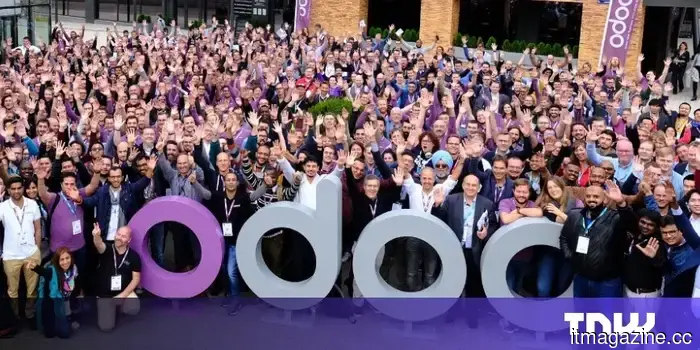 Odoo's valuation exceeds €7 billion as General Atlantic raises its investment.
Odoo reaches a €7 billion valuation following General Atlantic's increase in its shareholding, reflecting robust investor confidence in the company's international expansion.
Odoo's valuation exceeds €7 billion as General Atlantic raises its investment.
Odoo reaches a €7 billion valuation following General Atlantic's increase in its shareholding, reflecting robust investor confidence in the company's international expansion.
 When organizational knowledge turns into a vital asset.
Why corporate onboarding frequently transforms knowledge into conformity, stifles independent thought, and hinders innovation within large organizations.
When organizational knowledge turns into a vital asset.
Why corporate onboarding frequently transforms knowledge into conformity, stifles independent thought, and hinders innovation within large organizations.
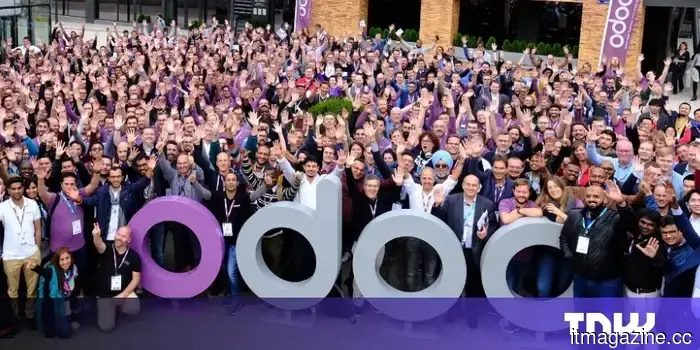 Odoo reaches a valuation of over €7 billion as General Atlantic boosts its investment.
Odoo reaches a valuation of €7 billion following General Atlantic's increased investment, underscoring robust investor confidence in its international expansion.
Odoo reaches a valuation of over €7 billion as General Atlantic boosts its investment.
Odoo reaches a valuation of €7 billion following General Atlantic's increased investment, underscoring robust investor confidence in its international expansion.
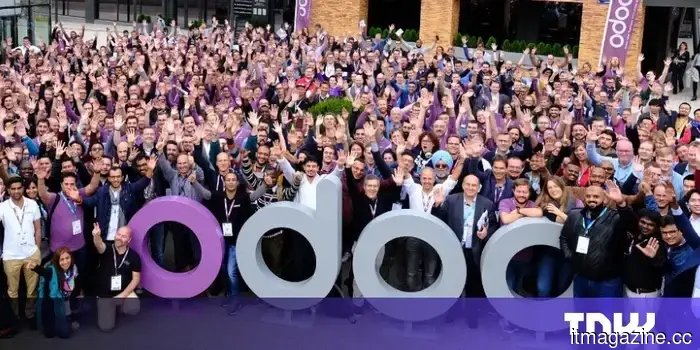 Odoo surpasses a valuation of €7 billion as General Atlantic raises its investment.
Odoo reaches a valuation of €7 billion following General Atlantic's increase in its stake, underscoring robust investor confidence in the company's global expansion.
Odoo surpasses a valuation of €7 billion as General Atlantic raises its investment.
Odoo reaches a valuation of €7 billion following General Atlantic's increase in its stake, underscoring robust investor confidence in the company's global expansion.
 Europe Inc: Brussels indicates a renewed effort to enhance competitiveness.
Europe Inc is Brussels' response to a fragmented market, international challenges, and the EU's desire for quicker company formation and expansion.
Europe Inc: Brussels indicates a renewed effort to enhance competitiveness.
Europe Inc is Brussels' response to a fragmented market, international challenges, and the EU's desire for quicker company formation and expansion.
Europe Inc: Brussels indicates an renewed effort to enhance competitiveness.
Europe Inc is Brussels' response to a fragmented market, global challenges, and the EU's desire for quicker company formation and growth.